
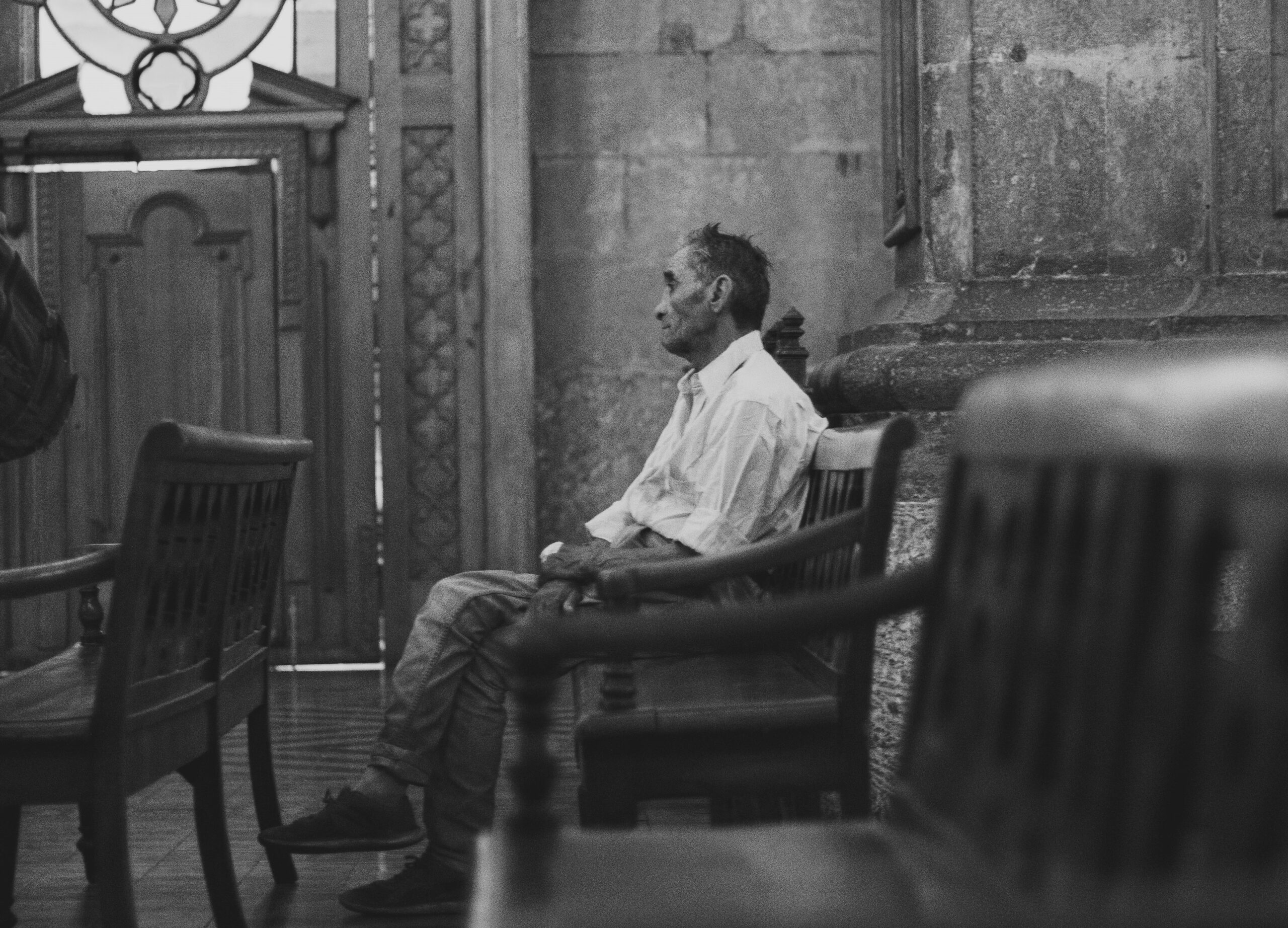
 『悲しみは笑いにまさる。顔の曇りによって心は良くなる』(伝道の書7章3節ー4節)
イスラエルの三代目の王、ソロモンは「悲しみは笑いにまさる。顔の曇りによって心は良くなる」と言いました。一見、このようなことを言う者は変わり者、あるいはひねくれ者に違いないと私達は思います。
正直に申し上げますが、私は牧師でありながら、皆さんにこの言葉を完全に解き明かすことができません。今もこの言葉の意味を私は探り続けています。神は私の人生に起きる出来事を通して、この御言葉の真理をこれから解き明かしてくださると期待しています・・・。
しかし、そんな私でもこの言葉の一端を経験するような瞬間がこれまでの人生には何度かありました・・・。
本日の「礼拝映像」「ポッドキャスト」「一日一生」はこちらから。
↓ 今日の「日英礼拝メッセージ原稿」、「おもちかえり」はこちらから ↓
祝宴ではなく、喪中の家で悟ること
伝道の書7章1節-4節
2021年10月24日
類を見ない財産と名声を得たイスラエル三代目の王、ソロモンが記した伝道の書を私達は隔週で見ております。今日は「祝宴ではなく、喪中の家で悟ること」というメッセージタイトルで、伝道の書7章1節から4節までを皆さんと共に見ていきたいと願っております。
1良い名声は良い香油にまさり、死の日は生まれる日にまさる。2祝宴の家に行くよりは、喪中の家に行くほうがよい。そこには、すべての人の終わりがあり、生きている者が、それを心に留めるようになるからだ。3悲しみは笑いにまさる。顔の曇りによって心は良くなる。4知恵のある者の心は喪中の家に向き、愚かな者の心は楽しみの家に向く。(伝道の書7章1節ー4節 新改訳聖書)
この七章を注意深く読みますと、ある特徴があることに気がつきます。それはこの七章だけで「~にまさる」という比較が4回、記されているということです。すなわちソロモンはある二つのことを比較して、こちらより、そちらのほうが「まさっている」ではないかと言っているのです。
その中から今日は二つの事柄についてみていきましょう。この二つは普通に考えますならば、とても常識では考えられないものです。まず、最初にその一つ、「祝宴にまさるもの」をみていきましょう。
祝宴の家に行くよりは、喪中の家に行くほうがよい。そこには、すべての人の終わりがあり、生きている者が、それを心に留めるようになるからだ。(2節:新改訳)
皆さんは「誕生パーティー」に行くのと「お葬式」に行くのとどちらを好みますか?大抵、私達は誕生パーティーを選ぶでしょう。誕生日を待ち望む人はいますが、お葬式を待ち望む人はいません。しかし、ソロモンはここで悲しみの家、喪中の家に行くほうが祝宴の家にいくよりもいいというのです。
こういうことを言う人はそうとうに変わっている人だと思います。もし、私達の周りに「俺は結婚式に出るよりも、お葬式に行っている方が断然、いいね」と言っている人がいたとしたら、私達はこの人はいったい何を言っているのだと驚き怪しむしょう。
ソロモンが言っていることは一見、そんなことです。では私達はこのソロモンを変わり者として理解すればいいのでしょうか。いいえ、彼がこう言った背後にはしっかりとした理由があるのです。
この度、「死」ということについて考え、調べているうちに一つの書物がこのテーマに対して、一石を投じているということを知りました。それはアーネスト・ベッカーという文化人類学者が書いた『死の拒絶』(『The Denial of Death』 Ernest Becker平凡社 邦訳1989年) という1974年にピュリッツアー賞を受賞している本です。
彼がいうには、私達はいつか必ずやってくる「死」というピークに向かってゆっくり上っていくローラーコースターに乗っているようなものだといいます。そして、その両側にはスクリーンがあり、私たちの「文化」がテレビ画面のように映し出され、私達はそれを気晴らしとして見ているようなものだというのです。
このあたりはソロモンが言っていることと重なります。ローラーコースターは一つ所に止まらずピークに向かいます。全てのものはその一時の気晴らしのように、私達の後方に過ぎ去っていくのです。
それは過ぎ去っていくだけで、私達の手に最後まで残るものは何もありません。そして、これまでお話してきましたようにソロモンはそのピークに到った人なのです。その彼の証言によりますと「祝宴の席」で私達が見聞きすることは、全て一時の気晴らしで過ぎゆくものです。
確かにそれはしばしの楽しさを与えてくれるでしょう。しかし、食べたもの、飲んだものは一晩で消化され、翌朝には再び空腹になり、喉が渇き、見聞きしたこともやがて風化します。
ソロモンが「伝道の書」において繰り返し、記しておりますことは、まさしくこのことであります。すなわちこの世の全ての事は移ろいゆくということです。それゆえに、そのように移ろいゆく、失われてしまうようなことを追い求めることは風を捕えるように空しいものだということです。
しかし、この世界には決して変わらないものもあります。それが絶対に変わらないことであるならば、そのことについて考えることは、それに対して何かしらの備えをしておくことは決して空しいことではありません。
最近、定期の集会でイエス・キリストが語られた「10名のおとめ」と「岩と砂の上に建てた家」の譬え話を学び、深く教えられました。
「10人のおとめ」(マタイ25章1節-13節)の譬えは、5人のおとめが油を用意し、5人のおとめはそれを備えていなかったので、婚宴に加わることができなかったという譬え話です。
また「岩と砂の上に建てた家」(マタイ7章24節-29節)の譬えは、やがて来る自然災害に対して、岩の上に家を建てた家は被害を受けず、砂の上に家を建てた人の家は破壊されてしまったという譬え話です。
イエス様はこのどちらの譬えの中でも「愚かな人」について語っています。かのイエス・キリストはどんな人を「愚かな人」と呼んでいるのか。興味がわきます。皆さん、イエス・キリストが「愚か者」と呼ぶ人はどんな人だと思いますか。
それは「起きることが分かっているのに、その備えをしない人です」。
イエス様は花婿が来ることが分かっているのに備えていないおとめに向かい、愚かと言い、災害はやってくるものなのに、それに備えていない砂の上に家を建てた者を愚か者と呼びました。
皆さん、心に刻みましょう。神のひとり子イエスが、あえて「愚か者だ」と言われたこと、それは「そのことは100%起こることが分かっているのに、そのことに対して、備えることがない人」なのです。
そして、その決して変わらない、確実にやってくること、もう、皆さん、お分かりですね、そう、その最たるものは「私達の死」なのです。
主にある皆さん、このことは確実なことなので、このことに予め、向き合っておくことは決して空しいことではありません。
ソロモンが「祝宴の席」に行くよりも「喪中の家」に行くほうがよいといった理由はそこにあるのです。祝宴の席には変わりゆくものが並べられている、しかし喪中の家には確実なものがあるのです。詩篇119篇を書いた著者はこう言っています。
「苦しみにあったことは、わたしに良い事です。これによってわたしはあなたのおきてを学ぶことができました」(詩篇119篇71節)
私達の人生には様々な苦しみには色々ありますが、その最たるものは愛する者や私達の命が失われることでありましょう。この事にはできる限り、関わりたくないと私達は思います。しかし、聖書は言います。それが実は自分にとって、とても大切なことになるのだと。
なぜなら、そのことを通して、私達は今一度、神様が決められた定めを学ぶことができるからです。このことを踏まえて生きていくのと、踏まえずに生きていくのとでは、これからの私達の人生は全く違ったものとなるのです。
ソロモンは、まずこの確実に私達に起こることに対して、しっかりと備えができているのなら、この地上での限られた時を楽しんだらいいではないか、ソロモンはそのことを伝道の書で言っているのです。詩篇90篇はモーセの祈りと言われていますが、その12節にはこう書かれています。
「われらにおのが日を数えることを教えて、知恵の心を得させてください」
この言葉は死から逆算して、どのように今を生きるべきかということを私達に教えているのです。生きるためには、まず死の備えありきなのです。そして、皆さんはお気づきでしょう。ソロモンもモーセもイエス・キリスト以前に生きた人でありますので、このところで彼のメッセージは終わると。
しかし、私達はイエス・キリスト後の時代を生きている者です。すなわち、私達が持っている確信は、イエス・キリストにあって私達の死は終わりではないということです。
このキリストの十字架により、私達には永遠の命が与えられており、このことこそが全ての人間に対して聖書が言っている死への備えなのです。私達はいかがですか。これらのことに対して考え、その備えができているでしょうか。
いや、まだだ。いや、確かじゃないという方、お電話ください。このことについてしっかりと確実に備えておこうではありませんか。愚か者とならないために。本当にこの人生を生きるために。二つ目のことをみましょう。それは「笑いにまさるもの」ということです。
3悲しみは笑いにまさる。顔の曇りによって心は良くなる。4知恵のある者の心は喪中の家に向き、愚かな者の心は楽しみの家に向く。(伝道の書7章3節ー4節 新改訳聖書)
ソロモンは「悲しみは笑いにまさる。顔の曇りによって心は良くなる」(3節)と言います。これまた変わり者、ひねくれ者の言葉としか私達は考えられません。そう思いませんか?
正直に申し上げますが、私は牧師でありながら、皆さんにこの言葉を完全に解き明かすことができません。今もこの言葉の意味を探り続けています。神は私の人生に起きる出来事を通して、この御言葉の真理をこれから解き明かしてくださると期待しています。
しかし、そんな私でもこの言葉の一端を経験するような瞬間がこれまでの人生には何度かありました・・・。
今から約二年前の1999年、10月12日、日本を襲った台風19号は当時、母が入居していました高齢者施設、川越キングスガーデンを水で満たしました。その高さは私達の胸のあたりにまでいたりました。既に歩くことができなくなっていた母は、職員の方達に運ばれて、救助隊のボートに乗せられ、助け出されました。
このことはニュースでも取り上げられ、テレビの中継もなされ、私はサンディエゴにいながら来る日も来る日も、このニュースを追いかけました。そして、日本からの連絡が来るたびに心がしめつけられるような毎日を送りました。
母は多くの方達の助けにより、救助された、その日から別の施設に入ることが許されました。しかし、この環境の変化は88歳の彼女の肉体には重荷となり、その後、体調を崩し、病院を転々とし、もはや自らの口で食べることができなくなりました。
今はそれでも色々な管を通して栄養を入れることができます。しかし、私はそれを断りました。こうして彼女が治る見込みはなくなりました。そして、いよいよ最後の日が近いと知り、11月末に私は母の元に向かいました。
母の手は細く、点滴の管がもはや血管にささらないので、点滴を外しました。それは彼女の死を意味しました。もはや彼女が言葉を語ることはありませんでした。時折、目を開け彼女はじっと私を見ました。母の頬から涙が流れました。
「あなたの息子で幸せでした、ありがとう」と何度も耳元で伝えました。笑いました、泣きました。母と二人の静かな日々を過ごしました。
病室で私は一日中、母の口元を見ていました。母の身体で唯一、動く器官は口だけだったからです。その口は小さく息を吸い、そして小さくはいていました。その口がいつ止まるのか、そこだけに目をとめていたのです。その彼女の口元を見ていて思ったのです。創世記2章7節、
「主なる神は土のちりで人を造り、命の息をその鼻に吹きいれられた。そこで人は生きた者となった」(創世記2章7節)
神は人に命の息を吹き入れた。それにより人は生きるようになった。人はその神の息によって生を受け、その息が続く限り人は生きる。
日本語では「息を引き取る」と言いますでしょ。その息を神が引き取る時に人は主のもとにかえるのです。88年前に母が生まれて初めてした一回目の息、その最初の息を神が彼女に与えてくれました。そうであるのなら、その最後の息を決めるのも神様です。
私ができることは、そこに座り、彼女に息を吹きこんだ主が、今度は彼女の息を引き取るのを見守ることだけです。それは彼女の生涯を見守り、その日まで導いてこられた主と母との間に流れる厳粛な時間でした。
息子でありながら、私がその間に介入する余地はないと思いました。そして、静かに最期の息をはいた彼女は12月3日、主なる神のもとにかえりました。こうして彼女は88歳の地上での生涯を閉じました。その年、私達の教会関係者で、その一年の間に召された方達の中で16番目の人となりました。
キリストの十字架は復活につながります。ですから、彼女が再び、目を開けた時に彼女は主と共にいます。そこには先に行かれた主の聖徒たちが皆、彼女が彼らのもとに来るのを待っていてくれました。あちらはきっとさぞかし、賑やかなことでしょう。
母は牧師でしたから、その人生、人前で数えきれないほどのメッセージを語ってきました。しかし、その母は一人息子の私を前に最後は何も語りませんでした。しかし、何も語らずとも、確かに、その時、その場は深い悲しみに包まれていましたが、私にとって人生最大のメッセージを、神様は母を通して私に語りかけてくれました。
今、生きているのは私の力ではない。確かに私は神にあって今、生かされている。この日に生きることも、明日を生きることも、それは全て神の一方的な恵みとあわれみだと。
こうして彼女は天に凱旋しました。一人の人間が私達の前から天に凱旋するということは、私達はその人から大切なものをいただいたということなのだと、多くの方達を天に送らせていただいた、その一年の間に教えられました。
一人一人がそれぞれ、神から与えられた人生を歩んで、主のもとに帰ったのです。ですから私達は彼らから受けたものを引き継ぎ、それを主の栄光のために用いなければならないのです。主にある兄弟姉妹、ある人は主から名を呼ばれ、主のもとに逝く。そして彼らはあちらで永遠に生きる。
それに対して、あなたも私も今、ここに残されている。私達にはその理由は知りえないのですが、主はまだ私達の名を呼んでいないのです。私達の息はまだ主権者なる神によって引き取られていない。なぜか。
私達の主である、神が私達に為すべきことを残しておられるからだ。使命とは命を使うと書く。キリストの命という代価を払って買い取られた私達。神によって許されているこの命をあなたは何のために使うのか?
主にある皆さん、私はこのようなことを人生の最も悲しい時に、神様から教えられました。
自戒をこめて言いますが、最近、巷では心にずしんと来るような言葉を聞くことがなくなりました。全ての言葉が軽く、一時、その言葉は私達を慰め、私達の気持ちを和らげてくれますが、それはフワフワと空間をただよっているだけで、やがて消え去るのです。
しかし、今日、お話した聖書の言葉は私達の心に深く突き刺さるのです。この主の言葉に向き合いつつ、神から与えられているこの人生を神と共に歩んでいきませんか。必ずやってくることに対して、しっかりと備えを始めませんか。
2祝宴の家に行くよりは、喪中の家に行くほうがよい。そこには、すべての人の終わりがあり、生きている者が、それを心に留めるようになるからだ。3悲しみは笑いにまさる。顔の曇りによって心は良くなる。4知恵のある者の心は喪中の家に向き、愚かな者の心は楽しみの家に向く。(伝道の書7章1節ー4節 新改訳聖書)
「苦しみにあったことは、わたしに良い事です。これによってわたしはあなたのおきてを学ぶことができました」(詩篇119篇71節)
お祈りしましょう。
Not a feast, but enlightenment in a house of mourning.
Oct 23, 2021
We have been studying the book of Ecclesiastes for a few weeks. Ecclesiastes was written by Solomon, the third king of Israel, a man of unparalleled wealth and fame.
Today, we will look at Ecclesiastes 7:1-4. The title of this message is, “Not a feast, but enlightenment in a house of mourning”.
A good name is better than a good ointment, And the day of one’s death is better than the day of one’s birth. 2 It is better to go to a house of mourning
Than to go to a house of feasting, Because that is the end of every man,
And the living takes it to heart. 3 Sorrow is better than laughter, For when a face is sad a heart may be happy. 4 The mind of the wise is in the house of mourning, While the mind of fools is in the house of pleasure. (NASB Ecclesiastes 7:1-4)
If you read this passage carefully, you will notice that it has the phrase “better than” four times. Four times, Solomon is comparing two things and saying this one is “better” than the other.
Let’s look at two of them today. Some of the things he compares appear to have little in common. First, let’s look at the phrase, “What is better than a feast”.
It is better to go to a house of mourning than to go to a house of feasting, because that is the end of every man, And the living takes it to heart (NASB 1995 Ecclesiastes 7:2).
Do you prefer to go to a “birthday party” or a “funeral”? Most of the time, we would choose the birthday party. There are people who like going to fun occasions like birthday parties, but it is rare for one to like going to a funeral. But here, Solomon is saying that going to a funeral (house of sorrow), is better than going to a house of feasting (a party).
We think that people who say such things are very strange. If we were surrounded by people who said, “I’d much rather be at a funeral than at a wedding,” we would be astonished and disconcerted at what they were saying.
At first glance, that is what Solomon is saying. So, are we to understand Solomon as being an odd man? No. There is a very good reason behind what he said.
In thinking about and researching the subject of death I encountered a book that has created a stir on this subject. It is a book written by cultural anthropologist, Ernest Becker. It is called The Rejection of Death. This book won the Pulitzer Prize in 1974.
In his book Dr. Becker writes that we are on a roller coaster that is slowly climbing towards a peak. That peak is called “death” and it will surely come one day.
There are screens on both sides of the roller coaster as it climbs, and our “culture” is projected like a TV onto those screens. We watch those screens as we move upward towards the peak, and it distracts us.
If we compare what Dr. Becker wrote with what Solomon is saying it tells us the roller coaster doesn’t stop, it keeps moving toward a peak. Everything passes behind us, like a temporary distraction.
It (life) will just keep going and nothing will remain until the end. And as I have said, Solomon is the one who has reached the peak.
According to King Solomon everything he saw, did, and heard at a “feast” was just a temporary distraction. It will give you pleasure for a while. It is temporary. What you eat and drink will be digested overnight, and the next morning you will be hungry and thirsty again. What you have seen and heard will eventually fade away.
This is what Solomon wrote repeatedly in the book of Ecclesiastes. In other words, all things in this world change. The pursuit of life’s pleasures is temporary and will be lost. It is like trying to catch the wind.
However, there are things in this world that do not change but the pursuit of those things have value. It is not a waste of time to think about and pursue those things. In fact, it is wise to prepare for and pursue those things.
At a recent weekly meeting I was deeply moved by Jesus’ parables of the “ten virgins” and the “house built on rock rather than sand”.
In the parable of the ten virgins (Matthew 25:1-13) five of the virgins brought extra oil for their lamps. The other five virgins did not bring extra oil and their lamps went out. As a result, they were unable to join the wedding feast.
In the parable of the house built on rock and sand (Matthew 7:24-29), the house built on the rock was not damaged by a natural disaster, while the house built on the sand was destroyed.
Jesus speaks of “foolish persons” in both parables. What kind of person does Jesus Christ call a “foolish person”? What kind of people do you think Jesus Christ calls “fools”?
It is the one who knows a disaster is coming but does not prepare for it.
Jesus called the virgins who had not brought enough oil for their lamps foolish for knowing that the bridegroom was coming and not preparing for it.
He called the man who one built his house on the sand foolish for not being prepared for the coming storm……even though he knew a disaster was coming.
Let’s take these lessons to heart. Jesus, the only begotten Son of God, dared to say, “You are a fool,” which means, “You know 100% that it will happen, but you are not prepared for it.
And the one thing that will never change, the one thing that is sure to come, you already know, that is our death. This is a certainty, so it is not foolish to prepare for it in advance.
This is why Solomon said it is better to go to a house of mourning than to a house of feasting. In the house of mourning, there are certainties, while in the house of feasting, there are things that change. The author of Psalm 119 says:
It is good for me that I was afflicted, that I may learn your statutes. (NASB 1995 Psalm 119:71)
There are many kinds of afflictions in our life, but among the most obvious ones are the loss of our loved ones and our lives.
We try to avoid these afflictions as much as possible. But the Bible says these afflictions can be very important for us.
This is because through it we can once again learn about God’s statutes. If we live our lives with this in mind our lives will be completely different from now on.
Solomon is saying in Ecclesiastes that if we are prepared for what is sure to happen to us (death) then we should still enjoy our limited time on earth. Psalm 90 is called the Prayer of Moses, and in verse 12 it says:
Teach us to number our days, that we may gain a heart of wisdom (NASB 1995 Psalm 90:12)
These words tell us we should live in the present, counting backwards from death. But, in order to live rightly we should first prepare for death. I’m sure you are aware Solomon and Moses lived before Jesus Christ. Therefore, their messages ended when they died.
We, however, are living in the age after Jesus Christ. The certainty we have is that the death of Jesus Christ is not the end. Through the cross of Christ, we are given eternal life, but the Bible tells us to still be prepared for death.
What about you? Are you thinking about these things and preparing for what is to come? No, not yet? If you are not sure, please call me. Let’s make sure we are prepared for this so we are not fools. To really live this life.
Let’s look at the second part of the scripture we are studying today. That is, what “is better than laughter”.
Sorrow is better than laughter, for when a face is sad a heart may be happy. 4 The mind of the wise is in the house of mourning, While the mind of fools is in the house of pleasure. (NASB 1995 Ecclesiastes 7:3-4).
Solomon said, “Sorrow is better than laughter, for when a face is sad a heart may be happy” (verse 3). Do you think these words sound like they are from an eccentric and twisted person?
I must confess that although I am a pastor, I am unable to fully unpack these words for you. I’m still searching for the meaning of these words.
I expect that God will reveal the truth of these words to me through the events that occur in my life.
However, there have been a few moments in my life where I have experienced at least a portion of these words….
About two years ago, on October 12, 1999, Typhoon No. 19 hit Japan and flooded the Kawagoe Kings Garden, the senior citizen facility where my mother was living at the time.
The height of the water was almost up to our chests. My mother, who was already unable to walk was carried by the staff to the rescue team’s boat.
This was covered in the news and broadcast on TV. I followed the news everyday while I was in San Diego, and every time I received a call from Japan, it was heart-wrenching.
With the help of many people, my mother was rescued and allowed to enter a different facility from the day she was rescued.
However, this change of environment became a burden to her 88-year-old body, and she fell ill. She was moved from one hospital to another and eventually was no longer able to eat.
They could still feed her through various tubes, but I refused to allow them to do so. Thus, there was no chance for her to recover. Knowing that her last day was near, I went to visit my mother at the end of November.
My mother’s hands were so thin that the IV tube could no longer penetrate her veins, so they removed the drip. That meant she was dying.
No longer did she speak. Occasionally, she opened her eyes and stared at me. Tears flowed from her cheeks. “I told her over and over in her ear, “I am so happy to be your son, thank you. I laughed, and I cried. My mother and I spent quiet days together.
In the hospital room, I spent the entire day watching my mother’s mouth. The mouth was the only part of her body she could move.
She was taking small breaths and puffing out small ones. I would watch her to see if it would stop. As I watched her, I thought about Genesis 2:7.
7 Then the Lord God formed man of dust from the ground and breathed into his nostrils the breath of life; and man became a living being. (NASB 1995 Genesis 2:7)
God breathed into man the breath of life, and with it man came to life. We are born by the breath of God, and we will live as long as that breath lasts.
In Japanese, it’s called “take the last breath away”. When God takes that breath away, the person returns to the Lord. God gave her that first breath 88 years ago. That being the case it is also God who decides the last breath.
All I could do was sit there and watch as the Lord who breathed life into her, was now taking her breath away. It was a solemn moment between my mother and the Lord who had watched over her all her life and guided her to that day.
Even though I was her son, I felt there was no room for me to intervene. She quietly took her last breath and returned to the Lord God on December 3.
Her earthly life ended at the age of 88. That year, she became the 16th person from our church to be called home to be with the Lord. The cross of Christ leads to the resurrection. Therefore, when she opened her eyes again, she was with the Lord. There, all the saints of the Lord who had gone before her were waiting for her to come to them. It must be a very busy place there.
My mother was a pastor, so she had given countless messages in front of people in her life. But, in the end, she said nothing to me, her only son.
But even though she didn’t say a word, and indeed, I was deeply saddened at that time and place, God spoke to me through my mother with the greatest message of my life.
It is not by my own strength that I am living now. Indeed, it is in God that I am living now. To live this day and to live tomorrow is all God’s unilateral grace and mercy.
This is how she made her triumphant return to heaven. During the year when we sent many people to heaven, we were taught that we have received something important from that people.
Each one of them has returned to the Lord with their own God-given life. Therefore, we must take over what we have received from them and use it for the glory of the Lord.
Some shall be called by the name of the Lord and shall come unto the Lord. And they will live there forever.
In contrast, you and I are here now. We do not know the reason why, but the Lord has not yet called our names. Our breath has not yet been taken by our sovereign God. Why?
It is because God, our Lord, has left us something to do. In Japanese, the word “mission(使命)” means to use our life(命を使う).
We have been redeemed at the cost of Christ sacrificing his life. We have been allowed by God to live. For what purpose do you use this life?
Dear brothers and sisters, this is what God taught me at the saddest time of my life.
I must admit that I don’t hear many powerfully inspiring words these days. All the words comfort us and ease our minds for a while, but then they just float around in the air and disappear.
However, the words of the Bible that I talked about today pierce our hearts deeply. As we face these words of the Lord, why don’t we walk with God in this life that He has given us?
Why don’t we begin to prepare ourselves for what is surely coming?
2 It is better to go to a house of mourning than to go to a house of feasting, because that is the end of every man, And the living takes it to heart. 3 Sorrow is better than laughter, for when a face is sad a heart may be happy. 4 The mind of the wise is in the house of mourning, While the mind of fools is in the house of pleasure (NASB 1995 Ecclesiastes 7:1-4)
It is good for me that I was afflicted, that I may learn Your statutes. (NASB 1995 Psalm 119:71)
Let us pray.
本日のおもちかえり
2021年10月24日
1良い名声は良い香油にまさり、死の日は生まれる日にまさる。2祝宴の家に行くよりは、喪中の家に行くほうがよい。そこには、すべての人の終わりがあり、生きている者が、それを心に留めるようになるからだ。3悲しみは笑いにまさる。顔の曇りによって心は良くなる。4知恵のある者の心は喪中の家に向き、愚かな者の心は楽しみの家に向く。(伝道の書7章1節ー4節 新改訳聖書)
1)『祝宴の家に行くよりは、喪中の家に行くほうがよい』(2)という言葉の理由は何だと思いますか。あなたはこの言葉の意味をどのように受け止めますか。
2)あなたがパーティーで知り、学ぶことができることは何でしょうか。パーティで見聞きすることに絶対に変わらないものがありますか。あなたが葬儀で知り、学ぶことができることは何でしょうか。葬儀で見聞きすることに絶対に変わらないものがありますか。
3)イエス・キリストが語られた「10名のおとめ」と「岩と砂の上に建てた家」の譬え話でイエス様はある者達を「愚か者」と呼んでいます。イエス様にとって、どんな人間が愚か者なのでしょうか。
『苦しみにあったことは、わたしに良い事です。これによってわたしはあなたのおきてを学ぶことができました』(詩篇119篇71節)。『悲しみは笑いにまさる。顔の曇りによって心は良くなる。知恵のある者の心は喪中の家に向き、愚かな者の心は楽しみの家に向く』(伝道の書7章3節-4節 新改訳聖書)。
4)これらの言葉に同意できるような経験をしたことがあなたにはありますか。
5)「悲しみ」や「苦しみ」を通して、神様は私達に何を教えようとされているのでしょうか。そのことにはどんな価値がありますか。
6)「悲しみ」や「苦しみ」を聖書の視点で見、それを受け止めていく時に、私達の人生にどんな変化が起こりますか。
