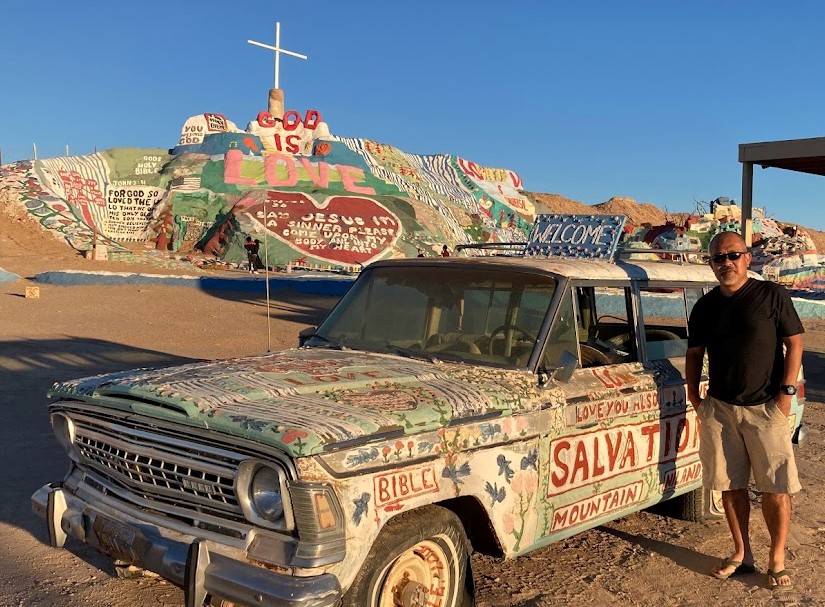
 『わたしは、すでに自身を犠牲としてささげている。わたしが世を去るべき時はきた。わたしは戦いをりっぱに戦いぬき、走るべき行程を走りつくし、信仰を守りとおした』(テモテ第二の手紙4章6節、7節)
アブラハムは神様から第一走者としてのタスキを受け、続くヤコブやモーセに、そのタスキが手渡されました。モーセはイスラエル民族最大の功労者であり、約束の土地を見ながらも、そこに入ることはできず、そのタスキをヨシュアに託したのです。そして、それを受けたヨシュアは自分の使命を全うすべく、彼の先祖達が入植できなかった約束の地に入ったのです。
ご存知でしょうか、私達も各々、主からこのタスキを賜っているということを。私達に託されたタスキを、最善なる状態で次の者たちに託すこと、私達はこの使命を主からいただいているということを。
箱根駅伝では第一走者は大都会、東京のオフィス街を走ります。強い海風に吹かれながら、湘南の海岸線を走る者たちがいます。そして箱根の険しい山を駆け登る者がおり、駆け降りる者がいます。そして最後にゴールのテープを切る者がいます。全ての区間はそれぞれ特徴をもった道です。その区間に一番、適した者を監督は選びます。主はあなたにも、あなたが走るべき「区間」を与えてくれています。
今日の「礼拝映像」「ポッドキャスト」「一日一生」はこちらから。
↓ 今日の「日英礼拝メッセージ原稿」「おもちかえり」はこちらから ↓
ヨシュア:私達が走るべき行程
2024年12月1日
私達は創世記のアダムから始まり、聖書中の人物を毎週、見ています。12月に入りましたので、来週からクリスマスに関連するメッセージを一米先生と交互にお話しする予定です。
先にモーセを見てきましたが、今日は若い時からモーセと行動を共にし、彼に忠実に仕え、イスラエルのために戦ったヨシュアを見ていきたいと思います。今日はまず、このモーセとヨシュアから「世代交代」についてお話しします。
ここまでのことをおさらいしましょう。まず確認が必要なことは、神様がイスラエルに与えると約束した「カナン」という土地です。この土地はヨルダン川と死海の西岸に位置する現在のイスラエルがある土地でした。
BC1950頃、神様はユダヤ人の父祖となりますアブラハムに「あなたの子孫にこの地を与える」(創世記12章7節)と約束されました。BC1800年頃、その孫になるヤコブには「あなたが伏している地をあなたと子孫に与えよう」(創世記28章13節)と、このカナンを与えるという約束を再度、確認されました。そしてBC1500年頃、モーセにもカナンの約束を思い起こさせ、神様はこう言われました。「良い広い地、乳と蜜の流れる地、すなわちカナン人・・・のおる所に至らせようとしている」(出エジプト3章8節)。
これらから私達は、確かに神様は「約束の地」を彼らに与えると言われていたことを確認することができます。しかし、その約束の地、カナンに実際に入植し、そこを獲得することが許されたのはアブラハム、ヤコブ、モーセではなく、それはヨシュアに託されたのです。モーセはカナンが見渡すことができる所まで行ったのです。しかし、彼がそこに入ることは許されませんでした。
そのような時、モーセはどのようにしてヨシュアに自らのはたらきを引き渡したのでしょうか。民数記27章16節にはモーセがその人生の最期の時に神様に願ったことがこのように記録されています。
民数記27章16節—17節:16「すべての肉なるものの命の神、主よ、どうぞ、この会衆の上にひとりの人を立て、17彼らの前に出入りし、彼らを導き出し、彼らを導き入れる者とし、主の会衆を牧者のない羊のようにしないでください」。
ここで私達が心に刻むべきことは、モーセはその後継者としてヨシュアの名をここで触れていないということです。これまでのモーセのはたらきの側にはいつもヨシュアがいましたから、モーセが当然、ここでヨシュアの名前を後継者として出してもいいと思うのです。しかし、そのような時に、彼は自分の考えや願いではなく、全てを白紙にして神様に自分の後継者となる人を求めたのです。そして、この言葉を受けて、神様はモーセに語られました。
民数記27章18節—20節:「神の霊のやどっているヌンの子ヨシュアを選び、あなたの手をその上におき、19彼を祭司エレアザルと全会衆の前に立たせて、彼らの前で職に任じなさい。20そして彼にあなたの権威を分け与え、イスラエルの人々の全会衆を彼に従わせなさい。
神様はモーセの死を前にして、ヨシュアを彼の後継者に指名したのです。モーセに子供はいましたが、モーセはその時に世襲を選ばず、神の示されたヨシュアを後継者としたのです。ここにはこのことが淡々と書かれていますが、この世ではこのことは簡単なことではないことを私達は知っています。こうしてヨシュアは神様から与えられた任命を厳粛に受け止めて、その任を引き継いだのです。そして、それを会衆も認めたのです。これらのことから私達はそれぞれが成すべき役目というものが神様から与えられているということに気がつかされます。
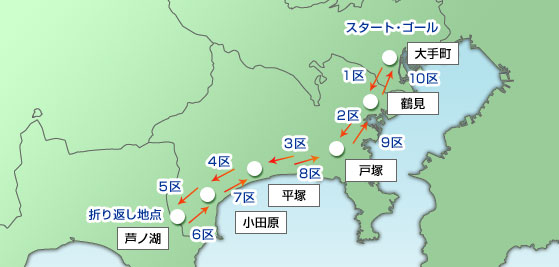 日本には箱根駅伝というものがあります。毎年、正月になりますと大学対抗のレースが催され、テレビでライブ中継します。一つの大学から選ばれた10人の走者が東京の日本橋から、箱根の芦ノ湖まで、10の区間を往復します。その距離は往復217.1キロ(134.89マイル)。すなわち箱根駅伝は217.1キロ(134.89マイル)を走るリレーと言うことができるでしょう。この217.1キロ(134.89マイル)の往時を5人、復路を5人の選手が走る長距離のリレーです。
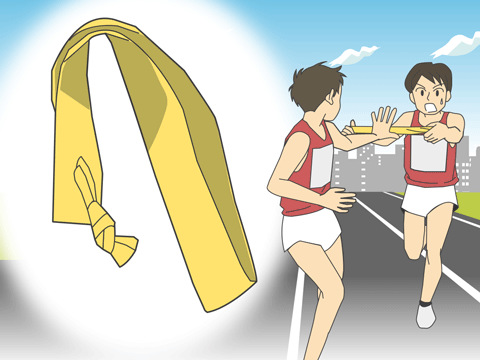
ただ、リレーとは異なることがあります。バトンに代わり、彼らは「タスキ」を肩にかけます。彼らは自分の走る区間を終える時、そのタスキを次の走者に渡すのです。
タスキを受け取った者は、そのタスキを肩からかけます。走者の心臓の鼓動と情熱を刻んだタスキは次の走者に託されます。彼らは自分の区間を力の限り走り抜きます。「力の限り」と言いましたのは、多くの走者はタスキを次の走者に渡した瞬間、そのまま道路に倒れ込み、時に医師が走者に駆け寄るからです。彼らの姿は、持てる力を出し尽くしたことを意味します。「世代交代」とは、私達がたすきを受け、それを次の者達に託すようなものです。
この場合アブラハムは神様から第一走者としてのタスキを受け、続くヤコブやモーセに、そのタスキが手渡されたのです。モーセはイスラエル民族最大の功労者であり、約束の土地を見ながらも、そこに入ることはできず、そのタスキをヨシュアに託したのです。そして、それを受けたヨシュアは自分の使命を全うすべく、彼の先祖達が入植できなかった約束の地に入ったのです。
ご存知でしょうか、私達も各々、主からこのタスキを賜っているということを。私達に託されたタスキを、最善なる状態で次の者たちに託すこと、私達はこの使命を主からいただいているということを。
箱根駅伝では第一走者は大都会、東京のオフィス街を走ります。強い海風に吹かれながら、湘南の海岸線を走る者たちがいます。そして箱根の険しい山を駆け登る者がおり、駆け降りる者がいます。そして最後にゴールのテープを切る者がいます。
全ての区間はそれぞれ特徴をもった道です。その区間に一番、適した者を監督は選びます。主はあなたにも、あなたが走るべき「区間」を与えていることをご存知ですか。このことを信仰をもって受け止め、そこに祈りと思いと力を注ぐ人生を歩む人は幸いだと思います。
古代オリンピックの始まりは紀元前9世紀までさかのぼると言います。ですからパウロの時代には、既に走る競技がありました。パウロはそんな競技者を思い浮かべながら、テモテ第二の手紙4章6節―8節を書きました。
テモテ第二の手紙4章6節—8節:6わたしは、すでに自身を犠牲としてささげている。わたしが世を去るべき時はきた。7わたしは戦いをりっぱに戦いぬき、走るべき行程を走りつくし、信仰を守りとおした。8今や、義の冠がわたしを待っているばかりである。かの日には、公平な審判者である主が、それを授けて下さるであろう。わたしばかりではなく、主の出現を心から待ち望んでいたすべての人にも授けて下さるであろう。
誰もがこの地上で永久に、その全ての行程を走り続けるのではありません。皆さん、今日、このことを心に刻んでお帰りください。それは、私達一人一人には神様から与えられている「走るべき行程」があるということです。
そして、その走るべき行程は皆、違うのです。私達はスピードや成した事の大きさを競うのではありません。ですから隣の人を見て、舞い上がる必要も落ち込む必要もありません。
神のみわざは世代を超えた共同作業であり、チームワークです。ダビデはイスラエルの王として、エルサレムの神殿建築を望んでいましたが、それを成し遂げたのは彼の息子のソロモンでした。預言者エリヤのはたらきは、さらに霊的な力が神様から与えられたその弟子、エリシャに引き継げられました。バプテスマのヨハネはイエス様がその活動を始める前に後に続くイエス・キリストのために道を整えました。ヨハネはキリストを指して「彼は栄え、私は衰える」という立場を貫き、イエス様と入れ替わるかのようにして天にかえりました。彼は後に続くイエス様が走りやすい道備えを、露払いをするかのごとく彼のゴールを目指したのです。
私達はその最後のテープをきることはないかもしれませんが、私達のタスキを受け取った次の者達がそのテープをきるかもしれません。このことは私達の家庭でも、職場でも、そして教会でも成されるべきことなのです。
私達の教会は94年以上もの歴史をもちます。これまでいったいどれだけの人達がこのタスキを携えて走ってくださったことでしょうか。私たちが目を閉じれば、あの人、この人の顔が思い浮かぶでしょう。彼らは主を仰ぎ、私達のために、その道程を走り通したのです。そして、私達に信仰のタスキを残していったのです。
私達は彼らが経験したことのない「コロナ・パンデミック」という区間を走り抜きました。できる限りの知恵を出し合い、助け合い、私達はそれを乗り越えました。主はその間に、私達に多くの新しいものを与えてくださいました。天にいる私たちの信仰の先輩方は、このことを喜んでいてくれることでしょう。
この信仰の旅は続きます。私達は主からそのタスキが託され、私達一人一人の行程を走り抜き、次の世代にこのタスキを託していくのです。皆さんとこの信仰の旅を続けることができることは私の喜びです。二つ目のことをお話しします。それは「力の出どころ」ということです。
私達が何かを習得しようとする時、すぐにそのことに熟練することはできません。そこにいたるまでには年月が必要であり、そのために見習いというような時を過ごすことがあります。営業職であっても、宮大工であっても、寿司職人であっても、まずは上司とか親方と呼ばれる人のもとで手習いを受けて、やがて一人立ちしていくものです。
同じようにヨシュアもまずイスラエルのリーダーであるモーセの側に仕える若者として聖書の中に出てきます。その間、モーセの言動をつぶさに観察し、その働きを間近に見ながら実際的なリーダーとしてのあり方を心に刻みました。その経験の中にヨシュアにとっては忘れられない、ある出来事がありました。そのことが出エジプト記17章9節-14節に記されています。
出エジプト記17章9節-14節:9モーセはヨシュアに言った「われわれのために人を選び、出てアマレクと戦いなさい。わたしは明日、神のつえを手に取って、丘の頂に立つであろう」。10ヨシュアはモーセが彼に言ったようにし、アマレクと戦った。モーセとアロンおよびホルは丘の頂に登った。11モーセが手を上げているとイスラエルは勝ち、手を下げるとアマレクが勝った。12しかしモーセの手が重くなったので、アロンとホルが石を取って、モーセの足もとに置くと、彼はその上に座した。そしてひとりはこちらに、ひとりはあちらにいて、モーセの手をささえたので、彼の手は日没までさがらなかった。13ヨシュアは、つるぎにかけてアマレクとその民を打ち敗った。14主はモーセに言われた、「これを書物にしるして記念とし、それをヨシュアの耳に入れなさい。わたしは天が下からアマレクの記憶を完全に消し去るであろう」。
その時、イスラエルはアマレク人と戦いの最中にありました。モーセはそのためにヨシュアに、アマレクとの戦いに出るようにと命じるのです。モーセはヨシュアにリーダーとして立つことの経験をさせたのでしょう。ヨシュアは言われた通りにイスラエルの先頭に立ち、戦いに出て行きました。
彼はプロの軍人ですから、戦い方というものを心得ていたと思います。綿密な戦略をたて、日ごろから訓練した者達と共に戦いに臨んだことでしょう。そして、その戦いに勝利をとりました。その実際の戦いはモーセ不在でなされましたから、実質、彼が先頭に立って勝ち取った勝利です。もしかしたら、「俺もまんざらではない」というような思いをもっていたかもしれません。
しかし、意気揚々と自陣に帰ってみると、ヨシュアが戦っている間にモーセが手を挙げて神様に祈っていたということを知ります。モーセがその祈りの手を挙げている時にはイスラエルが勝ち、手を下げるとアマレクが勝ったということを知るのです。ゆえにその戦いの勝利はヨシュアとその軍隊の力によるのではなくて、ひとえにモーセの祈りに応えた神様の力によるものであったということを彼は知るのです。主はモーセにこの出来事について、こう言いました。
出エジプト記17章14節:「これを書物に記して記念とし、それをヨシュアの耳に入れなさい」
そうです、これからヨシュアはモーセなき後、リーダーとして諸々の困難に向き合っていくことになり、もしかしたら恐れと不安で眠れぬ日々を送るかもしれない。その時にこの書物を読み返すことにより、戦いの勝敗は自分の戦術や兵士の力によるのではなく、神の力によるのだということをヨシュアは思い起こすことでしょう。
イスラエルのリーダーとなるべき者、その者が知らなければならない最も大切なことは実にこのことだったのです。そして、この経験は後のヨシュアの拠り所となるのです。ヨシュアがこのことを心に踏まえている限り、彼の心が揺らぐことはありません。神様はモーセの後継者であるヨシュアにこのことをまずしっかりと心に刻むことを望まれたのです。ゼカリヤ4章6節にはこう記されています。
ゼカリヤ4章6節:万軍の主は仰せられる、「これは権勢によらず、能力によらず、わたしの霊によるのである」
主にある皆さん、私達が成そうとすることは私達の権力や勢い、能力によるのではなく、神の力であるということを私達も心に刻もうではありませんか。
こうして、モーセから使命を引き継いだヨシュアは、神の力に寄り頼み、ことごとく取るべき地をとりました。しかし、そんな彼も人間が進むべきプロセスを遠ざけることはできません。彼も老齢になりました。ヨシュア記23章にはこのヨシュアの遺言が残されています。
この遺言は、彼がその人生で会得し、この確信と共に彼は生きてきました。その自分の人生で培った確信を、彼はタスキを託す者達に語りかけました。自分の人生の確信を後世に言い残すことができる人は幸いだと思います。私達は心してこの彼の遺言を、私達に語られているものとして心に刻みたいと思います。
ヨシュア記23章1節から11節:1 主がイスラエルの周囲の敵を、ことごとく除いて、イスラエルに安息を賜わってのち、久しくたち、ヨシュアも年が進んで老いた。2 ヨシュアはイスラエルのすべての人、その長老、かしらたち、さばきびと、つかさびとたちを呼び集めて言った、「わたしは年も進んで老人となった。3 あなたがたは、すでにあなたがたの神、主が、このもろもろの国びとに行われたすべてのことを見た。あなたがたのために戦われたのは、あなたがたの神、主である。4 見よ、わたしはヨルダンから、日の入る方、大海までの、このもろもろの残っている国々と、すでにわたしが滅ぼし去ったすべての国々を、くじをもって、あなたがたに分け与え、あなたがたの各部族の嗣業とさせた。5 あなたがたの前から、その国民を打ち払い、あなたがたの目の前から追い払われるのは、あなたがたの神、主である。そしてあなたがたの神、主が約束されたように、あなたがたは彼らの地を獲るであろう。6 それゆえ、あなたがたは堅く立って、モーセの律法の書にしるされていることを、ことごとく守って行わなければならない。それを離れて右にも左にも曲ってはならない。7 あなたがたのうちに残っている、これらの国民と交じってはならない。彼らの神々の名を唱えてはならない。それをさして誓ってはならない。またそれに仕え、それを拝んではならない。8 ただ、今日までしてきたように、あなたがたの神、主につき従わなければならない。9 主が大いなる強き国民を、あなたがたの前から追い払われた。あなたがたには今日まで、立ち向かうことのできる者は、ひとりもなかった。10 あなたがたのひとりは、千人を追い払うことができるであろう。あなたがたの神、主が約束されたように、みずからあなたがたのために戦われるからである。11 それゆえ、あなたがたは深く慎んで、あなたがたの神、主を愛さなければならない。
この言葉を文字通り、受け止める者は幸いだと思います。私は2001年、当時、日語牧師がいなかったサンディエゴ日本人教会のタスキを受け取り、そのタスキを肩にかけ、今にいたっています。このことを光栄に感じています。
そして、皆さんもこの教会と共に歩み始めた日から、このタスキを引き継ぎ、この教会の歴史の中にある行程の一つを主から託されています。私達はこの時代に生き、この教会の同じ区間を共に走っています。
私達には父母がおり、祖父母がおり、その先にも多くの先祖と呼ばれる人たちがいます。私たちの血は彼らと繋がれています。その繋がりの中で、私達の父母が、祖父母が、私達に託した信仰のタスキを受けている者たちがいます。もしかしたら家族・親族の中であなたが初めてのキリスト教徒かもしれません。それがいかなるものであれ、私達はこのタスキを次なる者に引き渡していくのです。
ヨシュアの遺言は、全て彼が成し遂げたことは、神が成されたことなのだということの証言でした。「自分が成し遂げた良きこと」は全て「主に従い生きてきたことの結果」なのだとヨシュアは私たちに語りかけます。
主にある皆さん、私達の拠り所は私達にではなく、主にあります。私達に神様がくださった能力をもって事にあたることは大切です。しかし、私たちの最終的な拠り所は「私達の何か」ではありません。
私たちには、こうありたいという人生に対する夢や希望があるでしょう。もし、私たちがそれらを全て自分の力量でなそうとするのなら、それらはその私達の力量以上のものとはなりません。私はこのことを繰り返し、みなさんにお伝えしたいと思います。もし、私たちがこの一度限りの人生、自分が思い描いたもの以上のものを見聞きしたいのなら、神に全権を委ねることです。
ヨシュア23章10節、11節:あなたがたの神、主が約束されたように、みずからあなたがたのために戦われるからである。それゆえ、あなたがたは深く慎んで、あなたがたの神、主を愛さなければならない。
このことを心の土台に据えて、神様から託された走るべき行程を走り続けようではありませんか。そして神の目にかなった、私達が残しうる最善のタスキを次なる者達に、託していこうでありませんか。お祈りしましょう。
Joshua: The Race We Should Run
Dec 1, 2024
We started with Adam in Genesis, and each week we have looked at a different person in the Bible. Since we are now in December, staring next week, Pastor Ichibei and I will alternate giving messages related to Christmas.
We have looked at Moses before, and today we will look at Joshua, who worked with Moses from his youth, served him faithfully, and fought for Israel. Today I will first talk about “generational change” from this Moses and Joshua.
Let us review what we have looked at so far. The first thing that needs to be confirmed is the land of “Canaan” that God promised to give to Israel. This land was the land where Israel is today, located on the west bank of the Jordan River and the Dead Sea.
Around 1950 BC, God promised Abraham, the father of the Jewish people, “To your offspring I will give this land” (Genesis 12:7). Around 1800 BC, God again confirmed His promise to give this Canaan to Abraham’s grandson Jacob, saying, “I will give you and your descendants the land on which you are lying” (Genesis 28:13). Then, around 1500 BC, God also reminded Moses of the promise of Canaan, saying,…and to bring them up out of that land into a good and spacious land, a land flowing with milk and honey—the home of the Canaanites…,
From these we can confirm that God did indeed say that He would give them the “Promised Land”. But it was not Abraham, Jacob, or Moses who were allowed to actually obtain and settle in that Promised Land, Canaan, but it was entrusted to Joshua. Moses went as far as where Canaan could be seen. However, he was not allowed to enter there.
At such a time, how did Moses hand over his ministry to Joshua? Numbers 27:16 records Moses’ request to God at the end of his life in this way.
Numbers 27:16-17: 16 “May the Lord, the God who gives breath to all living things, appoint someone over this community 17 to go out and come in before them, one who will lead them out and bring them in, so the Lord’s people will not be like sheep without a shepherd.”
What we should keep in mind here is that Moses does not mention Joshua’s name here as his successor. Since Joshua had always been by Moses’ side in his work so far, Moses could have naturally named Joshua as his successor here.However, at such a time, he asked God for someone to succeed him, not with his own ideas and wishes, but with a blank slate of everything. And with these words, God spoke to Moses.
Numbers 27:18-20: “Take Joshua son of Nun, a man in whom is the spirit of leadership, and lay your hand on him. 19 Have him stand before Eleazar the priest and the entire assembly and commission him in their presence. 20 Give him some of your authority so the whole Israelite community will obey him.
God appointed Joshua as Moses’ successor before his death. Moses had children, but Moses did not choose a heir at that time, but chose Joshua, whom God had shown him, as his successor. We know that this is not an easy thing to do in this world, although this is plainly stated here. Thus, Joshua solemnly accepted the appointment given to him by God and took over. These things make us realize that God has given each of us a role to fulfill.
In Japan, there is a thing called the Hakone Ekiden (relay). Every New Year’s, an intercollegiate race is held and broadcast live on TV.
Ten runners selected from one university will run 10 segments from Nihonbashi in Tokyo to Ashinoko in Hakone and back. Its distance is 217.1 kilometers (134.89 miles) round trip. In other words, the Hakone Ekiden can be described as a relay that runs 217.1 kilometers (134.89 miles). This is a long-distance relay in which five athletes run the outward journey and five athletes run the return journey of the 217.1 kilometers.
However, there is something different from a relay. Instead of a baton, they wear a “tasuki” (sash) over their shoulders. When they finish the segment they are running, they pass the sash to the next runner.
The recipient of the sash is to wear it over their shoulders. The sash drenched with the heartbeats and passion of the runner is passed on to the next runner.
They run through their segment to the best of their ability. I say “to the best of their ability” because many runners fall to the ground as soon as the sash is passed to the next runner, and sometimes a doctor rushes to the runner. Their appearance means that they have given all they have.
“Generational change” is like we receive a sash and pass it on to the next generation.
In this case, Abraham received the sash as the first runner from God, and the sash was handed to Jacob and Moses, who followed. Moses, who rendered the greatest distinguished service among the Israelites, saw the Promised Land but could not enter it, and entrusted the sash to Joshua. And with that, Joshua entered the Promised Land, which his forefathers had been unable to settle, to fulfill his mission.
Did you know that each of us has received this sash from the Lord? We have been entrusted by the Lord with the task of passing on the “tasuki” (sash) to the next generation in the best possible condition.
In the Hakone Ekiden, the first runners run through the office districts of the big city of Tokyo. There are those who run along the Shonan coastline, blown by the strong sea breeze. Then there are those who run up the steep mountains of Hakone, and those who run down it. And finally, there is one who cuts through the tape at the finish line.
Every segment of the road has its own characteristics. The coach selects the most suitable person for the segment. Did you know that the Lord has also given you a “segment” that you must run? I believe that those who accept this with faith, and lead a life of pouring their prayers, thoughts, and effort into it, are blessed.
It is said that the ancient Olympic Games date back to the 9th century BC. Therefore, in Paul’s time, there were already running competitions. Paul wrote Second Timothy 4:6-8 with such competitors in mind.
2 Timothy 4:6-8: 6 For I am already being poured out like a drink offering, and the time for my departure is near. 7 I have fought the good fight, I have finished the race, I have kept the faith. 8 Now there is in store for me the crown of righteousness, which the Lord, the righteous Judge, will award to me on that day—and not only to me, but also to all who have longed for his appearing.
No one runs all of the races forever on this earth. I hope you will all take this to heart as you leave today. That is, each of us has “the race” given to us by God.
And the race to be run is different for everyone. We are not competing for speed or the size of what we have accomplished. So there is no need to feel proud or feel depressed when you see the person next to you.
God’s work is a cooperative effort that transcends generations, and it is team work. David, as king of Israel, wanted to build a temple in Jerusalem, but it was his son Solomon who accomplished it. The work of the prophet Elijah was passed on to his disciple Elisha, to whom God gave additional spiritual power. John the Baptist prepared the way for Jesus Christ before Jesus’ ministry began. John referring to Jesus, held to the position that “He must become greater; I must become less,” and went to heaven as if he were changing places with Jesus. He aimed at his goal as if clearing and preparing the road that would make it easier for Jesus to run after him.
We may not cut that last tape, but the next person who receives our sash may cut it. This should be done in our homes, in our workplaces, and in our churches.
Our church has a history of over 94 years. How many people have run carrying this sash with them? If we close our eyes, we will picture the faces of that person or this person. They looked up to the Lord and ran the course for us. And they left us with a sash of faith.
We ran through a segment called the “Corona Pandemic” which they had never experienced before. With all the wisdom and help we could muster, we got through it. The Lord has given us many new things in the meantime. Our senior members of the faith in heaven will be glad about this.
This journey of faith continues. We have been entrusted by the Lord with this sash, and each of us will run our race, and entrust this sash to the next generation. It is my joy to continue this journey of faith with you all. Let me tell you about the second thing. That is “where the power comes from”.
When we try to learn something, we cannot immediately become proficient at it. It takes years to get there, and that is why we sometimes spend time as apprentices. Whether you are a salesperson, a temple carpenter, or a sushi chef, you first receive an apprenticeship under someone called a boss or master, and eventually you are on your own.
Likewise, Joshua first appears in the Bible as a young man serving at the side of Moses, the leader of Israel. During that time, he observed Moses’ words and deeds closely and took that practical leadership to heart as he watched that work up close and personal. There was one incident in that experience that Joshua will never forget. This is recorded in Exodus 17:9-14.
Exdus 17:9-14: 9 Moses said to Joshua, “Choose some of our men and go out to fight the Amalekites. Tomorrow I will stand on top of the hill with the staff of God in my hands.” 10 So Joshua fought the Amalekites as Moses had ordered, and Moses, Aaron and Hur went to the top of the hill. 11 As long as Moses held up his hands, the Israelites were winning, but whenever he lowered his hands, the Amalekites were winning. 12 When Moses’ hands grew tired, they took a stone and put it under him and he sat on it. Aaron and Hur held his hands up—one on one side, one on the other—so that his hands remained steady till sunset. 13 So Joshua overcame the Amalekite army with the sword. 14 Then the Lord said to Moses, “Write this on a scroll as something to be remembered and make sure that Joshua hears it, because I will completely blot out the name of Amalek from under heaven.”
At that time, Israel was in the midst of a battle with the Amalekites. Moses therefore commands Joshua to go to war against Amalek. Moses probably gave Joshua the experience of standing as a leader. Joshua did as he was told and stood at the front of Israel to fight.
He was a professional soldier, so I think he knew how to fight. They would have gone into battle with a well-developed strategy and a well-trained group of men. And they won the battle. Since the actual battle was fought without Moses, it was in effect a victory won with him who stood at the front. Perhaps he may have had a thought like, “I’m not too bad, either”.
However, when Joshua returned to his own camp in high spirits, he learns that Moses raised his hands in prayer to God while Joshua was fighting. He learns that when Moses raised his hands in prayer, Israel won, but when he lowered his hands, Amalek won. Therefore, he knows that the victory in the battle was not due to the power of Joshua and his army, but only to God’s power in response to Moses’ prayer. The Lord told Moses regarding this event.
Exodus 17:14: “Write this on a scroll as something to be remembered and make sure that Joshua hears it.”
Yes, Joshua will have to face many difficulties as a leader after Moses is gone, and perhaps he will have sleepless days with fear and anxiety. By rereading this book at such times, Joshua would be reminded that battles are not won or lost by his own tactics or the strength of his soldiers, but by the power of God.
This was indeed the most important thing that the one who was to become Israel’s leader needed to know. And this experience would later become Joshua’s resting place (stronghold). As long as Joshua takes this to heart, he will not waver. God wanted Joshua, Moses’ successor, to first take this firmly to heart. Zechariah 4:6 states.
Zechariah 4:6: ‘Not by might nor by power, but by my Spirit,’ says the Lord Almighty.
People in the Lord, let us be mindful, too, that what we seek to accomplish is not by our power, momentum, or ability, but by the power of God.
Thus, Joshua, who took over the mission from Moses, leaned on God’s power and took all the land he needed to take. But even he cannot keep away from the process that human beings must go through. He too has reached old age. In Joshua 23, we are left with this final will and testament of Joshua.
This final testament, he obtained through his life, and with this conviction he had lived. He spoke of the conviction he had developed in his own life to those to whom he entrusted his sash to. We are fortunate to be able to say to posterity the certainties of our lives. We would like to take this final testament of his to heart as spoken to us.
Joshua 23:1-11: 1 After a long time had passed and the Lord had given Israel rest from all their enemies around them, Joshua, by then a very old man, 2 summoned all Israel—their elders, leaders, judges and officials—and said to them: “I am very old. 3 You yourselves have seen everything the Lord your God has done to all these nations for your sake; it was the Lord your God who fought for you. 4 Remember how I have allotted as an inheritance for your tribes all the land of the nations that remain—the nations I conquered—between the Jordan and the Mediterranean Sea in the west. 5 The Lord your God Himself will push them out for your sake. He will drive them out before you, and you will take possession of their land, as the Lord your God promised you. 6 “Be very strong; be careful to obey all that is written in the Book of the Law of Moses, without turning aside to the right or to the left. 7 Do not associate with these nations that remain among you; do not invoke the names of their gods or swear by them. You must not serve them or bow down to them. 8 But you are to hold fast to the Lord your God, as you have until now. 9 “The Lord has driven out before you great and powerful nations; to this day no one has been able to withstand you. 10 One of you routs a thousand, because the Lord your God fights for you, just as He promised. 11 So be very careful to love the Lord your God.
Blessed are those who take these words literally. In 2001, I received a sash for the San Diego Japanese Christian Church, which at that time had no Japanese speaking pastor, and I put that sash on my shoulder, and here I am today. I feel honored by this.
And you, too, have inherited this sash from the day you began your walk with this church and have been entrusted by the Lord with one of the races in the history of this church. We live in this time, and together we run in the same segment of this church.
We have parents, grandparents, and many ancestors beyond them. Our blood is connected to them. In this connection, there are those of us who have received the sash of faith that our parents and grandparents entrusted to us. Maybe you are the first Christian in your family/relatives. Whatever may be the case, we will pass this sash to the next person.
Joshua’s final will and testament was his testimony that all he accomplished was what God had done. Joshua tells us that all the “good things I have accomplished” are “the result of living my life following the Lord”.
People in the Lord, our resting place (stronghold) is not found in ourselves, but in the Lord. It is important to do things with the abilities God has given us. However, our final resting place is not “our something”.
We all have dreams and hopes for our lives to be a certain way. If we try to do them all in our own power and capacity, they will not go beyond our power and capacity. I would like to reiterate this to you all. If we want to see and hear more than what we envisioned for ourselves in this one life, we must submit to God’s full authority.
Joshua 23:10, 11: because the Lord your God fights for you, just as He promised. So be very careful to love the Lord your God.
With this as the foundation of our hearts, let us continue to run the race that God has entrusted to us. And let us entrust the next generation with the best possible sash that we can leave behind that is pleasing in God’s eyes. Let us pray.
本日のおもちかえり
2024年12月1日
1)アブラハム(創世記12章7節)、ヤコブ(創世記28章13節)、モーセ(出エジプト3章8節)に神様が約束されていたことは何でしょうか。この約束は最後のヨシュアによって成就しました。このことは私達に何を語りかけますか。
2)モーセはどのようにしてヨシュアに自らのはたらきを引き渡しましたか(民数記27章16節、民数記27章18節—20節)。ここからモーセの神様に対するどんな思いをうかがい知ることができますか。
3)正月に中継される「箱根駅伝」はなぜ、私達の心を惹きつけるのでしょうか。アブラハム、ヤコブ、モーセ、ヨシュアとカナン入植のたすきが手渡されたように、私達も主からたすきを託されています。あなたはこのことをどのように受け止めていますか。あなたがこのたすきと共に成すことができる最善は何でしょうか。
4)パウロはテモテ第二の手紙4章6節―8節において私達には「走るべき行程」があると書きました。「走るべき行程」を走り抜いたという人生を生ききることは、私達の最期の日々において、どれくらい大切なことでしょうか。
5)出エジプト記17章9節-14節において、ヨシュアが知った(学んだ)ことは何ですか。なぜ、このことを心にとめて生きることは大切なのでしょうか。
6)上記のことはどのようにヨシュアの遺言において言い表されていますか(ヨシュア記23章1節から11節)このヨシュアの言葉であなたが自分に語りかけられている言葉として大切な言葉はなんですか。その言葉に生きる時に何が起こるとヨシュアは確信と共に私達に語りかけていますか。
