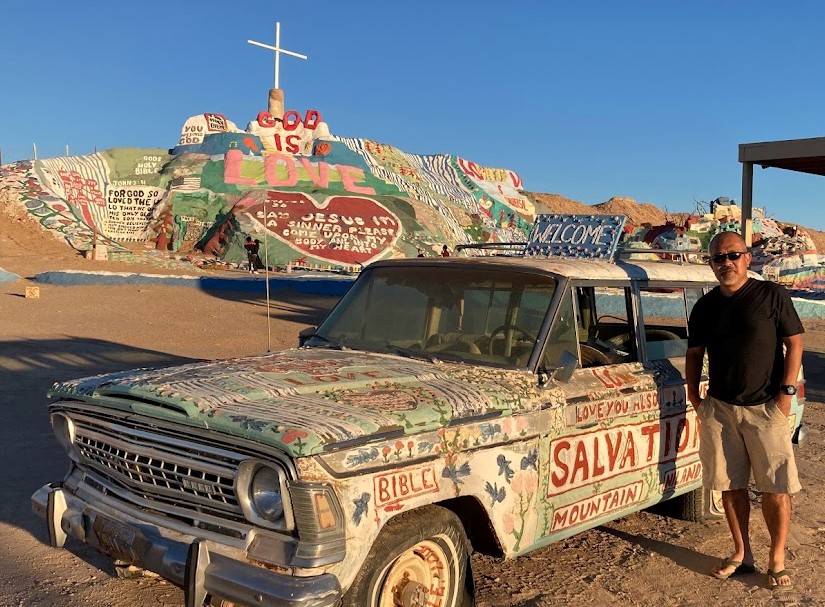
 私達が死ぬ時、誰しもが Fifty / Fifty の確率の前に立たされます。心臓の鼓動がとまった時、「私達は全くの無となるのか」、それとも「神は本当にいるのだ」ということを知るのか、そのどちらか一つを私達は必ず経験します。
もし神がいなければ、塵に帰る物質となった私達に、そのことを悔やむ必要はありません。私達の脳の機能はとまり、魂などはないのですから、後悔する私達はその時、存在していません。しかし、もし神がいて、私達の魂がそこにあるのなら、その時に私達は人生最大の喜びか、もしくは人生最大の後悔に向き合うことになります。その後悔は、自分は見過ごしてはならない最重要なことに目を向けずに生きてきてしまったという悔いであり、取り返しのつかないことです。しかし、その時の喜びは、その神と共に生きてきた喜び、そしてその時から私達のために死んでよみがえられた神の小羊なるイエスと共に永遠に生きる喜びです。
この確率が百万分の一ではなく Fifty / Fifty だということに私の心は震えます。
主にある皆さん、誰もが迎えるその最後の日に決着をつけて、今を、これからの人生を生きていきませんか。まず確かなるゴールの希望を前に置き、今日からそこに向かって私達のために命を捨ててくださったイエス様と歩み始めようではありませんか。
今日の「礼拝映像」「ポッドキャスト」「一日一生」はこちらから。
↓ 今日の「日英礼拝メッセージ原稿」「おもちかえり」はこちらから ↓
見よ、世の罪を取り除く神の小羊!
2024年12月15日
イエス・キリストの言葉と行いに敬意を表す人がこの世界には大勢います。今日の教育、医療、芸術、福祉、法律、経済にイエス・キリストが与えた影響はとてつもなく大きいものです。ヒンズー教徒であったモハメド・ガンジーは、イエス・キリストの山上の教えに大きな影響を受け、それは彼の非暴力の運動につながりました。
キリストの言葉はしばしば、思いがけない所で引用され、その教えと生き方に共感する人達はたくさんいます。今日、人間の歴史において一番、影響を与えた人は誰かと問われれば、イエス・キリストの名前をあげる人が多くいることでしょう。
そのイエス・キリストの誕生を祝う、クリスマスが今年もやってきます。イエス様が誕生した日について、もう少し具体的に言いますとこのようになります。「その日は処女マリアが聖霊によって身ごもり、神の一人子イエスが誕生した日」
そして、年が明け、来年の4月20日、私達はイエス・キリストが復活したことを記念するイースターを迎えます。イエス様が復活したイースターについて、もう少し具体的に言いますとこのようになります。
「神の一人子イエス様が人の罪の身代わりとなり、十字架にかけられ、死んで三日目によみがえった日」
「処女降誕」と「死人の復活」
イエス・キリストの言動に共感し、敬意を表す人達も「処女降誕」と「死からの復活」の話になりますと眉をしかめます。そのお気持ち、十分に理解できます。これらのことは私達の常識では考えられないことなのですから。今日は常識では考えられない、しかし否定できない事実についてお話しします。そのことを通して、私達のイエス・キリストに対する信仰が心に芽生えますようにと心より祈ります。
聖書の中には何度も出てくる言葉があります。その中に「小羊」という言葉があります。今から約4000年前、神はアブラハムという老人を立てて、彼を今日のユダヤ人の父祖とします。創世記22章にはそのアブラハムが自分の息子イサクを連れてモリヤの山に燔祭を捧げにいく場面が記録されています。燔祭には「人間が犯した罪の代償の犠牲」という意味があり、そのために羊の命が捧げられました。
しかしこの時、事前に神様はアブラハムに羊ではなく、彼の子、イサクの命を犠牲として捧げるようにと伝えていました。しかし、当のイサクは父と山に燔祭の犠牲を捧げに行くと聞いていただけで、そのことを知りませんでした。ですからその道中、イサクは犠牲を捧げに行くのに、その犠牲となる動物を父が携えていないのを不思議に思い、父にこう尋ねるのです。
創世記22章7節
「父よ、火とたきぎとはありますが、燔祭の小羊はどこにありますか」
このイサクの問いかけはこう言い代えることができます。「お父さん、私達の犯した罪の代償となる小羊はどこにいるのですか?」このイサクの口から投げかけられた問いかけが、この後の聖書の重大なテーマとなっていきます。
イサクの言葉が発せられてから約500年後、アブラハムの子孫であるイスラエルの民、今日のユダヤ人は400年もの間、エジプトの奴隷となっていました。このことに対して神様はモーセを立て、彼はエジプトの王、パロに度々「自分達をエジプトから解放するように」と直談判したことが出エジプト記に記録されています。
しかし、このことに対してパロの心は頑なで、彼がモーセの要求を拒否する度に神様は厳しい禍をエジプトにもたらしました。パロの心は頑なで、その禍は9つにもなり、最後に10番目の禍がエジプトに降りかかります。その10番目の禍はエジプトにいる全ての初子の命が失われるということでした。その禍が起こるにあたり神様はモーセを通して、奴隷であったイスラエルの民に言われたのです。
出エジプト記12章3節
あなたがたはイスラエルの全会衆に言いなさい、『この月の十日におのおの、その父の家ごとに小羊を取らなければならない。すなわち、一家族に小羊一頭を取らなければならない。
出エジプト記12章6節、7節
6 そしてこの月の十四日まで、これを守って置き、イスラエルの会衆はみな、夕暮にこれをほふり、7 その血を取り、小羊を食する家の入口の二つの柱と、かもいにそれを塗らなければならない。
出エジプト記12章12節、13節
12 その夜わたしはエジプトの国を巡って、エジプトの国におる人と獣との、すべてのういごを打ち、またエジプトのすべての神々に審判を行うであろう。わたしは主である。13 その血はあなたがたのおる家々で、あなたがたのために、しるしとなり、わたしはその血を見て、あなたがたの所を過ぎ越すであろう。わたしがエジプトの国を撃つ時、災が臨んで、あなたがたを滅ぼすことはないであろう。
その時、彼らは小羊をほふり、その血を家の入り口の2つの柱と、鴨居にそれを塗らなければならないと神様は民に言いました。そして、その晩、神様はエジプトの家々の柱と鴨居に子羊の血が塗られていない家の全ての初子を打たれたのです。しかし、その子羊の血が柱と鴨居に塗られた家に住むものは、その血ゆえに死がおよぶことがありませんでした。
この出来事は「過ぎ越し:Passover」と呼ばれ、今もユダヤ人は先祖を救われた神に感謝して、このことを大切な祭りとしています。この過ぎ越しの出来事から約750年後、イザヤという預言者が一つの驚くべき預言をしました。
イザヤ53章7節
「彼はしえたげられ、苦しめられたけれども、口を開かなかった。ほふり場にひかれていく子羊のように、また毛を切る者の前に黙っている羊のように、口を開かなかった」
イザヤは「彼」と記されている人が、屠り場にひかれていく子羊のように、毛を切る者の前に黙っている羊のように、口を開かなかったと預言しています。そして、その「小羊なる彼」についてイザヤはこう続けます。
イザヤ53章8節
彼は暴虐なさばきによって取り去られた。その代の人のうち、だれが思ったであろうか、彼はわが民のとが(罪)のために打たれて、生けるものの地から断たれたのだと。
小羊なる彼は暴虐なさばきにより、この地から取り去られる・・・。なぜ?彼は私達の罪のために打たれて、殺されるとイザヤは預言したのです。
33年前、私はバックパックを背負い、インドのコルカタにいました。そこにはカーリー寺院というヒンズー教徒の寺があります。ある時、私はそのカーリー寺院に集まる人々の異様な熱気に興味ひかれて、その中に入っていきました。
すると、そこには中庭があり、一匹の小羊が縄を首に巻かれていました。その羊を取り囲むように多くの人達が興奮して大きな声でどなりあっています。一人の男が外国人である私を見つけて手招きして、群衆の一番前に呼んでくれました。
これから何が起るのかと考える暇もなく、人々はその小羊の首を横たわっている丸太の上に載せました。そして、屈強な男が斧をその子羊の上に振り下ろしたのです。彼らにとって、その儀式が何を意味したのか、私は今も分かりません。一瞬の出来事でしたが、今でもその時の子羊の姿を忘れることができません。
これから起きることを察知していたのか、体を震わせ、声をあげることなく、口を硬く閉じ、なすがままに丸太に頭を横たえた小羊の姿を。イザヤはそのようにほふられる小羊を「彼」と呼んだのです。このイザヤの預言から750年後の西暦35年頃、バプテスマのヨハネというイエス・キリストと同じ時代に生きた人がある人を指さして、こう言いました。ヨハネ1章29節、
「みよ、世の罪を取り除く神の子羊」。
ヨハネはイザヤと同じように一人の人間を「小羊」と呼びました。しかし、ヨハネはイザヤのように間接的に小羊を彼と呼んだのではなく、「見よ!」とその人を指差して「世の罪を取り除く神の小羊!」と呼んだのです。
そして、そのヨハネが指差した先にはイエス・キリストが立っていたのです。ヨハネは「私達の罪の身代わりとなる小羊はどこにいますか」というイサクの問いに対して、2000年後に、その人を指差し、完璧な言葉をもって答えたのです。
私達は来週、クリスマスを迎えます。皆さん、「小羊」と「クリスマス」に繋がりを見出すことができますか。私達が思い浮かぶのは小羊を養い育てることを生業としていた羊飼いです。そう、羊飼いはクリスマスと切り離すことができません。
その晩、羊飼いはイエス・キリストが誕生したベツレヘムの野原で野宿をしていました。羊飼いに御使いはメシアの誕生を告げました。
ルカ2章10節−11節
10「恐れるな。見よ、すべての民に与えられる大きな喜びを、あなたがたに伝える。11 きょうダビデの町に、あなたがたのために救主がお生れになった。このかたこそ主なるキリストである」。
ベツレヘムとエルサレムは5.5マイルしかありません。当時、エルサレムの神殿では毎週、人の罪の身代わりとして、朝と晩に羊を犠牲として捧げていました。そして、そのエルサレムに犠牲の羊を供給していた場所の一つがベツレヘムだったと言われています。
その羊は傷のない、一歳になる小羊でなければなりませんでした。ベツレヘムの羊飼いは、手塩をかけて育てている小羊を人間の罪の犠牲として神殿に送り続けたのです。
イスラエルの二代目の王、ダビデが自分の部下の妻と姦淫の罪を犯した時、預言者ナタンは臆することなくダビデの罪を指摘するために譬えを語りました。その譬えは一人の男がどんなに愛情を注いで羊を育てているかということでした。
サムエル記下12章1節−3節
1 主はナタンをダビデにつかわされたので、彼はダビデの所にきて言った、「ある町にふたりの人があって、ひとりは富み、ひとりは貧しかった。2 富んでいる人は非常に多くの羊と牛を持っていたが、3 貧しい人は自分が買った一頭の小さい雌の小羊のほかは何も持っていなかった。彼がそれを育てたので、その小羊は彼および彼の子供たちと共に成長し、彼の食物を食べ、彼のわんから飲み、彼のふところで寝て、彼にとっては娘のようであった。
「富んでいる王、ダビデよ、あなたは貧しい部下が自分のように愛していた小羊のような妻を奪ったのだ」とナタンはダビデの罪を指摘したのです。この指摘はダビデが犯した罪がどんなに酷いものなのかということを説明するのに十分な譬えでした。
このナタンの言葉は、かつて自らも羊飼いであったゆえに、小羊への思いを知るダビデの心を突き刺したことでしょう。同時にこの譬えは当時の羊飼い達の羊への愛情をも示していたと思われます。
羊飼いにとって羊は家族のようなもの、ましてや小羊ともなれば、それは我が子のようなもの。ベツレヘムの羊飼いは、何百年もその小羊の成長を見届けることなく、我が子のような小羊の命をイスラエルの神殿に献上していたのです。
御使いはイエス・キリストの誕生を「全ての民に与えられる大きな喜び」と言いました。大切な羊の命を捧げ続けてきた彼らこそ、全ての民の中で一番、最初にこの喜びを知るべき人達だったのです。
主にある皆さん、数えきれないほどの小羊の命をエルサレムの神殿に供給していたベツレヘムでイエス・キリストは神の小羊として生まれたのです。私はこのイラストにいつも心が探られます。
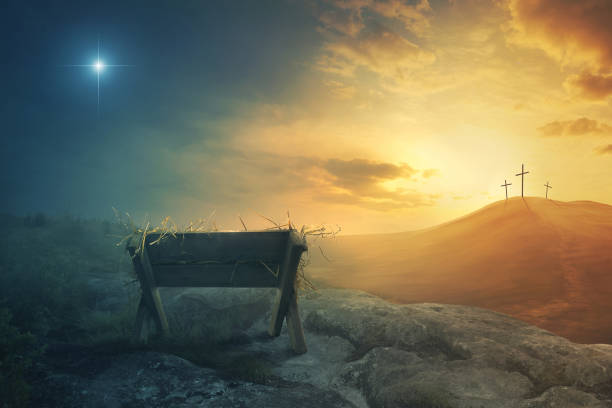
A wooden manger and three wooden crosses
ベツレヘムでイエス様が生まれた時は、イエス様が世の罪を取り除く神の小羊として、十字架に向かって歩み始めた時でもあったのです。
イエス・キリストは私達の罪の身代わりとして、最後の小羊として、ベツレヘムで生まれたのです。イサクの問いかけから、出エジプト、イザヤの預言、イエスの誕生、そしてヨハネの指摘。その期間は2000年です。
言うまでもなくイサクとモーセ、イザヤ、ヨハネに面識はありません。しかし、彼らは皆、小羊について語り、その小羊なるイエス・キリストがベツレヘムで、私達の間に生まれたのです。彼らは打ち合わせることもないのに、皆が小羊を指差し続けたのです。
2000年にもおよぶ、この「小羊」をめぐる一貫した筋書きを描き、実際にそれを実行することは可能でしょうか。私達が受け止めなければならないことは、これらのことは全て、実際に起きた史実だということです。このことについて、私達はどう受け止めることができるのでしょうか。
このことは2000年の間、誰かしらがこれらの一連の出来事を見守り、最終的にイエス・キリストによって、このことが成し遂げられることを計画していたということです。「私たちの罪の身代わりの小羊はどこにいるのか」という、聖書のテーマが創世記で投げかけられ、その問いかけに終止符を打つべく、一貫した意図とそれを実現させる継続的な力をもつ存在が、もしいるのなら、このことは可能です。それは誰なのか。パロか、ネブカデネザルか、カイザルか、アレキサンダーか。
彼らは人であって、神ではありません。我々人間には寿命があるのです。我々の一生は長くて100年。このことは200年前に私は存在していなかったことを意味し、100年後に私は存在しないということを意味します。
しかし、神は200年前におられ、100年後にもおられます。神には始まりも終わりもなく、神は永遠に存在するお方です。このような存在ですから、私達はそのお方を「神」と呼ぶのです。
私は先月、メキシコシティーを訪れました。そこにはメキシコ国立人類史博物館があります。メキシコ全土で発掘されたマヤ、インカ、オルメカ、テオティワカンの膨大な量の遺跡が展示されているアメリカ大陸最大の博物館です。
ここだけはガイドの解説が必要と思い、館内を3時間、案内していただきました。そこでガイドが繰り返し言っていた言葉を忘れることができません。彼女の口から何度も語られた言葉は:
「神」「血」「犠牲」「死後の命」
当時の人々は神々に人間の命を捧げていたというのです。時には傷なき子供の命が捧げられたというのです。実際に生きた人間の心臓を取り出して、その心臓を犠牲として捧げていたという台が博物館には展示されていました。
メキシコシティーはエルサレムから見ると地球の反対側にある街です。今日、お話してきたこととは全く無関係と思われる古代メキシコで、人は自らの罪に負い目を感じ、彼らは動物ではなく、傷なき子供の命を捧げていたのです。
時代と場所は変われども、人間の心に植えつけられている恐れは同じです。なぜなら、人は全て同じ神が造られたからです。昔も今も、いかなる土地に暮らす者も、神について考え、その心にある罪について考えるのです。
今朝、私たちが抱えている問題も突き詰めれば、私たち一人一人の罪の問題に結びつくのです。ですから御使いは言ったのでしょう。「恐れるな。見よ、すべての民に与えられる大きな喜びを、あなたがたに伝える」と。
先月、私達はここで三名の方達の洗礼式をもちました。彼らはこの神の小羊なるイエス・キリストの十字架の血によって救われたのです。2024年の今も神の小羊が十字架で流された血の力は今も失われることなく、私達に臨んでいるのです。この小羊なるお方によって、新しい人生を始める方達が今日も世界中で起こされているのです。
さらに申し上げましょう。小羊の物語はここで終わりません。今日はまず聖書の最初の書、創世記を取り上げました。その聖書はヨハネの黙示録を66番目、最後の書として閉じられます。
私は今日、今から4000年前とか、2000年前に起きた出来事について話してきました。それに対して、ヨハネの黙示録はこれからの私達の未来について起こることが記されている書物です。そのヨハネの黙示録の一番最後の22章、すなわちこのぶ厚い聖書の一番最後のページにはやがて、私たちが憩う天の国についてこうしるされています。
黙示録22章1節―5節
「御使いはまた、水晶のように輝いているいのちの水の川をわたしに見せてくれた。この川は、神と小羊との御座から出て、 都の大通りの中央を流れている。川の両側にはいのちの木があって、十二種の実を結び、その実は毎月みのり、その木の葉は諸国民をいやす。のろわるべきものは、もはや何ひとつない。神と小羊との御座は都の中にあり、その僕たちは彼を礼拝し、 御顔を仰ぎ見るのである。彼らの額には、御名がしるされている。 夜は、もはやない。あかりも太陽の光も、いらない。主なる神が彼らを照し、そして、彼らは世々限りなく支配する。
天の国を流れる川は小羊のみ座から流れ、その小羊を人々は礼拝し、その顔を仰ぎ見ているというのです。説明するまでもなくこの小羊とはイエス・キリストなのです。「燔祭の小羊はどこにいますか」とイサクが投げかけた問い。小羊の血により、イスラエルの初子の命は救われた出エジプト。やがて来られるほふり場に引かれる小羊について預言したイザヤの言葉。「みよ、世の罪を取り除く神の小羊」とイエス様を指さしたヨハネ。そのイエス誕生まで小羊を奉献し続けたベツレヘムの羊飼い達。
その神の小羊、イエス様は私達と共に永久にいてくださるというのです。なぜなら、このキリストは十字架につけられ、死んで葬られ、三日目に甦られたと聖書が告げているからです。
先に私はベツレヘムでイエス様が生まれた時は、イエス様が世の罪を取り除く神の小羊として、ほふられる十字架に向かわれた時でもあったと言いました。
A wooden manger and three wooden crosses
(写真1)同じようにベツレヘムでイエス様が生まれた時は、イエス様が私達と永遠に生きるために、復活される、その空の墓に向かわれた時でもあったのです。
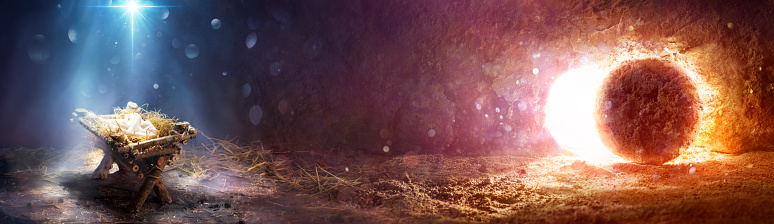
Chronology Of Jesus life – Born To Rise – Manger And Empty Tomb – Salvation Concept – Messiah, Emmanuel
聖書は約束します。私たちは小羊なるイエスと永遠に生きるのだと。主にある皆さん、このキリストの十字架をあおぎ、それを信じ、悔い改めて新しい人生を生きませんか。
私は生理学から「処女降誕」を、法医学から「死人の復活」を皆さんに説明することはできません。これらのことは私の常識の範疇にないことだからです。しかし、いかがでしょうか。これらのことに永遠の計画を手の中に治めている、私達の常識を超える神が関わっていたとしたら・・・。そもそも私達の常識の中に収まる存在を、どうして私達は神と呼ぶことができましょうか。私達の知識や理解の外にいるお方ゆえに、そのお方を私達は神と呼ぶのです。
今日お話しした神の御計画とその支配を知ったイエス・キリストの弟子ペテロは、これらのことをペテロ第一の手紙1章18節から21節において完全に言い尽くしています。
ペテロ第一の手紙1章18節-21節
18 あなたがたのよく知っているとおり、あなたがたが先祖伝来の空疎な生活からあがない出されたのは、銀や金のような朽ちる物によったのではなく、19 きずも、しみもない小羊のようなキリストの尊い血によったのである。20 キリストは、天地が造られる前から、あらかじめ知られていたのであるが、この終りの時に至って、あなたがたのために現れたのである。21 あなたがたは、このキリストによって、彼を死人の中からよみがえらせて、栄光をお与えになった神を信じる者となったのであり、したがって、あなたがたの信仰と望みとは、神にかかっているのである。
私達が死ぬ時、誰しもがFifty / Fiftyの確率の前に立たされます。心臓の鼓動がとまった時、「私達は全くの無となるのか」、それとも「神は本当にいたのだ」ということを知るのか、そのどちらか一つを私達は必ず経験します。
もし神がいなければ、塵に帰る物質となった私達に、そのことを悔やむ必要はありません。私達の脳の機能はとまり、魂などはないのですから、後悔する私達はその時、存在していません。しかし、もし神がいて、私達の魂がそこにあるのなら、その時に私達は人生最大の喜びか、もしくは人生最大の後悔に向き合うことになります。その後悔は、自分は見過ごしてはならない最重要なことに目を向けずに生きてきてしまったという悔いであり、取り返しのつかないことです。
しかし、その時の喜びは、その神と共に生きてきた喜び、そしてその時から私達のために死んでよみがえられた神の小羊なるイエスと共に永遠に生きる喜びです。
この確率が百万分の一ではなく、Fifty / Fiftyだということに私の心は震えます。
主にある皆さん、誰もが迎えるその最後の日に決着をつけて、今を、これからの人生を生きていきませんか。まず確かなるゴールの希望を前に置き、今日からそこに向かって私達のために命を捨ててくださったイエス様と歩み始めようではありませんか。
お祈りしましょう。
Look, the Lamb of God, Who Takes Away the Sin of the World!
Dec 15, 2024
There are many people in this world who show respect for the words and deeds of Jesus Christ. The impact of Jesus Christ on education, medicine, the arts, welfare, law, and economics today is tremendous. Mohandas Gandhi, a Hindu, was greatly influenced by Jesus Christ’s Sermon on the Mount, which led to his Nonviolent Resistance movement.
Christ’s words are often quoted in unexpected places, and there are many people who identify with His teachings and way of life. Today, if one were to ask who is the most influential person in human history, many people would probably name Jesus Christ.
Christmas, the celebration of the birth of Jesus Christ, is coming again this year. To be a little more specific about the day of Jesus’ birth, it goes like this. “On that day, the only begotten Son of God, Jesus, was born of the virgin Mary which she conceived by the Holy Spirit.”
Then, as we bring in the new year, next April 20, we will celebrate Easter, commemorating the resurrection of Jesus Christ. To be a little more specific about Easter, when Jesus was resurrected, it goes like this. “The day Jesus, God’s only begotten Son, took the place of man’s sins, was crucified, and rose from the dead on the third day.”
“Virgin Birth” and “Resurrection of the Dead”.
Even those who agree with and respect the words and deeds of Jesus Christ frown at the mention of the “virgin birth” and “resurrection from the dead”. I fully understand such feelings. These are things that our common sense cannot conceive of. Today I will talk about a fact that common sense cannot conceive of, but cannot deny. Through this, I sincerely pray that our faith in Jesus Christ will grow in our hearts.
There are words that appear many times in the Bible. One of the words is “lamb”.
About 4000 years ago, God raised up an old man named Abraham and made him the father of today’s Jewish people. Genesis 22 records the scene in which Abraham takes his son Isaac to the mountain of Moriah to offer a burnt offering. Burnt offering means “a sacrifice to pay for the sins of a human being,” and for this purpose the life of a sheep was offered.
But at this time, God had told Abraham in advance that he was to offer the life of his son, Isaac, as a sacrifice, not a sheep. However, Isaac, himself, only heard that he and his father were going to the mountain to offer a burnt offering, and he did not know about that. So on the way there, Isaac wonders why his father does not have the sacrificial animal with him when he goes to offer the sacrifice, and he asks his father:
Genesis 22:7
“The fire and wood are here, but where is the lamb for the burnt offering?”
This question of Isaac can be phrased this way. “Father, where is the lamb that will pay for the sins we have committed?” The question posed by Isaac’s mouth would become a significant biblical theme to follow.
About 500 years after Isaac’s words were uttered, the Israelites, descendants of Abraham, today’s Jewish people, had been slaves in Egypt for 400 years. In response to this, God set up Moses, who frequently asked the king of Egypt, Pharaoh, to free them from Egypt, as recorded in the Book of Exodus.
But Pharaoh’s heart was stubborn about this, and every time he refused Moses’ request, God brought severe plagues upon Egypt. Pharaoh’s heart was stubborn, and the plagues added up to nine, with the tenth and final plague falling on Egypt. The tenth of these plagues was the loss of the lives of all the firstborn in Egypt. In the midst of this plague, God said through Moses to the Israelites, who were slaves.
Exodus 12:3
3 Tell the whole community of Israel that on the tenth day of this month each man is to take a lamb for his family, one for each household.
Exodus 12:6, 7
6 Take care of them until the fourteenth day of the month, when all the members of the community of Israel must slaughter them at twilight. 7 Then they are to take some of the blood and put it on the sides and tops of the doorframes of the houses where they eat the lambs.
Exodus 12:12, 13
12 “On that same night I will pass through Egypt and strike down every firstborn of both people and animals, and I will bring judgment on all the gods of Egypt. I am the Lord. 13 The blood will be a sign for you on the houses where you are, and when I see the blood, I will pass over you. No destructive plague will touch you when I strike Egypt.
At that time, God told the people that they must slaughter a lamb, and put its blood on the sides and tops of the doorframes of the house. And that night God struck the firstborn of every house in Egypt that did not have the lamb’s blood on the sides and doorframes of the house. But those who lived in a house with the blood of the lamb on the sides and doorframes did not suffer death because of the blood of the lamb.
This event is called “Passover,” and it is still an important festival for Jews to thank God for the salvation of their ancestors. About 750 years after this Passover, a prophet named Isaiah made a remarkable prophecy.
Isaiah 53:7
He was oppressed and afflicted, yet He did not open His mouth; He was led like a lamb to the slaughter, and as a sheep before its shearers is silent, so He did not open His mouth.
Isaiah prophesied that the one described as “He” would not open His mouth, like a lamb being led to the slaughterhouse, like a sheep that is silent before its shearers. And of “Him, the Lamb,” Isaiah continues.
Isaiah 53:8
By oppression and judgment He was taken away. Yet who of His generation protested? For He was cut off from the land of the living; for the transgression of my people He was punished.
He, the Lamb, will be taken away from the land by oppression and judgment . . . . Why? Isaiah prophesied that He would be punished and killed for our sins.
Thirty-three years ago, I was in Kolkata, India, carrying a backpack. There is a Hindu temple there called the Kali Temple. One day, I was intrigued by the unusual enthusiasm of the people gathered at the Kali temple, and went inside.
Then there was a courtyard, and a lamb with a rope around its neck. Many people surrounded the sheep, excitedly and loudly yelling at each other. One man spotted me, a foreigner, beckoned to me and called me to the front of the crowd.
Without time to wonder what was about to happen, they placed the lamb’s head on a log that was lying there. Then a strong man swung his axe down on that lamb. To this day, I do not know what that ritual means to them. It was a fleeting moment, but I still can’t forget the sight of the lamb at that moment.
The lamb, perhaps sensing what was about to happen, wriggled its body, and without uttering a sound, it laid its head on the log without a fight with its mouth tightly closed. Isaiah called the lamb who would be slaughtered in such a manner, “He”. Around 35 AD, 750 years after Isaiah’s prophecy, John the Baptist, a man who lived at the same time as Jesus Christ, pointed to a certain man and said: John 1:29;
“Look, the Lamb of God, who takes away the sin of the world!”
John, like Isaiah, referred to one person as the “Lamb.” But John did not call the Lamb indirectly, as Isaiah did, “Look,” he pointing to the man, and said, “the Lamb of God, who takes away the sin of the world!”
And at the end of where John pointed his finger, stood Jesus Christ. John provided the perfect response to Isaac’s question, “Where is the lamb that will take the place (pay) for our sins?”, 2000 years later, by pointing to the One who is the Lamb.
We will celebrate Christmas next week.Can you all see the connection between the “Lamb” and “Christmas”? We think of shepherds who made their living feeding and raising lambs. Yes, shepherds cannot be separated from Christmas.
That evening, the shepherds were camping in the fields of Bethlehem, where Jesus Christ was born. To the shepherds the angel announced the birth of the Messiah.
Luke 2:10-11
10 “Do not be afraid. I bring you good news that will cause great joy for all the people. 11 Today in the town of David a Savior has been born to you; he is the Messiah, the Lord.”
Bethlehem and Jerusalem are only 5.5 miles apart. At that time, a sheep was sacrificed in the temple in Jerusalem every week, morning and evening, as a substitute for the sins of men. And it is said that one of the places that supplied Jerusalem with sacrificial lambs was Bethlehem.
The sheep had to be a unblemished, yearling lamb. The shepherds of Bethlehem continued to send their hand-raised lambs to the temple as sacrifices for human sin.
When David, the second king of Israel, committed the sin of adultery with the wife of one of his soldiers, the prophet Nathan was unafraid to speak a parable to point out David’s sin.The parable was about how one man lovingly raises his sheep.
2 Samuel 12:1-3
1 The Lord sent Nathan to David. When he came to him, he said, “There were two men in a certain town, one rich and the other poor. 2 The rich man had a very large number of sheep and cattle, 3 but the poor man had nothing except one little ewe lamb he had bought. He raised it, and it grew up with him and his children. It shared his food, drank from his cup and even slept in his arms. It was like a daughter to him.
Nathan pointed out David’s sin: “O rich king, David, you have taken a wife like a lamb whom your poor solider loved like himself.” This point was a sufficient parable to illustrate how terrible a sin David had committed.
Nathan’s words must have struck a chord with David, who, having once been a shepherd himself, knew how he felt about a lamb. At the same time, the parable seems to have indicated the love shepherds of the time had for their sheep.
To a shepherd, sheep are like family, and moreover, when they are lambs, they are like their own children. The shepherds of Bethlehem, for hundreds of years without seeing the lambs grow to maturity, had been offering the life of a lamb like their own child to the Temple of Israel.
The angel referred to the birth of Jesus Christ as a “great joy for all the people.” They were the first of all the people who should have known this joy, as they had been offering the lives of their precious sheep.
People in the Lord, Jesus Christ was born as the Lamb of God in Bethlehem, where the lives of countless lambs were supplied to the temple in Jerusalem. I always find my heart being probed by this illustration.
A wooden manger and three wooden crosses
When Jesus was born in Bethlehem, it was also when He began to walk toward the cross as the Lamb of God who takes away the sin of the world.
Jesus Christ was born in Bethlehem as the last Lamb to take the place of our sins. From Isaac’s question, the Exodus, Isaiah’s prophecy, the birth of Jesus, and the pointing out by John. Its duration is 2000 years.
Needless to say, Isaac and Moses, Isaiah, and John did not know each other. But they all spoke of a lamb, and that Lamb, Jesus Christ, was born among us in Bethlehem. They didn’t even confer with one another, but they all kept pointing to a lamb.
Is it possible to draw up a coherent plot for this “Lamb” that spans 2000 years and actually follow through on it? What we have to accept is that all these things are historical facts that actually happened. Regarding this matter, what are we to make it?
This means that for 2000 years, someone was watching over these series of events and planning for this to be finally accomplished by Jesus Christ. This is possible if there is a being with the consistent intent and ongoing power to bring an end to the biblical theme posed in Genesis by the question, “Where is the Lamb that will take the place (pay) for our sins?” Who is it? Is it Pharaoh, Nebuchadnezzar, Caesar, or Alexander?
They are men, not God. We humans have a life span. Our lifetime is 100 years at most. This means that 200 years ago I did not exist and 100 years from now I will not exist.
But God was there 200 years ago and will be there 100 years from now. God has no beginning and no end; He is the One who exists forever. Because He is such a being, we call Him “God”.
I visited Mexico City last month. There is the Mexican National Museum of Human History there. It is the largest museum in the Americas, displaying a vast amount of Mayan, Inca, Olmec, and Teotihuacan relics excavated throughout Mexico.
I thought this was a place where I needed a guide’s explanation, so I asked to be shown around the museum for three hours. I will never forget what our guide repeatedly said there. The words that were spoken repeatedly from her mouth were:
“God” “Blood” “Sacrifice” “Life after death”
It is said that people at that time offered human lives to the gods. It is said that sometimes the lives of unblemished children were sacrificed. The museum exhibited a table on which a live human heart was actually removed and offered as a sacrifice.
Mexico City is a city on the other side of the globe from Jerusalem. In ancient Mexico, which seems completely unrelated to what we have been talking about today, people felt so guilty for their sins that they offered the life of not animals, but unblemished children.
Times and places change, but the fears implanted in the human heart are the same. This is because all people are created by the same God. In the past and in the present, anyone living in any land thinks about God and about the sin in their heart.
The problems we have this morning, when you get down to it, are also tied to the problem of sin in each of us. Thus the angel must have said, “Do not be afraid. I bring you good news that will cause great joy for all the people.”
Last month we had three baptisms here. They were saved by the blood of the Lamb of God, Jesus Christ, shed on the cross. The power of the blood shed on the cross by the Lamb of God is not lost today, and is still with us. Through this Lamb, people are being raised up all over the world today to begin a new life.
Let me further state. The story of the Lamb does not end here. Today we began with the first book of the Bible, Genesis. That Bible closes with Revelation as its 66th and final book.
I have been talking today about events that happened 4000 or 2000 years ago. In contrast, Revelation is a book that describes what will happen to us in the future. The last chapter of the book of Revelation, chapter 22, or the last page of this thick Bible, describes the Kingdom of Heaven in which we will eventually rest.
Revelation 22:1-5
Then the angel showed me the river of the water of life, as clear as crystal, flowing from the throne of God and of the Lamb 2 down the middle of the great street of the city. On each side of the river stood the tree of life, bearing twelve crops of fruit, yielding its fruit every month. And the leaves of the tree are for the healing of the nations. 3 No longer will there be any curse. The throne of God and of the Lamb will be in the city, and his servants will serve him. 4 They will see his face, and his name will be on their foreheads. 5 There will be no more night. They will not need the light of a lamp or the light of the sun, for the Lord God will give them light. And they will reign for ever and ever.
The river that flows through the kingdom of heaven flows from the Lamb’s throne, and the people worship the Lamb and look up to His face. There is no need for explanation, this Lamb is Jesus Christ.
The question posed by Isaac was, “Where is the lamb for the burnt offering?” The blood of the lamb saved the life of Israel’s firstborn in Exodus. The words of Isaiah prophesying about the lamb that will eventually be led to the slaughter. John pointed to Jesus, saying, “Look, the Lamb of God, who takes away the sin of the world!” The shepherds of Bethlehem who continued to consecrate lambs until the birth of that Jesus.
That Lamb of God, Jesus, will be with us forever. This is because the Bible tells us that this Christ was crucified, died, was buried, and rose again on the third day.
Earlier I said that when Jesus was born in Bethlehem, it was also the time when He was heading toward the cross to be slaughtered as the Lamb of God who takes away the sin of the world.
Chronology Of Jesus life – Born To Rise – Manger And Empty Tomb – Salvation Concept – Messiah, Emmanuel
In the same way, when Jesus was born in Bethlehem, it was also the time when He was heading toward that empty tomb where He would be resurrected to live with us forever.
The Bible promises. We will live forever with Jesus, the Lamb.People in the Lord, why don’t you look up to the cross of Christ, believe in it, and repent and live a new life?
I cannot explain to you the “virgin birth” from physiology or the “resurrection of the dead” from forensic science. These are things that are out of my realm of common sense. But what do you think? What if a God beyond our common sense was involved in these things, who has the eternal plan in His hands . . . How can we call God an entity that fits within our common sense in the first place? We call Him God because He is outside our knowledge and understanding.
Peter, a disciple of Jesus Christ who knew the plan of God and His reign, which I spoke of today, said the following things fully in 1 Peter 1:18-21.
1 Peter 1:18-21
18 For you know that it was not with perishable things such as silver or gold that you were redeemed from the empty way of life handed down to you from your ancestors, 19 but with the precious blood of Christ, a lamb without blemish or defect. 20 He was chosen before the creation of the world, but was revealed in these last times for your sake. 21 Through him you believe in God, who raised him from the dead and glorified him, and so your faith and hope are in God.
When we die, we all stand with Fifty / Fifty odds before us. When the heart stops beating, we will surely experience one of two things: either “we will be nothing at all,” or we will know that “God really existed”.
If there is no God, we who have become matter returning to dust have no need to repent for it. Our brain stops functioning and there is no soul, so we, who regret, do not exist at that time. However, if God exists, and our souls are there, then we face either the greatest joy of our lives or the greatest regret of our lives. That regret is the regret that one has lived their life without paying attention to the most important things that they should not have overlooked and that they cannot take back.
However, the joy of that time is the joy of having lived with that God, and the joy of from that time on living forever with Jesus, the Lamb of God, who died for us and rose again. My heart shudders that these odds are Fifty / Fifty, not one in a million.
People in the Lord, why don’t we settle that last day that we all face, and live our lives now and in the future? Let us first set before us the hope of a sure goal, and let us begin today to walk toward it with Jesus who laid down his life for us.
Let us pray.
本日のおもちかえり
2024年12月15日
1)イエス・キリストの言葉と行いに敬意を表す人がこの世界には大勢いますが、「処女降誕」と「死人の復活」に関しては眉をひそめます。なぜですか?
2)紀元前2000年頃、燔祭を捧げにいったアブラハムにたずねたイサクの問いかけ(創世記22章7節)は、この後、聖書の中でどんな意味をもつようになりますか。
3)紀元前1500年頃に起きた出来事について、出エジプト記12章、3節、6節、7節、12節、13節を読みましょう。ここで小羊はどんな役目を担っていますか。
4)紀元前750年頃、イザヤという預言者が驚くべき預言をしました。イザヤ53章7節、8節を読みましょう。ここに記されている「彼」からあなたが思い浮かべる人は誰ですか。「彼」は何に向き合っていますか。
5)西暦35年頃、バプテスマのヨハネは「みよ、世の罪を取り除く神の子羊」とイエス・キリストを指さしました。この言葉はイエス様に対して何を意味していますか。
6)当時、ベツレヘムの羊はどのようなことに用いられていましたか。その事とイエス様がベツレヘムで誕生したことにはどんな関係がありますか。
7)ヨハネの黙示録22章1節―5節を読みましょう。ここに記されている「小羊」は誰を指していますか。ここに記されていることは「いつ」のことですか。
聖書は4000年前から一貫して「小羊」について触れ、それは未来にまでおよんでいます。このような筋書きを人間が考えることはできません。この背後におられるお方は私達の常識、知識、経験を超えたお方です。このように超越しているお方だけが「神」と呼ぶにふさわしいお方なのです。
