
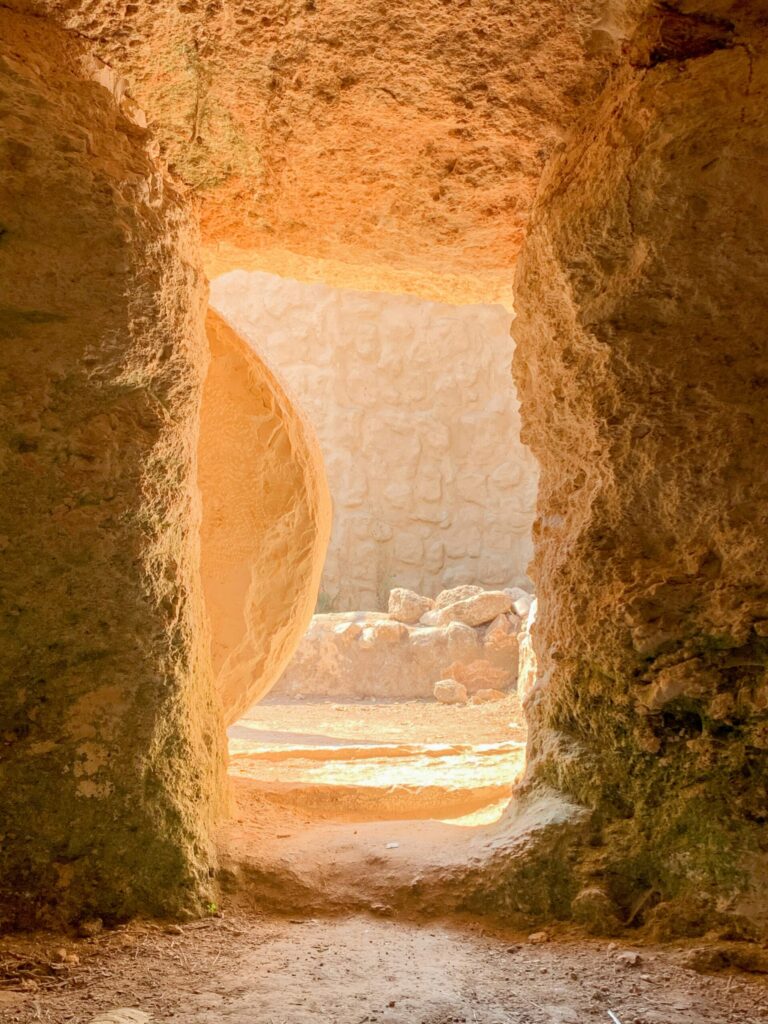
 マリヤはイエス様の墓の前で泣いていました。その時です、イエス様がマリアに姿を現し、彼女に言ったのです、
「女よ、なぜ泣いているのか」(ヨハネ20章15節)。
普通、私たちは愛する人を亡くして泣いている人に、この言葉をかけることはありません。仮にこの言葉をその人に投げかけるのなら、私たちはとんでもなく不謹慎な人間と呼ばれます。悲しんでいる者に向けられる言葉として、この言葉は明らかに相応しくない言葉なのです。
しかし、この言葉を言うことができる状況が一つだけあります。それはその人が泣いている、その理由と原因が存在しない時です。その時、マリヤは悲しむ理由を失ったのです。泣き続ける理由がなくなったのです(大倉)。
「礼拝映像」「ポッドキャスト」「一日一生」はこちらから。
↓ 今日の「日英礼拝メッセージ原稿」「おもちかえり」はこちらから ↓
マグダラのマリア:涙を流す理由がなくなる時
2026年2月1日
聖書はイエス様の宣教のはたらきに同行していた女性たちについて、こう記録しています(ルカ8章2節)。
ルカ8章2節 (Luke 8:2)
「また悪霊を追い出され病気をいやされた数名の婦人たち、すなわち、七つの悪霊を追い出してもらったマグダラと呼ばれるマリヤ」
ここに記されているマリヤは私たちに強い関心をもたらします。なぜなら彼女は「七つの悪霊を追い出してもらった女」だからです。いったいこの女性はどんな人だったのだろうかと私たちは思います。今日、私たちはこの彼女を「マグダラのマリヤ」と呼びます。
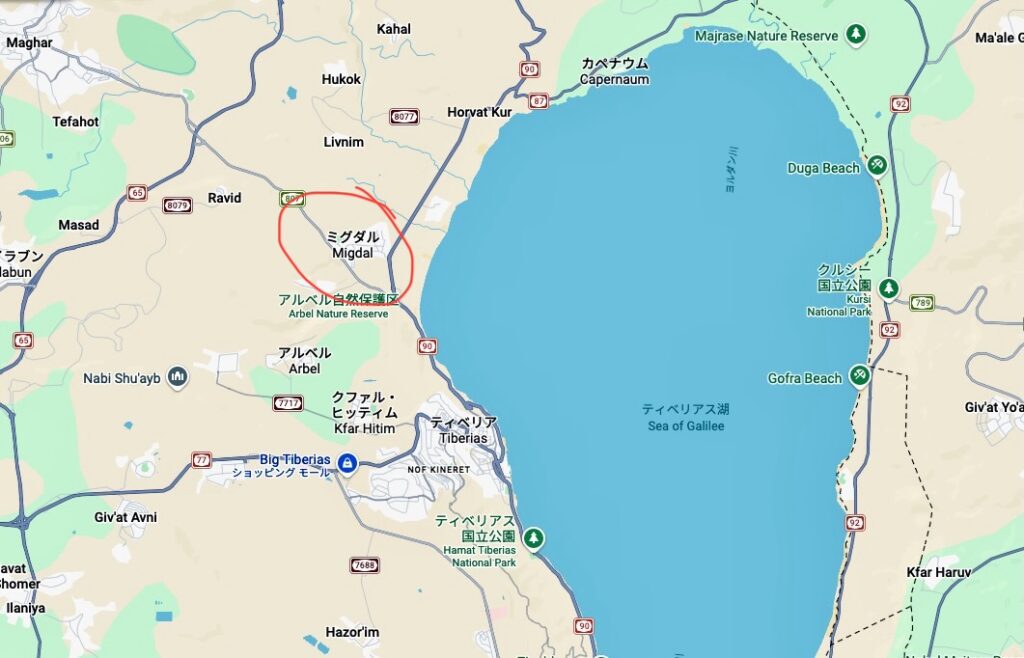 イスラエル、ガリラヤ湖畔にありますティベリアとカペナウムの間に素通りしてしまうようなミグダルという小さな村落があります。このミグダル(マグダラ)は、このマリヤの出身地です。
私は今から15年前、2011年の2月、このミグダルの町から車で二分ほどの所にあるガリラヤ湖畔のユースホステルに、滞在していました。2月でありながらも、夜になるとガリラヤ湖からの気持ちのいいそよ風を感じ、蛙の鳴き声が聞こえるのどかな場所でした。このミグダルは今も小さな村落です。何もない場所ですので、夜になるとその辺りは闇に包まれます。
そんな中、私はこのミグダルにあるガソリンスタンドに夕飯のサンドイッチを買いに何度か行きました。小さな村落、遊びに行くところもない、幼い時からの地元の友人なのでしょう、夜な夜なガソリンスタンドの外灯の下、若者たちがたむろしていました。そのうちに彼らと顔見知りとなり、アジア人の私を珍しく思ったのでしょう。
片言の英語で彼らと話をし、彼らは色々なことを私に尋ねてきました。「なぜ、ここにいるのか。アメリカでは今、何が流行っているのか。」そんな彼らの言葉で忘れられない言葉があります。「ここにいても楽しいことなんて、何もないんだ」。
想像しますに、この町に住む若者は2000年前も、同じことを言っていたのかもしれません。マグダラのマリアはそんな町で生まれ育ち、七つの悪霊に憑かれた女と呼ばれるようになったのです。七とは聖書で完全数です。彼女がどんな女性であったのか、私たちの想像はふくらみます。小さな村ですから、当時、彼女が七つの悪霊につかれていたということを知らない人は誰もいなかったでしょう。「今日、港付近でマリヤが大声で叫びながら、歩いていたよ」なんていう言葉が人々の間で行き交っていたかもしれません。
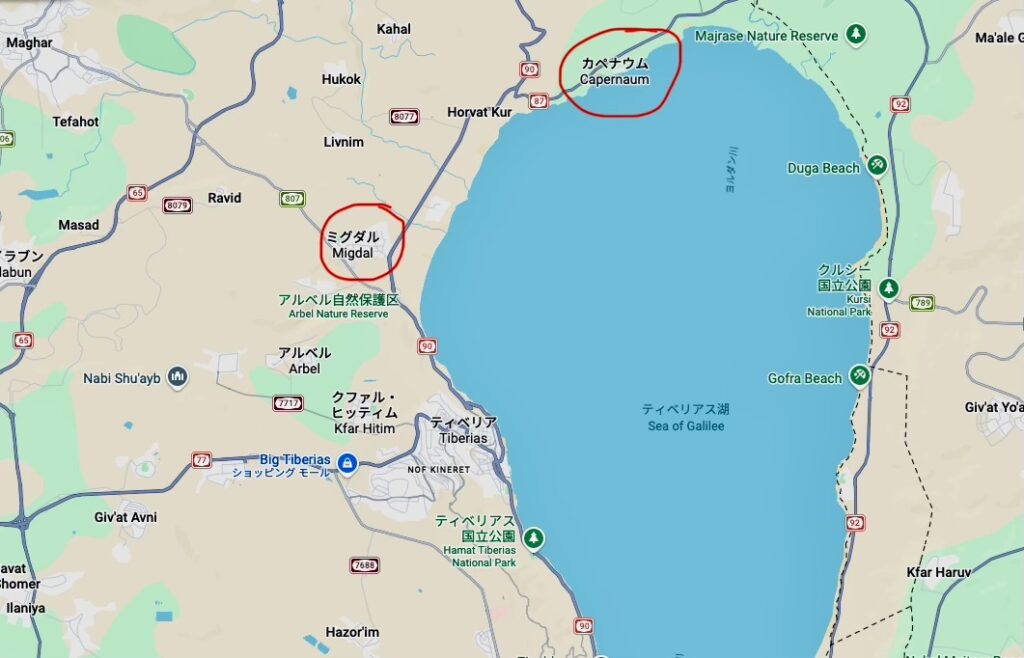 実際にミグダルに行って分かったのですが、このミグダルから五マイルほど北に行きますと、そこにはカペナウムがあります。そこはイエス様がガリラヤ伝道の拠点とした場所であり、ペテロの姑の家という遺跡が今日も残っています。すなわちカペナウムはミグダルの隣の村で、この二つの村をつなぐのはガリラヤ沿岸を通る一本の田舎道しかありません。イエス様がこのカペナウムからエルサレムに向かうのなら、その度にミグダルを通過したことでしょう。
マリヤはある時、このイエス様と出会い、イエス様によって七つの悪霊を追い出してもらったのでしょう。悪霊を追い出していただき、正気にもどった彼女はガリラヤの片田舎を離れ、エルサレムにまで出て行き、イエスのはたらきを助けたのです。エルサレムでは目立ってしまうようなガリラヤ訛りの言葉を使いながら、それでも嬉々としてイエス様に従っていった彼女の姿が目に浮かびます。と、ここまでならマリヤのことはこれ以上、深く私達の印象には残りません。
しかし、彼女のことを人類がさらに心に刻まなければならない出来事が起こりました。マリアが慕っていた命の恩人、イエス様が十字架にかけられて殺されてしまったのです。ヨハネはその時のことについて、このような記録を残しています。
ヨハネ19章25節
さて、イエスの十字架のそばには、イエスの母と、母の姉妹と、クロパの妻マリヤと、マグダラのマリヤとが、たたずんでいた。
ヨハネを除く12弟子は皆、イエスを置いて、逃げてしまいました。しかし、数人の女性達はイエス様の十字架の側におり、マグダラのマリヤもそこにいたのです。彼女はイエス様の最後の姿を心に焼きつけたのです。
その後、イエス様の体は十字架からとり下ろされ、アリマタヤのヨセフによって墓に収められました(マタイ27章59節−60節)。マリヤはイエスの体が収められる墓までついて行き、その墓の前に座っていたとマタイは記しています(マタイ27章61節)。そしてイエス様が墓に納められてから三日目の朝、マリヤは夜の明けるのを待ちかねて、再びこの墓に向かいます。行ってみるとその墓は空になっています。
驚いた彼女は走ってペテロとヨハネにそれを告げにいきます。二人は急いで墓にやってきてその有様を見、その後、自分の家に帰っていきました。しかし、マリヤはそこを離れず、墓の前で泣いていました。その時です、イエス様がマリアに姿を現し、彼女に言ったのです、ヨハネ20章15節、
「女よ、なぜ泣いているのか」。
普通、私たちは愛する人を亡くして泣いている人に、この言葉をかけることはありません。仮にこの言葉をその人に投げかけるのなら、私たちはとんでもなく不謹慎な人間と呼ばれます。悲しんでいる者に向けられる言葉として、この言葉は明らかに相応しくない言葉なのです。しかし、この言葉を言うことができる状況が一つだけあります。それはその人が泣いている、その理由と原因が存在しない時です。
マリヤはイエス様の体が失われていることを悲しみ、泣きました。そして言うまでもなく、彼女の涙の理由はイエス様の体がなくなってしまったということだけではありません。彼女はイエス様の死を悲しみ、泣いていたのです。もう会うことができないイエス様のことを思い、泣いていたのです。
しかし、そのマリアの悲しみの理由となっているイエス様が彼女に現れたのです。死んで墓に葬られたイエス様ご自身が今、彼女の前にいるのですから、彼女は泣く必要がないのです。その時、彼女は悲しむ理由を失ったのです。泣き続ける理由がなくなったのです。
皆さん、私たちは今も泣きます。イエス・キリストを知っていても、私たちの頬に涙が流れることがあります。信仰をもっていても私たちは泣きます。私たちは泣いていいのです。イエス様も友人ラザロが死んだことに対して涙を流されたのです。悲しいことがある時、私たちの肉体がその感情に反応し、目から涙が流れるような肉体を創造したのは神様なのです。
6年前の夜、私は静まり返った病院の一室で息をひきとった母を前に泣きました。ひとしきり大声を出して泣きました。話には聞いていましたが、そのような時には本当に母と過ごした日々が走馬灯のように心を駆け抜けていきました。
その私に向かって「なぜ、泣いているのか」なんてことを聞く人はいません。そんなことを言える人はこの地球上にはいないのです。しかし、私たちはこのことを思い起こしましょう。それを言えるお方が一人だけいる。それはイエス・キリストだ。
思いきり泣いたらいい。でもその涙が乾く時、私たちの心のどこかにこのイエス様の言葉を心に刻むのです。「なぜ泣いているのか」この言葉を抱え、この言葉の本当の意味が分かる日を待ち望みつつ、私たちは生きていくのです。パウロはこのことをこのように説明しました。
コリント第一の手紙13章12節
わたしたちは、今は、鏡に映して見るようにおぼろげに見ている。しかしその時には、顔と顔とを合わせて、見るであろう。わたしの知るところは、今は一部分にすぎない。しかしその時には、わたしが完全に知られているように、完全に知るであろう。
やがていつの日か、私たちがこの地上の諸々のしがらみから解き放たれた時、私たちはこのイエス様の言葉の意味を完全に知るようになるのです。そして、この言葉の次にパウロはあの有名な言葉を書き加えたのです。
コリント第一の手紙13章13節
このように、いつまでも存続するものは、信仰と希望と愛と、この三つである。このうちで最も大いなるものは、愛である。
我々人間にとって最も恐ろしいことは得体の知れない死であり、最も悲しいことも死によって愛する者と別れることです。「神は愛なり」と聖書は言います。神が私たちを本当に愛しているのなら、私たちが最も恐れ、悲しむ死を放置しておくことはありえません。
神は愛なり、だから、イエス・キリストは私たちのために死んでよみがえったのです。そして、そのことゆえに私たちも神から永遠の命をいただくことができるのです。それが私たちに与えられている変わることのない神の約束であり、希望なのです。そこには私たちに対する神の愛があるのです。
このイエス・キリストの復活についてマルコはそのことを記録に残しました。きっと彼はこの驚くべき出来事を何度も思い巡らし、何を後世に書き残そうかと考えたと思います。その中で彼はこんな一文を残したのです。
マルコ16章9節
「イエスはよみがえって、まずマグダラのマリアにご自身をあらわされた。イエスは以前に、この女から七つの悪霊を追い出されたことがある」
マルコはイエスがよみがえって、一番、最初にその姿を表したのはマグダラのマリアだったという証言をあえて私たちに残したのです。このことがいかにとんでもないことだということを皆さんは知っていますか。イエス・キリストの復活は人類にとってどんな意味を持っているのでしょうか。今も昔も人間は生と死の間を生きています。
エジプトにいくとピラミッドがあります。あれは王家の墓だと言われています。エジプトの王たちはどんなに大きな権力を持っていても、私たちと同じように死ぬことから免れませんでした。彼らができたことは、死んだ人の魂を慰め、彼らが死後の世界に旅立つことを願い、その体をミイラにして安置する場所を作ることだけだったのです。そして、今も基本的にわたしたちが死に対してできることは、せめて心をこめてその体を、灰を墓に収めることだけなのです。
私たちの関心は常に健康に関することです。なぜ、私たちは健やかでいたいのですか?極論を言えば、一日でも長く死と向きあうことがないようにと願うからではないですか。イエス・キリストの復活はこれらの私たちの恐れと苦悩を全てひっくり返し、希望に変えたのです。そのことにおいて、このイエス様の復活以上に人間にとって大切な出来事は人の歴史にはないのです。
神の子キリストが死を打ち破り、空間を超越したお方として復活なさるのなら、イエス様は世界のどこにも姿をあらわすことができました。もし天に広報担当なる御使いがいるのならイエス・キリストの復活をどのように世の中に伝えるか戦略を練ったことでしょう。彼らは考えたに違いありません。神の御子の復活の第一報は誰に託したらいいだろうか。
その候補者を選ぶ時の選考の基準はきっとこうなることでしょう。このニュースが全世界に確実に伝わるという目標を達成するために、大きな影響力を持っている人物を選ばなければならないと。その基準で考えますのなら、当時、おそらくイスラエルの周辺世界で一番、権力をもっていた人間として筆頭にくるのはローマの皇帝カエザルとなることでしょう。復活されたイエス様がカエザルの宮殿の食卓にあらわれたら、どうでしょう。ローマ帝国はそれから400年を待たずしてキリスト教をすぐに国教としていたことでしょう(キリスト教は紀元392年にローマの国教となりました)。なんと効果的で確実な戦略でしょうか!
あるいは参拝者が多い時間を見計らってエルサレムの神殿に復活したイエス様が姿をあらわすというのはどうでしょうか。つい数日前に十字架につけられ、多くの者達がその死を見届けたお方がよみがえって、彼らの前に姿をあらわせば、そのインパクトたるやものすごいものがあるでしょう。そして、その後、町の有力者を集めて晩餐会を開けば、あとは言うまでもありません、その日からイスラエルはイエス・キリストの前にひざまづくでしょう。
しかし、私達が思い浮かべるような神の宣教戦略は聖書のどこにも書かれていません。ただ書かれていることは「イエスはよみがえって、まずマグダラのマリアにご自身をあらわされた」ということだけなのです。当時、女性の証言は裁判で有効とはなりませんでした。ましてやマリヤは七つの悪霊につかれていた女なのですから、誰がその証言に耳を傾けるでしょうか。「イエスがよみがえった」などと言えば、「また悪霊に憑かれているのか!」と追いかえされてもおかしくなかったことでしょう。
先の宣教戦略に照らし合わせればこのような女にイエス様の復活が一番先に伝えられたということにメリットはなく、ただリスクが伴うことなのです。しかし、イエス様はあえて、意図的にこのマグダラのマリヤに復活のご自身を一番、最初に現したのです。なぜなら、ここに私たちが信じている神がどんなお方であるかというメッセージが込められているからです。そして、それは全く私たちの意表のつくことなのです。
この七つの悪霊にとりつかれていたマリヤを思う時に、この女性がどんな人であったのか、私達は容易に想像できます。すなわち、マグダラのマリヤとは:
人に恐怖を与えていた人。
自らの言動を制することができなかった人。
友人をもつことができなかった人。
家族との関係が完全に壊れていた人。
怒りを心の中にもっていた人。
誰も信じることができなかった人。
自分を尊いとなんて考えることもなかった人
明日に希望など絶対に持てなかった人。
そして、愛されるということを知ることがなかった人。
それがこのマグダラのマリアでした。しかし、このような人には一つの傾向があります。それはこのような人達は誰から指摘されなくても自分にはどうしようもできない問題があるということが分かっているということです。すなわち、そのような意味において彼女の心はいつも主イエスに開かれていました。彼女の心は神の前に備えられていたのです。人の目には絶望に見えることが、神様の前には大きな可能性となったのです。
イエス様はそのはたらきを始めた初期、有名な山上の教えを話されましたが、その時に彼女のような人を「心の貧しい人」と呼びました。
マタイ5章3節
『心の貧しい人達は幸いである。天国は彼らのものである』
日本のいわゆる識者と呼ばれている人が、このイエス様の言葉を「人間は貧困の中に生きた方がいいのだ」と解釈しているのを読んで、驚いたことがあります。イエス様はそのようなことを言われたのではなく、自らの心の惨めさ、自ら救いようのない自分の心の実態を嘆く人に向けて、イエス様は天国というものはそんなあなたたちのものなのだと言われたのです。そして、この言葉の通り、死んで甦ったキリストは、マリヤに地上におりながらも、天国で生きることの希望と喜びを明らかにしたのです。
ですから、もし、私たちが自分の心の貧しさを知っているなら、その心をどうしたらいいのかと嘆き悲しんでいるのなら、イエス・キリストは誰よりも、そんな私たちにお会いしたいと願っているのだということを今日、皆さんに知っていただきたいのです。
「七つの悪霊に取り憑かれていた女」人々は彼女をそのように呼びました。しかし、イエス・キリストとの出会いが彼女を変えました。あなたもこのイエス・キリストに出会いませんか。イエス・キリストは言いました。
「神の国は、実にあなたがたのただ中にあるのだ」(ルカ17章21節)。
心の貧しいマリヤは天国を確約され、この地上にありながら、その神の国に生きたのです。混沌とした世界に私たちは今、生きています。七つの悪霊とまで言わずとも、私たちのすぐ側には邪悪な罠がいくつも仕掛けられています。
聖書が指摘するように私たちの心の中にも罪なるものがあり、これがいつ私たちを窮地に追い込んでしまうのか分かりません。しかし、心の貧しいものはさいわいです。私たちは謙遜に神様に近づきましょう。イエス・キリストは私たちの罪に対しては完全な解決の道を用意してくださいました。私たちの側でできることは「謙遜になること」なのです。それは誰彼ではない、私たちが自分で選び取ることなのです。聖書は数千年来、イスラエルの失敗の原因について私たちに語りかけているのです。
ホセア4章16節
イスラエルは強情な雌牛のように強情である。今、主は小羊を広い野に放つようにして、彼らを養うことができようか。
このことは私たちにとっても何よりも難しいのです。しかし、このハードルを乗り越えて、私たちが神様に近づく時に全てが始まるのです。ダビデは詩篇51篇にこう書き残しました。
詩篇51篇16節、17節
16 あなたはいけにえを好まれません。たといわたしが燔祭をささげてもあなたは喜ばれないでしょう。17 神の受けられるいけにえは砕けた魂です。神よ、あなたは砕けた悔いた心をかろしめられません。
この御言葉が言っている通り、へりくだり、自らのいたらなさを認め、神に近づく者を神様が軽んじることはありません。そして、そんな私たちに主イエスは天国を確約してくださるのです。そう、この世界の只中で、私たちは御国を垣間見させていただくことすらできるのです。このタフな時代の只中にあって、それこそが私たちが生きていくために、本当に必要なものではないでしょうか。
「なぜ、泣いているのか。あなたは泣く必要はないのだ」この言葉の意味が私たちの魂に完全に収まる、その日まで、主イエス・キリストと共にこの人生の旅路を歩んでいこうではありませんか。それは私たちが暗黒に向かう旅路ではなく、決して失われない希望に向かう旅路なのです。この人生の旅路の最後に残されていることは希望以外にない。そんな人生をあなたの人生を共に歩んでいきませんか。
お祈りしましょう。
Mary Magdalene: When There is No Reason to Shed Tears
Feb 1 2026
The Bible records the following about the women who accompanied Jesus in His ministry:
Luke 8:2
and also some women who had been cured of evil spirits and diseases: Mary (called Magdalene) from whom seven demons had come out;
The Mary recorded here evokes a strong sense of interest within us. Because she is a “woman from whom seven demons had come out.” We wonder what kind of person this woman really was. Today, we call this woman “Mary Magdalene.”
Between Tiberias and Capernaum on the shores of the Sea of Galilee in Israel lies a small village called Migdal that one might easily pass by without noticing. This Migdal (Magdala) is the hometown of this Mary.
Fifteen years ago, in February 2011, I was staying at a youth hostel on the shores of the Sea of Galilee, about a two-minute drive from this town of Migdal. Even though it was February, at night you could feel the pleasant breeze from the Sea of Galilee and hear the croaking of frogs—it was a peaceful place. Migdal is still a small village today. Since it’s a place with nothing around, the area is enveloped in darkness at night.
Amidst all this, I went to the gas station in Migdal several times to buy sandwiches for dinner. In the small village, with nowhere to go for fun, they must have been childhood friends from the neighborhood, for night after night, young people would gather under the gas station’s streetlight.
Before long, I became acquainted with them, and they probably found me, an Asian person, rather unusual. I spoke to them in broken English, and they asked me all sorts of questions. “Why are you here? What’s trending in America right now?” Among the things they said, there is one thing I will never forget. “There is nothing fun about staying here.”
I imagine that young people living in this town might have said the same thing 2,000 years ago. Mary Magdalene was born and raised in such a town, and came to be known as the woman possessed by seven demons. Seven is a number of perfection in the Bible. Our imagination runs wild about what kind of woman she was. It was a small village, so back then, there was probably no one who did not know she was possessed by seven demons. People might have been saying things like, “Today, Mary was walking near the harbor, shouting loudly.”
When I actually went to Migdal, I discovered that about five miles north of Migdal lies Capernaum. That place served as the base for Jesus’ ministry in Galilee, and the ruins of Peter’s mother-in-law’s house remain there to this day.。That is, Capernaum was the village next to Migdal, and the only thing connecting these two villages was a single country road running along the shore of Galilee. If Jesus was traveling from Capernaum to Jerusalem, He would have passed through Migdal each time.
Mary must have encountered this Jesus at some point and had seven demons cast out by Him. After the demons were cast out and she regained her sanity, she left the remote countryside of Galilee and went all the way to Jerusalem to assist Jesus in His work. I can picture her, speaking with that Galilean accent that would have stood out in Jerusalem, yet following Jesus joyfully nonetheless. And if it had ended here, Mary would not have left a deeper impression on us.
However, an event occurred that humanity must engrave even more deeply in its heart. The one whose life Mary cherished, Jesus, was crucified and killed. John recorded the following account of that time.
John 19:25
Near the cross of Jesus stood His mother, His mother’s sister, Mary the wife of Clopas, and Mary Magdalene.
All twelve of the disciples except John fled, leaving Jesus behind. But some women were there at the cross of Jesus, and Mary Magdalene was among them. She burned the image of Jesus’ final appearance into her heart.
After that, Jesus’ body was taken down from the cross and laid in a tomb by Joseph of Arimathea (Matthew 27:59-60). Matthew records that Mary followed him to the tomb where Jesus’ body was laid, and she sat down in front of it (Matthew 27:61). Then, on the morning of the third day after Jesus was laid in the tomb, Mary could hardly wait for dawn and went to the tomb again. When she went to see it, the tomb was empty.
Startled, she ran to tell Peter and John. The two hurried to the tomb, saw what had happened, and then went back to their own home. But Mary did not leave that place; she remained at the tomb, weeping. At that moment, Jesus appeared to Mary and said to her, John 20:15,
“Woman, why are you crying?”
We don’t usually say this to someone who is crying over the loss of a loved one. If we were to say this to that person, we would be called an utterly careless person. As words directed toward those who are grieving, these words are clearly inappropriate. However, there is one situation where you can say this. It is when that person is crying, yet there is no reason or cause for it.
Mary was sad and wept because Jesus’ body was missing. And needless to say, the reason for her tears was not only that Jesus’ body was gone. She was grieving and weeping over the death of Jesus.。She was weeping because she was thinking of Jesus, whom she could no longer see.
But Jesus, the very reason for Mary’s sorrow, appeared to her. Since Jesus Himself, who died and was buried in the tomb, was now standing before her, she had no reason to weep. At that moment, she lost her reason to grieve. She no longer had a reason to keep crying.
Dear people, we still cry. Even though we know Jesus Christ, tears may flow down our cheeks. Even with faith, we weep. It is okay for us to cry. Jesus wept over the death of His friend Lazarus. When we experience sadness, it is God who created our physical bodies to respond to that emotion, causing tears to flow from our eyes.
On a night six years ago, I wept before my mother as she drew her last breath in a silent hospital room. I cried loudly for a while. I had heard about it before, but in such moments, the days I spent with my mother truly flashed through my mind like a kaleidoscope.
No one asked me, “Why are you crying?” No one on this earth can say such a thing. But let us remember this. There is only one who can say that. It is Jesus Christ.
Go ahead and cry your heart out. But when those tears dry, somewhere deep within our hearts, we engrave these words of Jesus. “Why are you crying?” Holding onto these words, we live our lives, longing for the day when we will understand their true meaning. Paul explained it this way.
1 Corinthians 13:12
For now we see only a reflection as in a mirror; then we shall see face to face. Now I know in part; then I shall know fully, even as I am fully known.
One day, when we are finally freed from all the earthly bonds that bind us, we will fully understand the meaning of these words spoken by Jesus. And then, following these words, Paul added those famous words.
1 Corinthians 13:13
And now these three remain: faith, hope and love. But the greatest of these is love.
The most terrifying thing for us humans is death, whose nature we cannot fathom; and the saddest thing is parting from our loved ones through death. If God truly loves us, He would never leave us to face death, which we fear and grieve over most.
God is love, and that is why Jesus Christ died and rose again for us. And because of this, we too can receive eternal life from God. That is the unchanging promise and hope of God given to us. Therein lies God’s love for us.
Mark recorded this account of the resurrection of Jesus Christ. I am sure he must have thought about this astonishing event over and over, pondering what to write down for posterity. In it, he left behind this sentence.
Mark 16:9
When Jesus rose early on the first day of the week, He appeared first to Mary Magdalene, out of whom He had driven seven demons.
Mark deliberately left us the testimony that Mary Magdalene was the very first person to whom Jesus appeared after His resurrection. Do you all realize just how outrageous this is? What significance does the resurrection of Jesus Christ hold for humanity? From ancient times to the present, humans live between life and death.
When you go to Egypt, there are pyramids. They are said to be the tombs of the royal family. Even the kings of Egypt, no matter how great their power, could not escape death, just like us.
All they could do was comfort the souls of the dead, pray for their journey to the afterlife, and create a place to enshrine their mummified bodies. And even now, fundamentally, all we can do for the dead is to at least lay their bodies to rest in a grave with all our hearts.
Our focus is always on health-related matters. Why do we want to be healthy? To put it bluntly, is it not because we wish to avoid facing death for even a single day longer? The resurrection of Jesus Christ overturned all these fears and sufferings of ours, transforming them into hope. In this regard, there is no event in human history more important to mankind than Jesus’ resurrection.
If Christ, the Son of God, overcame death and rose as one who transcends space, then Jesus could have appeared anywhere in the world. If there were a heavenly messenger in charge of public relations, they would surely have devised a strategy for how to announce the resurrection of Jesus Christ to the world. They must have wondered: To whom should the first news of the resurrection of the Son of God be entrusted?
The selection criteria for choosing that candidate will surely be as follows. To achieve the goal of ensuring this news reaches the entire world, we must select a person with significant influence. If we consider it by that standard, then at that time, the person who likely held the most power in the world surrounding Israel would undoubtedly be the Roman Emperor Caesar. What if the resurrected Jesus appeared at the banquet table in Caesar’s palace? The Roman Empire would have made Christianity its state religion without having to wait another 400 years (Christianity became the state religion of Rome in 392 AD). What an effective and reliable strategy!
Or how about Jesus appearing at the Temple in Jerusalem at a time when many worshippers gather? Just a few days ago, the One who was crucified and whose death many witnessed has risen and appeared before them. The impact of this must be tremendous. And then, if you gather the city’s influential figures for a banquet afterward, it goes without saying that from that day onward, Israel will kneel before Jesus Christ.
However, nowhere in the Bible is there any mention of a divine missionary strategy as we might imagine it. All that is written is that “When Jesus rose, He appeared first to Mary Magdalene”. At that time, a woman’s testimony was not considered valid in a court of law. And especially since Mary was a woman possessed by seven demons, who would listen to her testimony? If she said, “Jesus has risen,” it wouldn’t have been surprising if she was driven away with cries of, “You are possessed by demons again!”
In light of the missionary strategy outlined earlier, there is no advantage to the fact that the news of Jesus’ resurrection was first delivered to such a woman; it only carries risk. However, Jesus deliberately chose to appear to Mary Magdalene first and foremost after His resurrection. Because it contains the message of what kind of God we believe in. And that is something that completely takes us by surprise.
When we think of Mary, who was possessed by seven demons, we can easily imagine what kind of person she was.
That is to say, Mary Magdalene was:
A person who instilled fear in others.
A person who could not control their own words and actions.
A person who could not have friends.
A person whose relationship with their family was completely broken.
A person who harbored anger within their heart.
A person no one could trust.
A person who never thought of themselves as precious.
A person who could never possibly have hope for tomorrow.
And a person who never knew what it meant to be loved.
That was Mary Magdalene. But people like this tend to have one common trait. It is that people like this understand they have problems they cannot do anything about, even without anyone pointing it out to them. In that sense, her heart was always open to the Lord Jesus. Her heart was prepared before God. What seemed like despair to human eyes became a great possibility before God.
In the early days of His ministry, Jesus delivered the famous Sermon on the Mount, where He called people like her “the poor in spirit.”
Matthew 5:3
“Blessed are the poor in spirit, for theirs is the kingdom of heaven.”
I was once astonished to read that so-called intellectuals in Japan interpret this saying of Jesus as meaning, “It is better for people to live in poverty.” Jesus did not say such a thing. Rather, to those lamenting the wretchedness of their own hearts, the hopeless state of their own souls, Jesus said, “The kingdom of heaven belongs to you.” And just as this word declares, Christ, who died and rose again, revealed to Mary the hope and joy of living in heaven while still on earth.
Therefore, if we know the poverty of our heart and are lamenting and grieving over what to do with it, I want you all to know today, that Jesus Christ desires to meet us more than anyone else.
“The woman possessed by seven demons”—that is what people called her. However, her encounter with Jesus Christ changed her. Would you also like to meet this Jesus Christ? Jesus Christ said:
“because the kingdom of God is in your midst.” (Luke 17:21)
Mary, poor in spirit, was assured of heaven and lived in that kingdom of God while still on earth. We are now living in a chaotic world. Even if we don’t go so far as to call them the seven demons, numerous wicked traps lie in wait right beside us.
As the Bible points out, there is sin within our hearts, and we never know when it will drive us into a desperate situation. However, blessed are the poor in spirit. Let us approach God with humility. Jesus Christ has provided a perfect solution for our sins. What we can do on our part is to be humble. This is not something imposed by others, but something we choose for ourselves. For thousands of years, the Bible has been telling us about the causes of Israel’s failures.
Hosea 4:16
The Israelites are stubborn, like a stubborn heifer. How then can the Lord pasture them like lambs in a meadow?
This is the most difficult thing for us as well. However, when we overcome this hurdle and draw near to God, that is when everything begins. David wrote in Psalm 51:
Psalm 51:16, 17
16 You do not delight in sacrifice, or I would bring it; you do not take pleasure in burnt offerings.17 My sacrifice, O God, is a broken spirit; a broken and contrite heart you, God, will not despise.
As this word of God declares, God will not despise those who humble themselves, acknowledge their own inadequacy, and draw near to Him. And to us, the Lord Jesus promises us heaven. Yes, even in the midst of this world, we are granted glimpses of the kingdom. In the midst of these tough times, isn’t that precisely what we truly need to survive?
“Why are you crying? You don’t need to cry.” Until the day when the meaning of these words fully settles in our souls, let us walk this journey of life together with the Lord Jesus Christ. It is not a journey into darkness, but a journey toward hope that can never be lost. At the end of this journey through life, nothing remains but hope. Wouldn’t you like to live such a life together?
Let us pray.
本日のおもちかえり
2025年2月1日
1)あなたは「七つの悪霊にとりつかれていた女」(ルカ8章2節)と聞きますと、その女性はどんな生活を送っていたと想像しますか(聖書において七は完全数です)。彼女はコミュニティーにおいて、どのように受け止められていたと想像しますか。
2)この女性はイエス様によって七つの悪霊を追い出されました。それは彼女の人生をどう変えたでしょうか。彼女のイエス様に対する感謝の思いはどのように表されたでしょうか(ヨハネ19章25節、マタイ27章59節−60節、マタイ27章61節)
3)墓の前で泣いているマリヤにイエス様は「女よ、なぜ泣いているのか」(ヨハネ20章15節)と言いました。あなたは愛する者を亡くした人にこの質問を投げかけることができますか。この質問をすることができる条件は何ですか?イエス様はその条件を満たしていましたか?
4)「イエスはよみがえって、まずマグダラのマリヤにご自身をあらわされた」(マルコ16章9節)とマルコは記録しています。これはイエス様は意図的に一番、最初に復活の姿をマリヤに明らかにされたということであり、これは驚くべきことです。なぜですか?この意図的なイエス様の選択から、イエス様の人間に対するどんな思いを私たちは受け止めますか?
5)『心の貧しい人達は幸いである。天国は彼らのものである』(マタイ5章3節)というイエス様の言葉はどのようにマリヤに当てはまりますか。この言葉が意味することは何ですか。
