
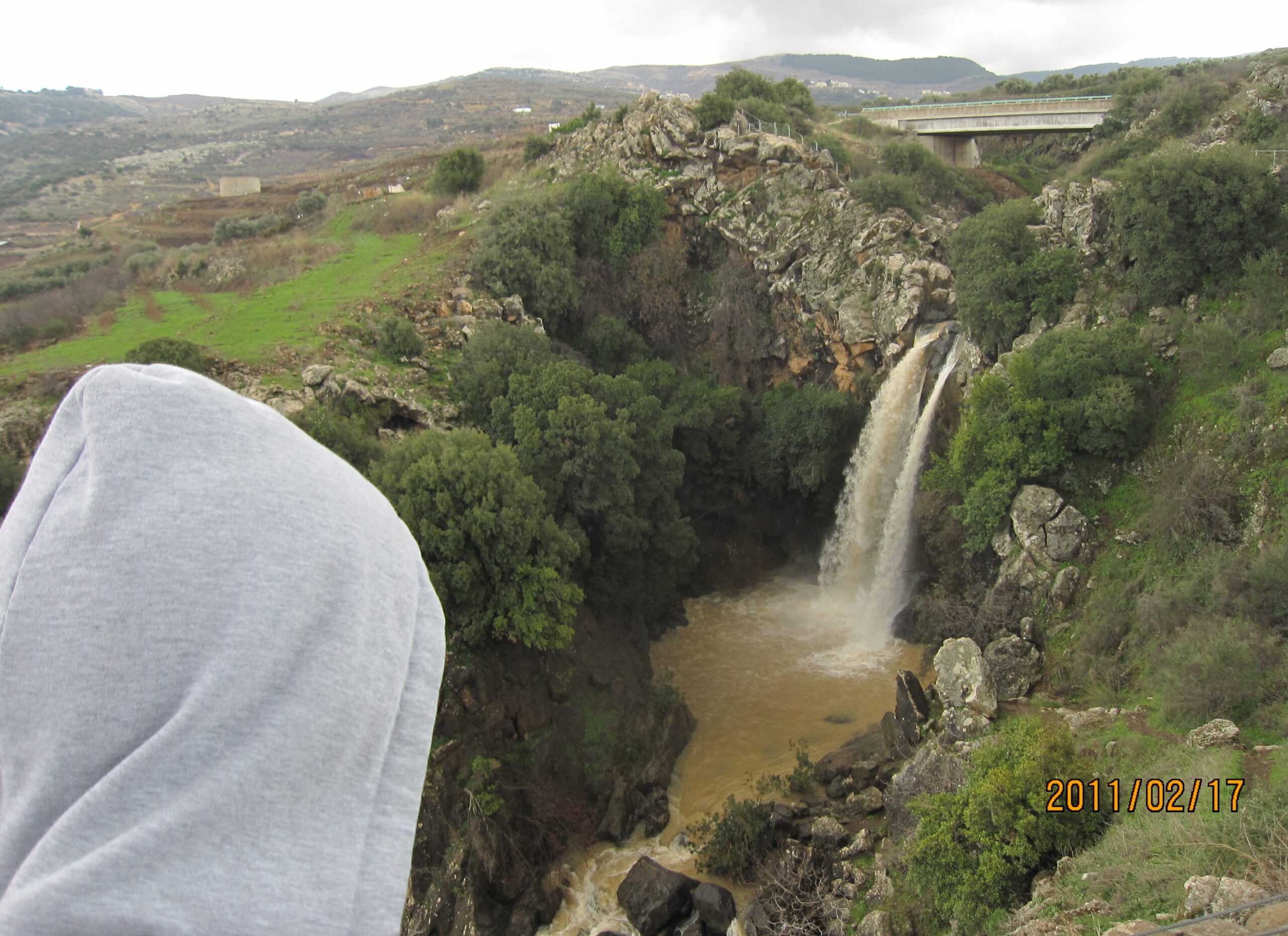
 『油断することなく、あなたの心を守れ、命の泉は、これから流れ出るからである』(箴言4章23節)。
今から10年前、サバティカルをいただき、私は一人でイスラエルを訪れました。レンタカーに乗り、その北部にあるレバノン、ヨルダン、シリア、イスラエルを国境とするゴラン高原に行きました。
かつてその領有権を争って中東戦争の火種となった場所です。なぜ、人々はこのゴラン高原を欲しがったのか。 それはイスラエルという国の地図を見ればすぐに分かります。このゴラン高原はガリラヤ湖の北に位置し、そこに流れ入る川の源流を有する場所なのです。
ご存じのようにイスラエルは乾燥地帯で水を確保することが困難な場所です。その国でゴランを制するということはイスラエルの水源を制するということになりますゆえに、そこは軍事的な要所となっているのです。
命の源なる泉を守ることなくして、国を守ることはできないのです・・・。同じように私達の心の泉を守ることなくして、どうして私達は固く立つことができましょう。
本日の「礼拝映像」「ポッドキャスト」「一日一生」はこちらから。
↓ 今日の「日英礼拝メッセージ原稿」、「おもちかえり」はこちらから ↓
「全ては私の心の泉から」
2021年11月21日
今日、多くの人達は生活が便利になったものの、ますます自分たちは忙しくなっていると感じているといいます。そんな日々を送る私達は自らを省みる時間をもつことが難しく、とにかく一日一日のノルマをこなすことで精一杯に暮らしています。
そして余裕がなくなってくると感謝する心を失い、かえって気持ちのあせりからか、不満というものが心におこってきます。
そもそも私達が暮らすこの世界は、私達の心に不満を呼び起こそうとする力が強くはたらいている場所で「私達がどれだけ不足しているか」「どれだけ不相応な環境にいるか」ということを、手を変え、品を変えアピールしてくるのです。
すなわち「あなたの能力は正等に評価されていない」、「あなたが今、使っているものは古い」、「あなたは誰よりも余計に働かされている」などなど絶え間ないメッセージを常に私達は耳にしながら暮らしています。
そんなことを思いつつ、サンクスギヴィングディー、すなわち神様に感謝を捧げる日をひかえ、私達に語りかけられている聖書の言葉を通して、いくつかの大切なことを確認したいと願っております。
まず最初にイスラエルの二代目の王、ダビデが記した詩篇103篇1節から2節(新改訳)を読みましょう。
「わがたましいよ。主をほめたたえよ。私のうちにあるすべてのものよ。聖なる御名をほめたたえよ。わがたましいよ。主をほめたたえよ。主の良くしてくださったことを何一つ忘れるな」
ここには普通に読めば読み過ごしてしまう言葉があります。それはダビデが誰に向かって「主をほめたたえよ。聖なる御名をほめたたえよ。主をほめたたえよ」と言っているのかということです。
そうです「わがたましいよ、わたしのうちにある全てのものよ、わがたましいよ!」と彼は自分の魂に、自分のうちにあるすべてのものに向かって叫んだのです。
なぜ、ダビデは自分の魂に繰り返し、語りかけたのでしょうか。なぜなら、彼は「自分の魂がどうあるかということの大切さ」を誰よりも知っていたからです。
彼の人生は波乱万丈でした。ある時は自分が真実に仕えていたサウル王の妬みを買い、不当に命を狙われたため逃亡しました。ある時は我が息子の反逆を受けて親として最も辛い悲しみを経験しました。
そのような環境に身を置いた彼は、過酷な状況であればあるほどに、自分の魂を名指しして、主をほめたえるようにと語りかけたのです。
そうしなければ、まさしく自分の魂は神をほめたたえるどころか、心の中は絶望や苦々しい思いで満ちてしまうということを彼は知っていたのでしょう。
自分を取り囲む環境や自分以外の人の心を変えたり、支配することはできません。しかし、少なくとも彼は自分の魂については、その可能性があることを誰よりも知っていたために、繰り返し自分自身に語りかけたのです。
そして特に彼が自分の魂に常に刻み込もうとしていたことは「主の良くしてくださったことを何一つ忘れるな」ということでした。
なぜ、彼は神に感謝することを自らの心に語り続けたのでしょうか。なぜなら自分に襲いかかる様々な事柄の中で、そのことは自らの心を神様に結びつけるために最も大切なことだからでした。
そして、そんなダビデの背中を間近に見ていた人がいました。ダビデの跡を継いだ、息子のソロモンです。彼は箴言4章20節から27節にこんな言葉を記しています。箴言4章20節-23節、
20わが子よ、わたしの言葉に心をとめ、わたしの語ることに耳を傾けよ。21それを、あなたの目から離さず、あなたの心のうちに守れ。22それは、これを得る者の命であり、またその全身を健やかにするからである。23油断することなく、あなたの心を守れ、命の泉は、これから流れ出るからである。
この23節を文語訳聖書はこう記しています。「すべての守るべきものよりもまさりて、汝の心を守れ」。また新改訳聖書は「力の限り、見張って、あなたの心を見守れ」と記しています。
すなわち心を守ることは、他の全てのことよりも、まず第一に優先すべきことなのであり、私達は力の限り、私達の心を見張る必要があるのだというのです。
ソロモンは父、ダビデが様々な危機に直面しながらも、自らの魂に語りかけている、神様が自分に成してくださったことを感謝している、そんな背中を見ながら育ち、一つのことを悟ったのでしょう。
そして、それが23節、「命の泉は、これから流れ出るからである」ということなのです。キングジェームスバイブルはこう書いています。「そこから出るものは命に関わることなのだ」
ソロモンは自分の父がエルサレムの城壁や兵力を補強することよりも、物見やぐらから敵を始終、見張ることよりも、まずその心を守ることに細心の注意を払っていたということ知っていました。
なぜなら命の泉はその心から流れ出るものであり、そのことこそがイスラエルという国の基盤を築いたのだということを彼は悟っていたからです。
今から10年前、サバティカルをいただき、私は一人でイスラエルを訪れました。レンタカーに乗り、その北部にあるレバノン、ヨルダン、シリア、イスラエルを国境とするゴラン高原に行きました。かつてその領有権を争って中東戦争の火種となった場所です。なぜ、人々はこのゴラン高原を欲しがったのか。
それはイスラエルという国の地図を見ればすぐに分かります。このゴラン高原はガリラヤ湖の北に位置し、そこに流れ入る川の源流を有する場所なのです。ご存じのようにイスラエルは乾燥地帯で水を確保することが困難な場所です。その国でゴランを制するということはイスラエルの水源を制するということになりますゆえに、そこは軍事的な要所となっているのです。
現在もここには、あちこちに戦車があり、今でもいたるところに地雷注意のマークがあり、その時も度々、国連の車とすれ違いました。今でもその土地は変わらずその水源ゆえに、イスラエルの要所となっているからです。
その旅では幾つかの古代の聖書の遺跡を見て回りましたが、その行く先々で見聞きしたのは、どの遺跡もその城壁の内側に水源、すなわち泉を保有していたということです。
言われてみればそのとおりです。たとえ高い城壁を築いたとしても、その城壁内に水がなければ人は生きていけません。水がなければ戦いに勝つことはできません。そして、それは城壁内に川が流れているということではだめなのです。
なぜなら、その上流をせき止められてしまえば、城壁内への水は完全に止められてしまうからです。やはり水源、すなわち水そのものが沸く泉を城壁内にもっていなければならないのです。
イスラエルの民にとって泉とはまさしく自分が生きるか死ぬかを左右するものであり、彼らが城壁の内に泉をもつことを絶対不可欠とし、それを死守したように、ダビデやソロモンも、その心の中の泉というものを何よりもまず大切なものとしたのです。
キングスジェームスの言葉を心に刻みましょう。『あなたの心を熱心に保ちなさい、そこから出るものは命に関わることなのだ』
そして、このダビデ、ソロモンと引き継がれてきたその心というものについてイエス・キリストはさらにそれを具体的に説明されました。イエス様はマルコ7章18節‐23節においてこう言われました。
18すると、言われた、「あなたがたも、そんなに鈍いのか。すべて、外から人の中にはいって来るものは、人を汚し得ないことが、わからないのか。19それは人の心の中にはいるのではなく、腹の中にはいり、そして、外に出て行くだけである」。イエスはこのように、どんな食物でもきよいものとされた。20さらに言われた、「人から出て来るもの、それが人をけがすのである。21すなわち内部から、人の心の中から、悪い思いが出て来る。不品行、盗み、殺人、22姦淫、貪欲、邪悪、欺き、好色、妬み、誹り、高慢、愚痴。23これらの悪はすべて内部から出てきて、人をけがすのである」。
まずここでイエス様は当時、人々の間で重要とされていた食物規定に関して一石を投じました。すなわち食べ物にきよい、きよくないということはない。それはただ私達の体内に入って、出て行くだけのものであり、どの食べ物もきよいとイエス様は言われました。
そして、後半を見ますとそれが食べ物だけを言っているのではないということに私達は気がつかされるのです。
この世界に生きる私達は、その五感を通して諸々のことを私達の内に入れます。そのことをその前に書かれている食物の件に照らし合わせて考えますならば、実際のところ、その諸々のこと自体は私達を汚すものではないのです。
すなわち、目に飛び込んできたある出来事、耳に聞こえてきた囁き、それ自体はまだ私達を汚してはいません。しかし、それらが私達の魂に達し、そのことに対して私達の魂が反応し、苦々しい思いや不満となって外に出て行く時に、それが人を汚すというのです。
ヤコブはこの内から出ていく最たるものとして「私達の口から出る言葉」を取り上げてこう書いています。
7あらゆる種類の獣、鳥、這うもの、海の生物は、すべて人類に制せられるし、また制せられてきた。8ところが、舌を制しうる人は、ひとりもいない。それは、制しにくい悪であって、死の毒に満ちている。9わたしたちは、この舌で父なる主をさんびし、また、その同じ舌で、神にかたどって造られた人間をのろっている。10同じ口から、さんびとのろいとが出て来る。わたしの兄弟たちよ。このような事は、あるべきでない。11泉が、甘い水と苦い水とを、同じ穴からふき出すことがあろうか。ヤコブ3章7節-11節
ヤコブはここで私達の口から出ていく言葉は制しにくい悪であり、死の毒で満ちていると言っています。また、この自分の言葉を完全に制しうる人は一人もいないと断言しています。
私達は何であれ誰かから何かを断言されると、それに反発を感じますが、このヤコブが言う「自らの言葉を制している人はいない」という言葉に対しては、しばし我が身を振り返れば納得いくのではないでしょうか。
そして、ここまでお話ししていますように、自分の口から出る言葉を制し得ないということは、その源なる心をも制していない、その心において既に苦い水がわいてきてしまって、それが口から溢れでてしまったということです。
そしてこのことは、これまでダビデが自らの魂に語りかけた、ソロモンが何よりもあなたの心を見張れと言っていたその要所を私達は完全に守りきれないということを意味します。
それでは、私達はどうしたらいいでしょうか。一つのとっておきの希望をお話しましょう。その希望は思いがけないところに、思いがけない出来事によって啓示されています。出エジプト記15章22節‐25節
22さて、モーセはイスラエルを紅海から旅立たせた。彼らはシュルの荒野に入り、三日のあいだ荒野を歩いたが、水を得なかった。23彼らはメラに着いたが、メラの水は苦くて飲むことができなかった。それで、その所の名はメラと呼ばれた。24ときに、民はモーセにつぶやいて言った、「わたしたちは何を飲むのですか」。25モーセは主に叫んだ。主は彼に一本の木を示されたので、それを水に投げ入れると、水は甘くなった・・・。
ここに記されている出来事はモーセというイスラエルの指導者がエジプトで奴隷となっていた民を救い出し、荒野をさ迷った時のことです。
彼らはその荒野で水を得ることができませんでした。やっと見つけたと思ったメラという場所にあった水は、苦くてとても飲めたものではなかったのです。しかし、モーセが神様に示された一本の木をその苦い水に入れるとそれは甘くなったというのです。
このメラで起きた出来事はその後に起こる、あることの型となっています。すなわち、この苦い水とはイエス様が言われた「不品行、盗み、殺人、22姦淫、貪欲、邪悪、欺き、好色、妬み、誹り、高慢、愚痴。23これらの悪はすべて内部から出てきて、人をけがすのである」(マルコ7章21節-23節)であることが分かります。
このような苦々しい水が私達の心からわき、それがやがて外に出て行くのです。その苦水は誰も飲めたもの、すなわち、受け入れられるようなものではないのです。
しかし、そのメラの苦水は一本の木によって甘い水に変えられたというのです。この出来事を再びやがて起きる一つの型として見ますならば、あることが分かります。
そうです、その木とはカルバリの丘に建てられたキリストの十字架という木なのです。私達の心がイエス・キリストの十字架によって支配されるのならば、私達の心に変化が起きるのです。
その変化とは私達の心の表面の泥水を十字架がすくってきれいにしてくれるというようなものではなく、その心の源に新しい命の泉をわきおこしてくださるという変化なのです。
あのヨハネ4章にはスカルの井戸辺でイエス様がサマリアの女と出会われた時のことが書かれています。かつて五人の夫と会い別れるということを繰り返し、今は人目を避けて暮らす悲しい過去をもっていた女性です。その女性にイエス様は言われました。
「この水を飲む者は誰でも、またかわくであろう。しかし、わたしが与える水を飲む者は、いつまでも、かわくことがないばかりか、わたしが与える水は、その人のうちで泉となり、永遠の命にいたる水かわきあがるであろう」(ヨハネ4章13、14節)。
この時、イエス様がこの女性に語りかけた言葉は、強烈に彼女の心を貫き通しました。その時まで彼女が何を試みて生きていたのかということがこの言葉によって彼女に一つの気づきを与えたからです。
すなわち、それまでの彼女の試みとは自分の人生は新しい男性との関係によって、一時、数杯の水を飲むということであり、しかしながら、それはすぐに乾くものだったからです。しかし、今や彼女は決してかわくことがない、その心からわきでる命の泉をイエス様からいただいたのです。
主にある兄弟姉妹、私はなぜ、今日、このようなことをお話したのでしょうか。それは私達の日毎の感謝というものは私達の周りの環境が自分にとって良きと思われるものになったから起きてくるものではなく、私達の心からわいてくるものだということを確認するためです。
それゆえ、お話ししましたように、私達はしっかりと私達の心に語りかけ、その心を守る必要があるということを知るためです。しかし、そんな私達の心がけにも限界があります。ある意味、それがイエス・キリストが生まれる前を生きたダビデやソロモンの限界だということができましょう。
しかし、今や私達はイエス・キリストの十字架により、その心が変えられ、その内からキリストによって永遠の命にいたる泉をわかせていただくのです。その泉は私達の努力によって獲得するものではなく、神ご自身が私達の心に湧かせて下さるものなのです。それをもって私達は主への感謝と共に生きることができるのです。このメッセージの後に私達は「御国の心地す」を歌います。
1)悲しみ尽きざる 浮き世にありても
日々 主と歩めば 御国の心地(ここち)す
ハレルヤ !罪、咎(とが)消されし、わが身は
いずくにありても、 御国の心地す
私達の住む浮世において私達は尽きることのない悲しみを経験します。しかし、もし私達が私達を愛し、私達のためにその十字架にかかってくださり、御復活してくださった主イエスと共に日々、歩むのならば、私達は神の御国に住んでいる心地がします。
なぜでしょうか、なぜなら、私達のその心をキリストの愛が命の泉わくところと変えてくださるからです。それゆえ、私達はどこにいようとも、私達の心は御国に生きているようなのです。
3)山にも 谷にも 小屋にも 宮にも
日々主と住まえば 御国の心地す
ハレルヤ !罪、咎(とが)消されし、わが身は
いずくにありても、 御国の心地す
私達が山に住もうが、谷底に住もうが、小さな小屋に住もうが、華やかな宮に住もうが、もし私達が私達を愛し、私達のためにその十字架にかかってくださった主イエスと共に日々、歩めるならば、私達は神の御国に住んでいる心地がします。
なぜでしょうか、なぜなら、私達のその心をキリストの愛が命の泉わくところと変えてくださるからです。それゆえ、私達はどこにいようとも、私達の心は御国に生きているようなのです。
皆さん、私達の心はどうですか?私達を取り巻く環境は日々、目まぐるしく変わります。私達の心はその環境に支配され続けるのでしょうか。そうであるなら、私達は常に苦い思いをはきだすことになるでしょう。そこから感謝の思いが起こる可能性はとても少ないのです。
しかし、私達が己が心を見守り、「わがたましいよ。主をほめたたえよ。私のうちにあるすべてのものよ。聖なる御名をほめたたえよ。わがたましいよ。主をほめたたえよ。主の良くしてくださったことを何一つ忘れるな」と語りかけるのなら、神は私達の心に命の泉を湧かせてくださるのです。お祈りしましょう。
Everything comes from the spring of my soul.
Nov 21,2021
Today many people feel that although life has become more convenient, things are more complicated and they are busier than ever. We live our lives trying to meet increasing daily quotas and this makes it difficult for us to take time for self-reflection.
When we lose the luxury of having time to do things we would like to do we lose our sense of gratitude in what life has to offer. We often become impatient and frustrated.
We need to keep in mind the world we live in is a place where forces seek to arouse discontent in our minds. Those forces are strong and they appeal to us in different ways. They seek to show us where we are lacking and how unworthy we are.
We live in a world where we are constantly bombarded with messages such as, “Your abilities are not being evaluated fairly,” “What you are using is outdated.”You are forced to work more and harder than anyone else”.
With this in mind and as we approach Thanksgiving Day, a day to give thanks to God, I would like to present a few important things taken from the word of God, the Bible.
First, let’s read Psalm 103:1-2, written by David, the second king of Israel.
1 Praise the Lord, my soul; all my inmost being, praise his holy name. 2 Praise the Lord, my soul, and forget not all his benefits— (Psalm 103:1-2 NIV)
There is a word here that if you read it normally, you will miss it. It’s David saying to whom, “Praise the Lord! Praise His holy name. Praise the Lord.
He cried out to his soul with all his might, “O my soul, all my inmost being, O my soul!”.
Why did David repeatedly speak these words to his soul? Because he, more than anyone else, knew the importance of the condition of his soul.
David led a conflicted life. Despite loyally serving King Saul, David was at times jealous of him. Adding to this conflict David once had to flee Saul who unjustly threatened David with death.
Closer to home David endured one of the most painful things a parent can experience… the rebellion of a son against a parent. David was in a tough place, yet, the tougher the situation the more he spoke to his soul to praise the Lord by name.
He knew that if he didn’t, his soul would be filled with despair and bitterness, instead of praising God.
David realized he could not change or control what was going on in his life and the minds of people around him. But he knew he was in control of his own mind so he frequently spoke to himself.
During these stressful times he always told himself, “Always be thankful for and remember what the Lord has done for me”.
Why did he keep telling himself to be thankful to God? Because in the midst of all the things that were occurring, it was the best thing he could do to keep his mind connected to God.
And there was a man who was watching David’s back closely. It was his son, Solomon, who followed in David’s footsteps. He wrote these words in Proverbs 4:20-23.
20 My son, give attention to my words; Incline your ear to my sayings. 21 Do not let them depart from your sight; Keep them in the midst of your heart. 22 For they are life to those who find them And health to all their body. 23 Watch over your heart with all diligence, For from it flow the springs of life. (Proverbs 4:20-23 NASB 1995)
The Japanese Bungo-yaku Bible tells us, “Guard thy heart above all that is to be guarded”. The Japanese Shinkaiyaku translation of the Bible says, “With all your strength, watch and guard your heart”.
In other words, guarding our hearts is very important and should be a top priority. We need to watch our hearts to the best of our ability.
Solomon grew up watching his father, David, and witness that he spoke to his inner soul. He saw that even in the face of crisis
David thanked God for what God had done for him. Through these things, he must have realized.
And that is what verse 23 is all about, “For the spring of life will flow from the heart”. The King James Bible puts it this way, “for out of it are the issues of life.”
Solomon knew that his father was more concerned about protecting his heart and soul than reinforcing the walls of Jerusalem, or building up his army, or watching his enemies from his watchtower,
because he knew that the spring of life flowed from his heart and soul, and that is what laid the foundation for the nation of Israel.
Ten years ago, I took a sabbatical and visited Israel by myself. I took a rental car and went to the Golan Heights, which borders Lebanon, Jordan, Syria and Israel in its northern part.
It is a place that sparked a war in the Middle East over its ownership and who controlled it. Why did people want the Golan Heights?
This can be easily seen by looking at a map of the country of Israel. The Golan Heights is located north of Lake Galilee(Tiberias) and is the source of the rivers that flow into it.
As we all know, Israel is an arid country where it is difficult to secure fresh water. To control the Golan Heights means to control the source of fresh water for Israel thus, it is a key military location.
Even today, there are many military tanks in the area with landmine warning signs everywhere. UN vehicles frequently pass and the land remains an important place for Israel because of it is their source of fresh water.
During my trip, I visited several ancient Biblical ruins. Everywhere I went I saw they all had water sources, or springs, inside their walls.
That’s right. Even if you build a high wall, if there is no water
inside the boundary of the walls you cannot survive. You cannot win a battle without water, and it’s not enough to have a river running through the city walls.
This is because if the upper stream of the river is blocked, the water into the city walls will be completely blocked. You have to have a source of water, a spring, within the city walls.
For the Israelites, a spring or a source of water could determine whether they would live or die. Water within their walls was absolutely essential. Because of this they would defend it to the death. Likewise, David and Solomon made the spring in their hearts the most important thing in life.
Let us take to heart the words of King James version of Proverbs 4:23, 23 Keep thy heart with all diligence; for out of it are the issues of life.
Jesus Christ elaborated on the meaning of “heart” David and Solomon were talking about. In the New Testament book of Mark Chapter 7, verses 18-23, Jesus said,
18 “Are you so dull?” he asked. “Don’t you see that nothing that enters a person from the outside can defile them? 19 For it doesn’t go into their heart but into their stomach, and then out of the body.” (In saying this, Jesus declared all foods clean.) 20 He went on: “What comes out of a person is what defiles them. 21 For it is from within, out of a person’s heart, that evil thoughts come—sexual immorality, theft, murder, 22 adultery, greed, malice, deceit, lewdness, envy, slander, arrogance and folly. 23 All these evils come from inside and defile a person.” (Mark 7:18-23 NIV)
Jesus caused a stir with regard to the food regulations that were important among the people when he spoke these words. There was no such thing as “good” or “bad” food. It just goes in and out of our bodies, and Jesus said that all food is good.
And when we look at the second half, we realize that it is not just about food.
As we live in this world, we allow things to enter us through our senses. If we think about it in the light of the preceding paragraph about food, in fact, the things themselves do not defile us.
In other words, an event that we see, a whisper that we hear, in and of itself, does not defile us yet. But when they reach our souls, and our souls react to them, and they go out as bitterness and frustration, that is when they defile us.
James writes that one of the most important things that can go out from within us are “the words that come out of our mouths”.
7 All kinds of animals, birds, reptiles and sea creatures are being tamed and have been tamed by mankind, 8 but no human being can tame the tongue. It is a restless evil, full of deadly poison. 9 With the tongue we praise our Lord and Father, and with it we curse human beings, who have been made in God’s likeness. 10 Out of the same mouth come praise and cursing. My brothers and sisters, this should not be. 11 Can both fresh water and salt water flow from the same spring? (James 3:7-11 NIV)
James says that the words that come out of our mouths are sometimes uncontrollable and can be full of evil and deadly poison. He also asserts that there is no one (other than Jesus) who can completely control their words.
We often feel repulsed when someone assures us of something, but when we ponder about James’ affirmed words, “No one controls his own words”, and look back at ourselves” we think it makes sense.
As I have said, if you cannot control the words that come out of your mouth, it means that you do not have complete control of your heart, which is the source of your words, and words that taste like “bitter water” come out before you realize it.
And this means that we are not be able to fully adhere to the key point spoken by David to himself and by Solomon that told us to guard our heart above all else.
So what should we do? Let me tell you about one great hope. That hope is revealed in an unexpected place by an unexpected event. Exodus 15:22-25
22 Then Moses led Israel from the Red Sea and they went into the Desert of Shur. For three days they traveled in the desert without finding water. 23 When they came to Marah, they could not drink its water because it was bitter. (That is why the place is called Marah.) 24 So the people grumbled against Moses, saying, “What are we to drink?”25 Then Moses cried out to the Lord, and the Lord showed him a piece of wood. He threw it into the water, and the water became fit to drink (Exodus 15:22-25).
The event described here occurred when the Israelite leader, Moses, was rescuing his people from slavery in Egypt and leading them in the wilderness.
They could not get fresh water in that wilderness. The water at Marah, which they finally found, was bitter and undrinkable. But when Moses put a piece of wood God had shown him into the bitter water it became fit to drink.
The events that took place at the Marah are an example of what is to come. The “bitter water” is what Jesus refers to as “sexual immorality, theft, murder, 22 adultery, greed, malice, deceit, lewdness, envy, slander, arrogance and folly. 23 All these evils come from inside and defile a person.” (Mark 7:18-23 NIV)
This bitter water comes from within our hearts and eventually goes out. This bitter water is not something anyone should drink or accept.
However, the bitter water of Marah was turned into sweet water by a piece of wood. If we again look at this event as a sign of what will happen in the future we see one thing.
We see the cross made of wood on which Christ was crucified on the hill of Calvary. If our hearts are governed by the crucified Jesus Christ there will be a change in our hearts.
This change is not like a cross used to clean the muddy water from the surface of our hearts. It is a complete and thorough cleaning of our entire heart that brings forth a new spring of life.
In John 4, we read about Jesus’ encounter with the woman of Samaria at the well of the Sychar.
She was a woman with a checkered past who had met and separated from five husbands and now lived in seclusion. To this woman, Jesus said;
13 “Everyone who drinks this water will be thirsty again, 14 but whoever drinks the water I give them will never thirst. Indeed, the water I give them will become in them a spring of water welling up to eternal life.”
The words that Jesus spoke to this woman at this time pierced her heart with intensity, because they made her realize what she had been trying to live with until that moment.
Her previous attempts at a life of her own had been to drink a few glasses of water from her relationship with a new man, but it had dried up quickly.
But now she has received from Jesus a spring of life that flows from her heart and never drains.
Dear brothers and sisters, why did I tell you this today? This is to confirm that our daily gratitude does not come from the environment around us, which we think is good for us, but from our heart.
Therefore, as I told you, to know that we need to speak firmly to our hearts and guard them.
However, there is a limit to what we can do on our own. In a way, that was the limitation encountered by David and Solomon who lived before Jesus Christ was born.
But now, through the cross of Jesus Christ, our hearts can and have been changed. We have a spring of water provided by God welling up within our hearts giving us eternal life within us through Jesus Christ.
The spring is not something we can acquire through our own efforts, but something that God Himself makes spring up in our hearts. With that, we can live with gratitude to the Lord.
After this message, we will sing a hymn, “Where Jesus is, Tis Heaven”.
Since Christ my soul from sin set free,
This world has been a heaven to me;
And ’mid earth’s sorrows and its woe,
’Tis heaven my Jesus here to know.
O hallelujah! yes, ’tis heaven,
’Tis heaven to know my sin’s forgiven;
On land or sea, what matters where?
Where Jesus is, ’tis heaven there.
In this world we live in, we experience sorrow. But if we walk daily with the Lord Jesus, who loved us, took up his cross and died for us and then was resurrected we will feel like we are living in the Kingdom of God.
Why? Because the love of Christ transforms our hearts into a wellspring of life. Therefore, wherever we are, our hearts are as if we are living in His Kingdom.
What matters where on earth we dwell?
On mountain top, or in the dell,
In cottage, or a mansion fair,
Where Jesus is, ’tis heaven there. [Refrain]
O hallelujah! yes, ’tis heaven,
’Tis heaven to know my sin’s forgiven;
On land or sea, what matters where?
Where Jesus is, ’tis heaven there.
Whether we live on a mountain top, in the bottom of a valley, in a small hut, or in a glamorous palace, if we can walk daily with the Lord Jesus, who loved us and took up his cross for us, we will feel like we are living in the Kingdom of God.
Why? Because the love of Christ transforms our hearts into a wellspring of life. Therefore, wherever we are, our hearts are as if we are living in the Kingdom.
How is your mind, everyone? The environment around us changes rapidly every day.
Will our minds and hearts continue to be controlled by our environment? If so, we will always have bitterness in our hearts and the bitterness will go out from us. It is very unlikely that thoughts of gratitude will arise from them.
But if we watch our hearts and speak to our souls, “Praise the Lord, my soul; all my inmost being, praise his holy name. Praise the Lord, my soul, and forget not all his benefits”, then God will make a spring of life spring up in our hearts.
Let us pray.
本日のおもちかえり
2021年11月21日
1)あなたの心にはいつもどんな思いがありますか。私達の暮らす世界で私達はどんなことを見聞きすることにより、心に不満や苦々しい思いがわいてきますか。
2)詩篇103篇1節、2節を読みましょう。ここでダビデが心がけていることは何ですか。なぜ、ダビデはそのことを心がけているのでしょうか。
3)あなたの言動の出どころはどこですか。「主の良くしてくださったことを何一つ忘れるな」 (詩篇103篇2節)ということを心に刻んで生きることはなぜ大切ですか。
4)ダビデの背中を見て育った息子のソロモンは箴言4章23節で「油断することなく、あなたの心を守れ、命の泉はこれから流れ出るからである」と書きました。ソロモンは何をダビデの生きざまから学んだのでしょうか。
5)イスラエルの多くの古代都市の遺跡は城壁で囲まれており、その中には泉がありました。なぜなら、たとえ敵に包囲されたとしても、その泉がそこに暮らす者達の命を支えるものだったからです。ソロモンは「私達の心」を「命の泉」と呼びました。英語のキングスジェームスバイブルは23節を『あなたの心を熱心に保ちなさい、そこから出るものは命に関わることなのだ』と言いました。あなたはこの言葉に同意しますか。
6)マルコ7章18節-23節、ヤコブ3章7節-11節を読みましょう。私達の内から出て行くものについて聖書はなんといっていますか。あなたはこれらのものを自分の力で制することができますか。
7)出エジプト記15章22節‐25節は何の予型となっていますか。ヨハネ4章13節、14節の主イエスの言葉から私達が寄り頼むべきものは何だと言うことが分かりますか。
8)私達は環境に支配され、揺り動かさ、時に私達は不満に支配されます。この現状に対して「あなたの心を守れ」という言葉は、私達に何を気づかさせ、どんな励ましを与えてくれるでしょうか。
