
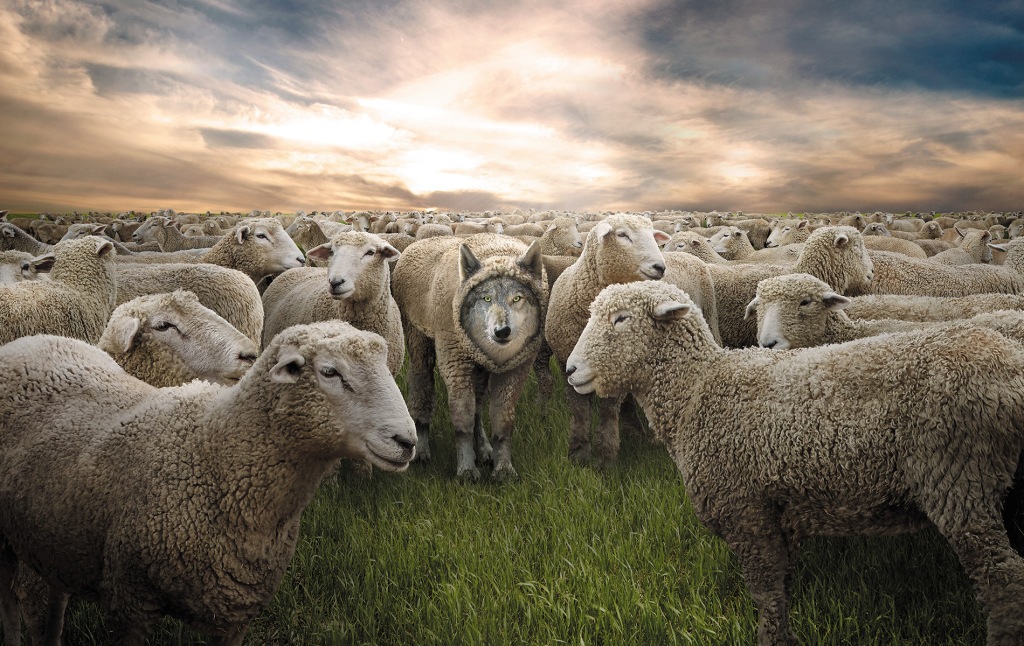
 イエス・キリストは12弟子を世に遣わす時に言われました。『わたしがあなたがたをつかわすのは、羊をおおかみの中に送るようなものである。だから、蛇のように賢く、鳩のように素直であれ』(マタイ10章16節)。
時々、私達は「コンクリートジャングル」とか「外に出れば七人の敵がいる」というような言葉を使います。ジャングルとは弱肉強食が繰り広げられるような場所であり、私達が生きる世界はまさしくコンクリートで囲まれた厳しい世界なのだということです。
甘い言葉、巧みな言葉をもって、私達を騙そうとする人や、強盗のように私達に襲いかかって、大切なものや命さえ奪っていく者たちがいます。そのようなところにあなたたちを送り込むのだとイエス様は言いました。すなわち、そのままそこに入っていったらあなたたちは瞬く間に襲われてしまうのだよということです・・・。
本日の「礼拝映像」「ポッドキャスト」「一日一生」はこちらから。
↓ 今日の「日英礼拝メッセージ原稿」「おもちかえり」はこちらから ↓
蛇のように賢く、鳩のように素直に!
2022年2月6日
皆さんと見てまいりました「伝道の書」のシリーズもいよいよ終わりに近づいてきました。この書は今から3000年も前に書かれましたが、その内容は今を生きる私達に新鮮な知恵と指針に満ちておりました。そして今日の御言葉も私達の実生活にとって益となる知恵に満ちた言葉です。今日は伝道の書11章1節-4節を見ていきたいと思います。
1あなたのパンを水の上に投げよ、多くの日の後、あなたはそれを得るからである。2あなたは一つの分を七つまた八つに分けよ、あなたは、どんな災が地に起るかを知らないからだ。3雲がもし雨で満ちるならば、地にそれを注ぐ、また木がもし南か北に倒れるならば、その木は倒れた所に横たわる。4風を警戒する者は種をまかない、雲を観測する者は刈ることをしない(伝道の書11章1節―4節)。
ここからまず最初に「蛇のように賢く」ということをお話しましょう。
日本語の聖書は一節を「あなたのパンを水の上に投げよ、多くの日の後、あなたはそれを得るからである」と書いています。「あなたのパンを水の上に投げよ」と読みますと、私のイメージとして、大きな鯉が泳ぐ池があって、そこに食パンをちぎって投げている自分の姿というものを想像します。
そのパンを投げますと大きな口をあけた鯉がよってきてパクパクとそれを食べるのです。しかしながら、続く「多くの日の後、あなたはそれを得るからである」という言葉について考えますと、この鯉が育ち、大きくなったその鯉を料理して食べることぐらいしか思い浮かびません。当時のイスラエルの人達の食生活を考えますのなら、これは無理のある解釈となります。そこで、この箇所を英語の聖書で読んでみましたら、何を意味するのかが分かったのです 。
英語聖書にはこのように記されています。1 Ship your grain across the sea; after many days you may receive a return.
すなわちこの言葉は「パンを水の上に投げなさい」というよりも「あなたの穀物を舟にのせて出荷させなさい。多くの日を経て、あなたは見返りを得るだろう」ということだったのです。
諸外国と貿易を盛んにしていたソロモンらしい言葉です。続く2節の彼の言葉に私達はさらに驚きます。『あなたは一つの分を七つまた八つに分けよ、あなたは、どんな災が地に起るかを知らないからだ』英語を見ますとさらによく分かります。
2 Invest in seven ventures, yes, in eight; you do not know what disaster may come upon the land. 七つ、もしくは八つの事業に投資せよ。あなたはどんな災いがその地に起きるか知らないからだ。
「Venture」とは今日「ベンチャー企業」と言われますように、新しいビジネスモデルで成長している企業を意味します。そのようなところに投資する場合には、投資先を一つにするのではなくて、七つか八つに分散させなさいとここには記されているのです。なぜなら、その投資の前途は分からないからです。
エチオピアとだけ貿易をして、そこに投資しているのなら、エチオピアに飢饉が来て、見あった収益を得ることができな意ばかりか、投資したものを全て失うかもしれない。 だから他の国地域にも投資しておきなさいということです。
このソロモンの時代から3000年を経た今日、私達は地球規模での自然災害を経験しています。最近もトンガで噴火があり、これが原因で数年後に冷夏となり、作物の収穫が落ち込むかもしれないと言われます。
地震や台風やトルネードが頻発し、家が倒壊したり、洪水により全てのものが流されてしまうということが度々、あります。グローバルな世界では、製品の生産が一つところに集中していたために、これらの災害により、その場所が被害を受けると、それが破門してその製品の製造ができなくなってしまうということが起きています。
まさしく投資は分散するということ、それは多くの企業にとって課題となっています。今から3000年も昔に、このように現在、世界が直面している問題に対して指針が示されていたということに私達は驚きます。
このような極めて現実的なソロモンの慎重さと先見性を知る時に私達はイエス様が12弟子をこの世に遣わす時に言われた言葉を思いおこします(マタイ10章16節)。
『わたしがあなたがたをつかわすのは、羊をおおかみの中に送るようなものである。だから、蛇のように賢く、はとのように素直であれ』
この世に弟子たちが出て行くことは、羊が狼の中に送られるようなものなのだとなんとも恐ろしいことをイエス様は言われました。狼とは言うまでもなく獰猛な肉食獣で、羊に襲いかかる動物です。
時々、私達は「コンクリートジャングル」とか「外に出れば七人の敵」というような言葉が使われます。ジャングルとはまさしく弱肉競争がなされているような厳しい場所であり、私達が生きる世界はまさしくコンクリートで囲まれた厳しい世界なのだということです。
また「七人の敵」とは、今でこそ私達は刀を差して暮らしてはいませんが、まさしく隙があれば後ろから切りつけてくるような多くの敵に私達は取り囲まれているということであります。私達の暮らす世界には海のもの、山のものがうごめいています。
甘い言葉、巧みな言葉をもって、私達を騙そうとする人や、強盗のように私達に襲いかかって、大切なものや命さえ奪っていく者たちがいます。そのようなところに無防備なあなたたちを送り込むのだとイエス様は言いました。すなわち、そのままそこに入っていったらあなたたちは瞬く間に襲われてしまうのだよということです。
このような世界に暮らす私達に、イエス様は「蛇のように賢く生きるのだ」というのです。「蛇」のようにと言われても蛇とはそんなに賢いものなのでしょうか。そもそも私達は蛇の生態を詳しくは知りません。そんな私達にとって蛇といいます時に、まず思い起こすのはあの創世記に記されているエデンの園にいた蛇です。
あの蛇の言葉によってエバは巧みに騙され、アダム共々、禁じられていた実を食べてしまったのです。創世記の3章1節に書かれているとおりです。T
「さて主なる神が造られた野の生き物のうちで、蛇がもっとも狡猾であった」。
このところで使われています「滑稽な」という言葉は、ヘブル語では「アルーム」と言われる言葉で「ずるい」とか「悪賢い」という意味があるのですが、そのような悪い意味だけに用いられる言葉ではなくて「利口な」「分別のある」「賢い」「慎重な」「鋭い」「洞察力のある」という意味もそこにはあります。
イエス様が「蛇のように賢く」と「蛇」という生き物を使われた時に、この創世記のことを念頭に入れておられたのでしょう。すなわち、その意味はしっかりと「分別をもち」、「洞察力をもって」、「慎重に」という意味でしょう。
エバを騙した蛇は明らかに悪賢さを持っていました。しっかりと男と女というジェンダを見極め、アダムではなく、エバに巧妙な言葉で近づき、絶妙な誘導尋問のような方法で彼らに禁断の実を食べさせたのです。
同じように、このような手口で私達に忍び寄るものが私達の世界にはいくらでもあります。そのような世界に今、私達は生きているという自覚と、その世界で私達も蛇のような冷静な洞察力と慎重さと共に生きるということです。そのことを続く伝道の書は具体的ににこう記しています。
3雲がもし雨で満ちるならば、地にそれを注ぐ、また木がもし南か北に倒れるならば、その木は倒れた所に横たわる。4風を警戒する者は種をまかない、雲を観測する者は刈ることをしない。
ソロモンは雲や風、そして雲の動きというものを慎重に見極める洞察力の必要性をここに訴えます。それはすなわち私達が、この世界の状況、この国の状況を蛇のように賢く見極めることです。
私達の家庭の状況、仕事の状況、そして、これからの教会の状況、それらに対する洞察力と慎重さを意味します。そして、それに対して自分は、家族は、教会は、会社は、国は何をすべきなのかということを決断、実行していくのです。
そして、このことが成されるためにもう一つ必要なことがあります。それは「鳩のように謙遜に」ということです。
私はこれまで「蛇のように賢く」とお話しました。しかし、ここからはその対極についてお話します。すなわち「鳩のように素直に」ということです。このことについて伝道の書11章の続きにはこのように記されています。
5あなたは、身ごもった女の胎の中で、どうして霊が骨にはいるかを知らない。そのようにあなたは、すべての事をなされる神のわざを知らない。6朝のうちに種をまけ、夕まで手を休めてはならない。実るのは、これであるか、あれであるか、あるいは二つともに良いのであるか、あなたは知らないからである。
誰も女性の胎の中でどのようにして私達が形作られるのかを知りません。このことは、神は私達の理解を超えて働かれるお方であるということであり、私達は鳩のような素直さをもって、そのことを受け止めなければならないということです。
ここでいう素直さは謙遜ということもできるでしょう。ここには「朝のうちに種をまけ」とあります。そして「その手を夕まで休めるな」というのです。
陽が暮れるまで全力でそのことにあたれというのです。私達が蒔いたものからどのような収穫を得ることができるかを私達は知らないからです。このことはイエス様ご自身もマルコ4章26節-28節で言っています。
26「神の国は、ある人が地に種をまくようなものである。27夜昼、寝起きしている間に、種は芽を出して育って行くが、どうしてそうなるのか、その人は知らない。28地はおのずから実を結ばせるもので、初めに芽、つぎに穂、つぎに穂の中に豊かな実ができる。
私達が分からないところでは神様は働き続けています。まさしくコリント第一の手紙3章6節-8節が言っているとおりです。
6わたしは植え、アポロは水をそそいだ。しかし成長させて下さるのは、神である。7だから、植える者も水をそそぐ者も、ともに取るに足りない。大事なのは、成長させて下さる神のみである。8植える者と水をそそぐ者とは一つであって、それぞれその働きに応じて報酬を得るであろう。
私自身、おおいに反省するところがあるのですが、自分の頭の中だけで考えますと、そこから何も先に進まないことがあります。 しかし、信仰の世界はそうではありません。私達には見えない、知り得ない方法で女性の胎に子が宿るということを謙遜に覚えなければなりません。
種をまくことまでが私達のできることであり、一度、大地にまかれ、その上に土が盛られた種から芽が出て収穫にいたるのは全て神のわざであるということを謙遜のに受け止めなければなりません。
私達は自分ができる最善を成すべきです。「朝から種をまき、一生懸命に自分がなすべきこと、自分がすべきことに力を注ぐ」。そして、このところにはその私達の働きは「夕まで」と書かれている。夕がきたら後は神に委ね、そして休むのです。
この見えない神の御業はとても大切な真理なのでしょう。聖書ではあちこちにこのことが記されています。イザヤ書55章9~11節、
8わが思いは、あなたがたの思いとは異なり、わが道は、あなたがたの道とは異なっていると主は言われる。9天が地よりも高いように、わが道は、あなたがたの道よりも高く、わが思いは、あなたがたの思いよりも高い。10天から雨が降り、雪が落ちてまた帰らず、地を潤して物を生えさせ、芽を出させて、種まく者に種を与え、食べる者にかてを与える。11このように、わが口から出る言葉も、むなしくわたしに帰らない。わたしの喜ぶところのことをなし、わたしが命じ送った事を果す。
人がこの地に誕生して以来、このことは変わることなく、神の働きは私達が気がつかない間に、すなわち私達の力のおよばないところで古の昔から繰り返されているのです。
牧師になって26年となります。あっという間でした。年月を経ることによって学ぶことが数、多くあります。そして、まさしくこの御言葉は真実だと思います。
すなわち、こと人がクリスチャンになるということに関しては、ことごとく自分の思いはおよばないということを数多く経験してきました。すなわち「この人はクリスチャンになるのではないか」「この人は立派に成長していくのではないか」と私なりに考えたことはならず、かえって「正直、この人がクリスチャンになることはないだろう」とか「実際、この人がクリスチャンになっても大丈夫だろうか」という人達がクリスチャンとなり、しっかりと信仰生活を歩んでいるのです。
このようなことが一度や二度ではなく、度々、経験してきたものですから、ここ数年、私はそのような自分の考えを捨てるようにしました。
このようなことは予測が全く不可能であり、考えても無駄だからです。すなわち、それはどういうことかと言いますと、私が見えないところで神様がその方達に色々な方法をもって確かにはたらかれているということです。
ですから、まさしくパウロがコリント書で言っていますことに私は100%、同意するのです。すなわち、私ができることは植えること、水を注ぐこと。成長させてくださるのは神であり、植える者もそそぐ者も取るに足りないということ。
自分の頭の中で小さく物事をまとめることなく、神様に大いに期待して、パウロがテモテ書に書いていることを続けるのです。
「御言を宣べ伝えなさい。時が良くても悪くても、それを励み、あくまでも寛容な心でよく教えて、責め、戒め、勧めなさい」(テモテへの手紙二4章2節)
今日も明日も大胆に御言葉をここにも、あそこにも、思いがけない所にもまき続けておくこと、それが私達の成すべきことです。
コロナになり二年が経とうとしていますが、この間に私達のミニストリーは制限されました。長い間、オンライン礼拝を捧げてきました。そして、今も礼拝をオンラインで放映しています。
この間に私達は世界中の数万人もの方達に福音の種をまき続けることができました。この種に命を与え、成長させてくださるのは神様です。この種がどこかで芽を出すことを信じています。
今日は「蛇のように賢く、鳩のように素直に!」ということをお話してきました。新しい一年、「羊をオオカミの中に送り出すような」の世界に生きる者として、私達は蛇のような賢さ,そして鳩の謙虚さを持って、地に足をつけて暮らしましょう。
この賢さ、そして謙虚さがいかなるものであるかは全て聖書に書かれています。これからもそこから共に学び、それに生きましょう。思いがけない時に、思いがけない方法で今もはたらいてくださっている神様がいらっしゃることを謙虚に認め、しかるべき時には信仰をもって大胆に一歩を踏み出しましょう。主のはたらきは私達の考えをはるかに凌駕しているのですから。お祈りしましょう。
Be as shrewd as snakes and as innocent as doves. Feb 6 2022
The message series on the book of Ecclesiastes is coming to an end. This book was written 3,000 years ago, but its contents are full of fresh wisdom and guidance for those of us living today.
today’s verse is also full of wisdom that will benefit us in our real lives. Today I would like to look at Ecclesiastes 11:1-4.
Ship your grain across the sea; after many days you may receive a return.2 Invest in seven ventures, yes, in eight; you do not know what disaster may come upon the land.3 If clouds are full of water, they pour rain on the earth. Whether a tree falls to the south or to the north, in the place where it falls, there it will lie. 4 Whoever watches the wind will not plant; whoever looks at the clouds will not reap. (Ecclesiastes 1:1-4)
Here’s the first thing I want to talk about: be as shrewd as snakes. The Japanese Bible says in verse 1, “Cast your bread upon the waters, for after many days you will have it. When I read, “Cast your bread upon the waters,” I imagine myself tearing off a piece of bread and throwing it into a pond full of koi fish.
When I throw a piece of bread, the koi fish come with their big mouths open to eat it. However, when I think about the words that follow, “For after many days you will have it,” I imagine cooking and eating the koi fish after it is well fed and has grown bigger.
If we think about the eating habits of the Israelites at that time, this would be an impossible interpretation. And when I read this passage in the English translation, I understood what it meant. This is what it says in the English Bible.
1 Ship your grain across the sea; after many days you may receive a return.
In other words, the words were not so much, “Throw your bread in the water,” but rather, “Let your grain be shipped in boats. After many days, you will get your reward.
These words are typical of Solomon, who was active in trade with other nations. We are even more surprised by his words in the next verse of the Japanese translation.
“And divide it into seven or eight parts. For you don’t know what calamities may befall the land”. The English Bible is even clearer.
2 Invest in seven ventures, yes, in eight; you do not know what disaster may come upon the land.
The word “venture” means a company that is growing with a new business model, as in “venture companies” today. If you want to invest in such a company, you should not invest in just one, but in seven or eight.
This is because we do not know what the future holds for that investment. If you are only trading and investing in Ethiopia-and a famine comes, you will not only lose the returns you deserve, but you may also lose everything you have invested. So, you should invest in other countries and regions as well.
3000 years after the time of Solomon, we are experiencing natural disasters on a global scale.
Recently, there was an eruption in Tonga, which is estimated to cause a cold summer in a few years, which may depress crop yields. Earthquakes, typhoons, and tornadoes occur frequently, often causing houses to collapse and floods to wash everything away. In the global world, the production of products has been concentrated in one place, and when that place is damaged by these disasters, it affects everything around it, and the production of that product is no longer possible. The very idea of diversifying investments has become a challenge for many companies t is amazing to us that 3,000 years ago, there were guidelines for the problems that the world is facing today.
When we see the prudence and foresight of Solomon, we are reminded of the words of Jesus when he sent the 12 disciples into the world (Matthew 10:16).
16 “I am sending you out like sheep among wolves. Therefore be as shrewd as snakes and as innocent as doves.
Jesus said that the departure of His disciples into the world would be like sheep being sent into the midst of wolves. Needless to say, wolves are ferocious predators that will attack sheep.
Sometimes we use words like “concrete jungle” or “a man steps out, there are seven enemies”. A jungle indicates a place with competition for control in a “survival of the fittest”. The term refers to how the world we live in is harsh place surrounded by concrete.
And although we don’t carry swords in our daily lives, the proverb about “seven enemies” reveals how we are surrounded by many enemies who will cut us down from behind if we are not alert.
There are those who try to deceive us with sweet and clever words, and there are those who attack us like robbers and take our precious things and even our lives. Jesus said that he would send you into such a place unprotected. In other words, if you just walk in there, you will be attacked in the blink of an eye.
Jesus told us to be wise as snake in this world, but are snakes really that wise? We don’t know much about the life of a snake. When we think of snakes, we first think of the serpent in the Garden of Eden as described in Genesis.
The serpent’s words deceived Eve, and she and Adam ate the forbidden fruit. This is what is written in Genesis 3:1.
3 Now the serpent was more crafty than any of the wild animals the Lord God had made.
The word “crafty” used here is the Hebrew word “arum,” which means “cunning” or “deceptive,” but it can also mean “clever,” “sensible,” “wise,” “prudent,” “perceptive,” or “insightful.
Jesus must have had this Genesis passage in mind when he used the word “snake” and “wise as serpents”. In other words, it likely means to be “wise,” “insightful,” and “prudent”.
The serpent that deceived Eve was obviously deceptive. The serpent had a specific strategy when it approached Eve, not Adam, with clever words, and made them eat the forbidden fruit with exquisite interrogation techniques.
n the same way, there are many things in our world that can sneak up on us with this kind of trickery. We need to be aware that we are living in such a world, and we need to live in that world with the calm insight and caution of a snake. The book of Ecclesiastes is very specific about this.
3 If clouds are full of water, they pour rain on the earth. Whether a tree falls to the south or to the north, in the place where it falls, there it will lie. 4 Whoever watches the wind will not plant; whoever looks at the clouds will not reap.
Solomon emphasizes the need for careful insight into the clouds, the wind, and the movement of the clouds. This means that we need to exercise wise discernment of the state of the world and the state of our nation.
It means applying insight and prudence into our family situation, our work situation, and the situation of the church. It also means making decisions about what we, our family, our church, our company, and our country should do.
And there is one more thing that is needed for this to be done, and that is to be “as innocent as a dove”. I have talked about being “shrewd as a snake” so far.
But now I would like to talk about the opposite. In other words, to “be as innocent as a dove. This is what the rest of Ecclesiastes chapter 11 says.
As you do not know the path of the wind, or how the body is formed in a mother’s womb, so you cannot understand the work of God, the Maker of all things. 6 Sow your seed in the morning, and at evening let your hands not be idle, for you do not know which will succeed, whether this or that, or whether both will do equally well.
How we are formed in the womb is an amazing mystery to us. This shows that God is the one who works beyond our understanding, and we must accept this with the innocence of a dove. Innocence here can also be described as humility.
It says, “Sow your seed in the morning”. And, “Do not let your hand rest until evening”. We are told to work at it with all our might until nightfall. This is because we do not know what kind of harvest we will reap from what we sow.
This is what Jesus himself said in Mark 4:26-28.
26 He also said, “This is what the kingdom of God is like. A man scatters seed on the ground. 27 Night and day, whether he sleeps or gets up, the seed sprouts and grows, though he does not know how. 28 All by itself the soil produces grain—first the stalk, then the head, then the full kernel in the head.
God continues to work in places we do not understand. This is exactly what 1 Corinthians 3:6-8 says.
6 I planted the seed, Apollos watered it, but God has been making it grow. 7 So neither the one who plants nor the one who waters is anything, but only God, who makes things grow. 8 The one who plants and the one who waters have one purpose, and they will each be rewarded according to their own labor.
I often have to admit that when I think only in my head, I never get anywhere. But that is not the case in the world of faith. We must remember in humility that a child is conceived in a woman’s womb in a way that we cannot see or know.
We must accept in humility that it is our work to sow the seed, and that once the seed is sown and the soil is heaped on top of it, it is God’s work to make it sprout and produce a harvest.
We should do the best we can. We should sow the seeds in the morning and put all our effort into what we can do. And this is where it says that our work is “until evening”. When evening comes, we leave the rest to God, and then we rest.
It has been 26 years since I became a pastor. It has been a blink of an eye. There are many things that I have learned as the years have passed. And I believe that this verse is very true.
I have experienced many things that I did not expect when it comes to my judgments of a person becoming a Christian. I have experienced many cases where I have thought, “This person will become a Christian,” or “This person will grow up to be a great Christian, “Instead, people who I thought, “Honestly, this person will never become a Christian,” or “I worry about this person becoming a Christian,” have become Christians and are living a strong life of faith.
This has happened to me not once, not twice, but many times, so in the past few years I have tried to discard such thoughts. It is because these things are completely unpredictable and useless to think about.
In other words, what I mean by that is that God is certainly working in various ways with people, in ways that I cannot see.
So I agree 100% with what Paul is saying in the letter of Corinthians. All I can do is plant and pour water on it. It is God who makes it grow, and those who plant and those who water are insignificant.
We should relent in our attempts to gather things in our mind, and instead have great expectancy in God and continue to do what Paul writes in the book of Timothy.
2 Preach the word; be prepared in season and out of season; correct, rebuke and encourage—with great patience and careful instruction (2 Timothy 4:2).
Today and tomorrow, we must boldly continue to sow the Word here, there, and in unexpected places, that is what we must do!
It’s been two years since the Corona pandemic, and during this time our ministry has been limited. We have been offering online worship for a long time, and we are still broadcasting our services online.
During this time, we have been able to continue to sow the seeds of the gospel to tens of thousands of people around the world. It is God who gives life to this seed and makes it grow. We believe that these seeds will sprout somewhere.
Today, ” Be as shrewd as snakes and as innocent as doves!” That’s what I’ve been talking about.
In this new year, as people living in a world of “sheep among wolves,” let us live with the wisdom of a snake and the humility of a dove and keep our feet on the ground. The Bible tells us all about what it means to be wise and humble. Let’s learn from it and live by it.
Let us humbly acknowledge that God is still working in unexpected times and in unexpected ways, and when the time is right, let us take a bold step forward in faith.
The Lord’s work is far beyond our imagination. Let us pray.
本日のおもちかえり
2022年2月6日
1)伝道の書11章1節―4節を読みましょう。1,2節と3,4節から私達はどんなメッセージを受け止めますか。ここからソロモンがどんな心で世界と向き合っていたことが分かりますか。
2)イエス様は12弟子を世に遣わすにあたり『わたしがあなたがたをつかわすのは、羊を狼の中に送るようなものである。だから、蛇のように賢く、鳩のように素直であれ』(マタイ10章16節)と言われました。イエス様はこの世をどのような場として理解していましたか。今日の私達の社会はどうですか?
3)信仰者である私達がこの世に対して蛇のように賢くあることはなぜ必要ですか。その「賢さ」とはどんな賢さを意味しますか。
4)伝道の書11章5節から6節を読みましょう。ここには私達が知りえないことが書かれていますか。なぜ、自分は神の前に無知であることを知ることは大切ですか。そこから私達が会得できる美徳は何ですか。
5)上記のことと「鳩のように素直であれ」というのはどう関連しますか。
6)マルコ4章26節-28節、コリント第一の手紙3章6節-8節、イザヤ書55章―11節を読みましょう。これらに共通していることはなんですか。
7)上記のことを踏まえて私達が日々、成すべきことは何ですか(伝道の書11章6節、テモテへの手紙二4章2節)
8)リアリストであり、信仰者であることはどのように可能ですか。どんなバランスが必要ですか。
