 『あなたがたは聖書の中に永遠の命があると思って調べているが、この聖書はわたしについてあかしをするものである』(
*いつもよりも短くなっておりますが、よかったらご覧ください。
Broadcast live streaming video on Ustream
「礼拝プログラム」、「一日一生」はこちらから。本日の「日英両語拝メッセージ原稿」、「おもちかえり」はこちらから ↓
預言されていたキリスト(1)
ヨハネ5章39節―47節
2014年10月26日
私達の手元にあります聖書は旧約聖書39巻、そして新約聖書は27巻となり 計66巻の書物です。この書ほどこの世界に影響を与えた本はありません。英語圏では定冠詞、THEがついた「THE BOOK」とはバイブルのことを示します。世界には無数の本がありますが、それらはこの聖書とは一線を画すものです。なぜでしょうか。
聖書は40名以上の人達により1500年の年月をかけて書かれた書です。想像してみてください。聖徳太子より100年も昔に誰かが書いた文章、その後、100年毎に二人、もしくは三人のその時代を代表する著者の作品を1500年間集めて、今日、それら69冊をまとめて一冊の本とすることを。当然、彼らの間に面識はなく、役割分担を決めて一冊の書を世に出しましょうというような編集会議もなされません。それはどんな書物になるでしょうか。言うまでもない前後の脈略が全くないバラバラの書です。しかしながら、聖書はその1500年、40人の著者によって書かれた書に一貫性があるのです。
しかしながら一貫性と言いましても何をもって一貫しているのでしょうか。それは聖書が一貫して「イエス・キリスト」を指さしているということです。言うまでもないそれはイエス・キリストが誕生する数千年も前の出来事の中にもイエスが示されているということです。そもそもなぜこのようなことをお話しするかと言いますと、その根拠はイエス様ご自身がそのように言っているからなのです。私達がシリーズとして見ておりますヨハネの福音書からイエス様の言葉をみてみましょう。
39あなたがたは、聖書の中に永遠の命があると思って調べているが、この聖書は、わたしについてあかしをするものである。(ヨハネ5章39節)。
そうです、イエス様ははっきりと聖書は自分について証言しているものだと言っています。さらにはイエス様が十字架において処刑され、墓に葬られたことに対して絶望してエマオという町に向かって歩く二人の弟子に復活されたイエス様は歩みよられ、彼らにこう話しました。
『25「ああ、愚かで心のにぶいため、預言者たちが説いたすべての事を信じられない者たちよ。26キリストは必ず、これらの苦難を受けて、その栄光に入るはずではなかったのか」。27こう言って、モーセやすべての預言者からはじめて、聖書全体にわたり、ご自身についてしるしてある事どもを、説きあかされた』(ルカ24章25節-27節)。
そして、この後に再びこの二人と共に他の弟子達もいる所に姿を現され、こう言われました。44「わたしが以前あなたがたと一緒にいた時分に話して聞かせた言葉は、こうであった。すなわち、モーセの律法と預言書と詩篇とに、わたしについて書いてあることは、必ずことごとく成就する」(ルカ24章44節)。
ちょうど私達は今、「キリストを知る」というテーマで日曜日の礼拝メッセージ・シリーズを見ておりますから、「聖書はわたしについて証しをするものである」、「聖書全体にわたり、自分について記している事を説き明かされた」、「モーセの律法と預言書と詩篇とに、わたしについて書いてあることは、必ずことごとく成就する」というようなイエス様ご自身の証言を読むのなら、これはどういうことなのかと、やはり私達はそこに踏み込まなければイエス・キリストがどんなお方であるのかは分かりません。
それにしても不思議なイエスの証言です。旧約聖書とはイエス・キリストが生まれたはるか前に書かれたものであり、その中には一度も「イエス・キリスト」という名前は出てこないにもかかわらず、その聖書はイエス様を証言しているというのですから。ですからこのイエスの証言について、私達にはこんな疑問がわくのです。「イエス様、いったい聖書のどこにあなたを証言している言葉があるのですか。あなたが言われたように「モーセの律法」と「預言書」と「詩篇」のどこにイエス様について記していることがあるのですかと」。そこで今日はこの三つのうちの「モーセの律法に記されていること」についてお話しましょう。
モーセの律法に記されていること
モーセの律法というのはモーセの書のことです。そして、モーセの書において最大の出来事は紀元前3500年頃にエジプトで起きました出エジプトです。そうです、その時
イスラエルの民は400年もの間、エジプトの奴隷であり、そこから彼らが脱出していくのです。その時にイスラエルのリーダーであったモーセはエジプトのパロ王に度々、自分たちをエジプトの地から出て行くことを許すようにと直談判したのです。
しかし、そこには決してイスラエルの民をエジプトから解放させないエジプト王パロの心の頑なさがありました。そのために彼がその談判に心を閉ざすたびに災いがエジプトに降りかかり、その数や10の災いにいたったと聖書には記録されています。それらの災いは1)エジプトのナイル川の水が真っ赤に変わることから始まり、2)蛙の異常発生、3)ブヨの大発生、4)アブの大発生、5)疫病が起こり、6)腫れ物が広がり、7)雹(ひょう)が降り、8)いなごが異常発生し、9)世界が暗闇で包まれたのです。
言うなればパロには9回のチャンスがありました。しかし、彼の心は非常に頑なで、ついに最も悲惨な10番目の災い、すなわちエジプトにいる全ての初子の命が失われるという災いが起こりました。それは人間から家畜にいたるまで、全て最初に生まれた者たちの命が失われるという災いです。
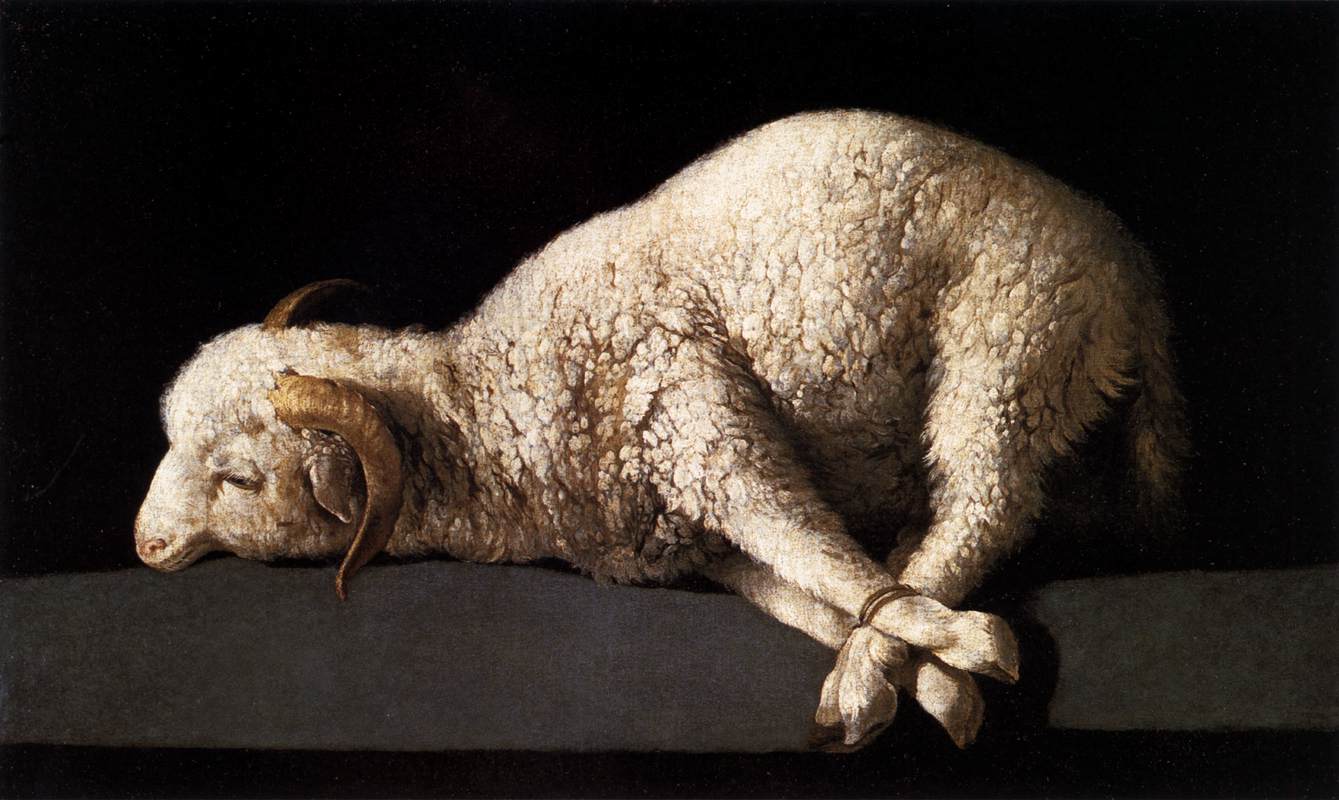
そして、このことに対して神様はモーセにイスラエルの民がこの災いから免れるために必要なことを話しました。すなわち一家族に一頭、傷のない雄の小羊をほふり、その小羊の血を、その人が住む家の入り口の2つの柱と、鴨居にそれを塗るのであるならば、それが目印となって、その家における初子の死は過ぎこされるというのです。しかし、その時に家々の柱と鴨居に子羊の血が塗られていない家々の全ての初子が打たれ、殺されてしまうというのです。この出来事をして聖書はそれを「過ぎ越し」と呼びます。
イスラエルの民が災いから逃れるために、神様が彼らに求めた事は、小羊の血が流されるということでした。つまり、その小羊の血が柱に塗られることにより、彼らは神様の審判を逃れることができたのです。彼らが神様の罰を逃れるためには一匹の傷なき羊の命が必要とされたのです。
そして、驚くべきことはこの過ぎ越しの出来事は聖書の中で孤立している単独の出来事ではないのです。その前後に起きた出来事、実にその年月の間隔は4000年にもおよぶのですが、その間に間に起きた出来事と鎖のようにこの過ぎ越しの出来事は関連しているのです。。
この出エジプトにおける過ぎ越しが起きた時から、さらにさかのぼること500年も昔、紀元前2000年、今から4000年の昔、神はアブラハムという一人の老人に目を留められ彼からその計画を始めようとされます。そのアブラハムが神様から『あなたの子、あなたの愛するひとり子イサクを連れてモリヤの地に行き、わたしが示す山で彼をはん祭としてささげなさい』(創世記22章2節)という命を受けて、モリヤの山に我が子イサクを捧げにいく場面が創世記22章に記されています。このモリアの地とは今日、エルサレムの黄金ドームが立っている場所です。
創世記にはそこに向かうこの父と息子の姿が描かれています。そこで神様にイサクの命を犠牲として捧げるためです。しかし、そのことを何も知らない、ただ山に犠牲を捧げにいくことだけと知らされていたイサクは一言、自分達が捧げるべき動物を父が携えていないことに気がつき、アブラハムにこう尋ねるのです。「父よ、火とたきぎとはありますが、はん祭の小羊はどこにありますか」(創世記22章7節)
皆さん、「はん祭」とは人が犯した罪に対する神への償いという意味があります。つまり、イサクはこのような意味をこめてこの一言を父アブラハムに言ったのです「お父さん、私たちの犯した罪の償いとなる小羊はどこにいるのですか?」この少年イサクの口から語られた何気ない一つの投げかけが聖書の重大なテーマとなっていきます。「どこに羊はいるのか」つまり「どこに人の罪の身代わりになる小羊がいるのか?」。このテーマによって聖書は展開していくのです。
そして、この出来事から1250年後、モーセの出エジプトから750年後、イザヤという預言者が一つの驚くべき預言をしました。「彼はしえたげられ、苦しめられたけれども、口を開かなかった。ほふり場にひかれていく子羊のように、また毛を切る者の前に黙っている羊のように、口を開かなかった」(イザヤ53章7節)
インドのカルカッタにマザーテレサの施設がいくつかあります。その一つの施設の隣にカーリー寺院というヒンズー教徒の寺があります。20年以上も前、その辺りをうろうろしていた私はそのカーリー寺院に集まる人々の異様な熱気に何事だろうと思い、その中に入っていきました。すると、そこには中庭があり、一匹の小羊が縄を首に巻かれていました。その羊を取り囲むように多くの人達が何か興奮して大きな声で話しています。一人の男が明らかにインド人ではない自分を見つけて、その小羊が間近に見える場所に手招きしてくれました。その小羊は黒く、心なしかこれから自分の身に起こることを察知しているのか縮こまるかのようにして神妙にしていました。そして、これから何が起るのかと考える暇もなく、人々はその小羊の首を丸太の上に載せました。そして、屈強な男が斧を振り下ろしたのです。ヒンズー教徒にとって、その儀式が何を意味するかは今も分かりません。しかし、私はこのイザヤ書に書かれている『ほふり場にひかれていく子羊のように、また毛を切る者の前に黙っている羊のように、口を開かなかった」を読む時に、いつもあの無抵抗の羊の姿を思い起こすのです。
そうです、イザヤが言うところの小羊とは今から4000年も昔、イサクが父アブラハムに「はん祭の小羊はどこか」と問うた小羊であり、また今から3500年も昔、「その門と鴨居に塗られた小羊の血により死がその家を過ぎこした」というあの過ぎ越しの出来事が予表していた小羊でありました。その小羊について今から2750年前に生きたイザヤはほふられる子羊の姿をして、それをこれまでとは違い、さらに具体的に「彼」と呼んだのです。
このイザヤから750年後、バプテスマのヨハネというイエス・キリストと同じ時代に生きた人が目の前にいるある人を指さしてこう言いました「みよ、世の罪を取り除く神の子羊」。そうです、ヨハネはイザヤのように「彼」と間接的にその小羊を呼んだのではなく、「見よ!」とその人自身を指差して「世の罪を取り除く神の小羊!」と呼んだのです。
イサクの「はん祭の小羊はどこにいますか」という問いかけから始まり、エジプトにおいては、初子の命が守られるために、その小羊の血がエジプトの町の柱に塗られました。そして、イザヤはその羊を「彼」と呼びました。ヨハネはそのイザヤによって呼ばれた「彼」を実際に見て、そして指差したのです。そして、その指差した先に実にユダヤ民族が数千年来、語り続けてきた小羊なるイエス・キリストがいたのです。
過ぎ越しの時に柱に塗られた小羊の血、それをもってイスラエルの民は神の罰を逃れることができたのです。そして、それはやがて後にこの世界で全世界の人間の罪のために十字架に架けられ、その罪の完全な赦しを約束されるイエス・キリストの確実な約束の予表だったのです。イエス・キリストが十字架で流された血をもって、私たちは今、その罪が過ぎこされるのです。
イエスの後に生きた使徒パウロはガラテヤ6章17節で「わたしはイエスの焼印を身に帯びている」と言いました。かつてエジプトの国で入り口の二つの柱と鴨居に小羊の血が塗られている家だけが、神の怒りから免れた印となったように、イエスの十字架による罪の赦しという焼印を身に帯びている私たちは、キリストと共に生きる望みが与えられているのだとパウロはここで言っているのです。
皆さん、イエス・キリストが聖書は自分のことを証言していると言われたことは、普通で考えますのならありえないのです。しかしながら、今、お話しましたように私達は畏れの思いをもってキリストの言葉の前にひれふすのです。確かに数千年も前に記録されたはん祭の小羊はこのイエス・キリストによって成就したのです。
そして、それだけではありません、聖書の中において一番「小羊」という言葉が出てくる箇所をご存知ですか?それは聖書の一番最後に記されているヨハネの黙示録です。私は今日、今から4000年前とか2000年前に起きた出来事について話してきましたが、ヨハネの黙示録はまだ起きていない、これからの私たちの未来について記している書物なのです。そのヨハネの黙示録の一番最後の22章、すなわちこのぶ厚い聖書の一番最後のページにはやがて、私たちが憩う天の国についてこうしるされています。(22章1節―7節)。
「御使いはまた、水晶のように輝いているいのちの水の川をわたしに見せてくれた。この川は、神と小羊との御座から出て、 都の大通りの中央を流れている。川の両側にはいのちの木があって、十二種の実を結び、その実は毎月みのり、その木の葉は諸国民をいやす。のろわるべきものは、もはや何ひとつない。神と小羊との御座は都の中にあり、その僕たちは彼を礼拝し、 御顔を仰ぎ見るのである。彼らの額には、御名がしるされている。 夜は、もはやない。あかりも太陽の光も、いらない。主なる神が彼らを照し、そして、彼らは世々限りなく支配する。彼はまた、わたしに言った、「これらの言葉は信ずべきであり、まことである。預言者たちのたましいの神なる主は、すぐにも起るべきことをその僕たちに示そうとして、御使をつかわされたのである。見よ、わたしは、すぐに来る。この書の預言の言葉を守る者は、さいわいである」。
天の国を流れる川は小羊のみ座から流れ、その小羊を人々は礼拝し、その顔を仰ぎ見ているというのです。説明するまでもなくこの小羊とは天におけるイエス・キリストであり、そこはやがて私達が行くべき場所なのです。ヨハネが言っていますように、これらの言葉は信ずべきであり、まことであるということ、その書の預言の言葉を守る者は、さいわいです。
皆さん、聖書が他の書物の追随を許さない理由はここにあります。人が本を書くときには起承転結を考え、何年も構想を練って書きます。そして、当然、それは一人の作者によってなされていくのです。故にそこには一貫性があるのです。しかし、この聖書は実に1500年の期間にわたり40名ほどの人達によって書かれました。当然、今日、取り上げました「出エジプト記」も「イザヤ書」も「ガラテヤ書」も「ヨハネ黙示録」も互いに面識もない、異なる時代を生きたモーセ、イザヤ、パウロ、ヨハネという人達が書いたのです。しかし、これらの一つ一つの章は小羊なるイエス・キリストを指差しているのです。ここには歴史、全てを見つめておられる神の目が注がれているのです。これらのことを踏まえる私達はあのイエス様の言葉の間に畏れの思いとともにひれ伏すのです。
44「わたしが以前あなたがたと一緒にいた時分に話して聞かせた言葉は、こうであった。すなわち、モーセの律法と預言書と詩篇とに、わたしについて書いてあることは、必ずことごとく成就する」(ルカ24章44節)。
この言葉をイエス様が弟子達に語ったのは、イエス様が復活されてから後のことです。しかし、イエス様は言っています「わたしが以前、あなたがたと一緒にいた自分に話して聞かせたこと言葉は」と。すなわち、聖書が自分のことについて書いてあるということをイエス様はその生涯を通して何度も何度も弟子達に語っていたのです。
あの少年イサクが4000年前に投げかけた「どこにはん祭の小羊がいますか?」という質問は、現代も世界を巡ります。そして、私たちはその答えを知っているのです。それは、ヨハネがその本人を指差して言ったようにイエスこそが世の罪を取り除く神の小羊なのです。イエスこそが私たちのために命を捨てるほどに私たちを愛して下さったお方なのです。そして、このお方こそが死を打ち破り永久に私たちを生かしめるお方なのです。私達の人生にはうっかりミスしてしまうことが多くあります。しかし、その人生のどこかでこのイエス・キリストと四つに向かい合うこと、私達はそれをミスしてはなりません。このイエスと出会い、彼を私たちの心の王座に迎え入れること、これよりも大切なことはないのです。お祈りしましょう。
The Prophesied Christ (1)
John 5:39-47
October 26, 2014
The Bible we have before us is composed of 39 books of the Old Testament and 27 books of the New Testament, a total of 66 books. There is no other book that has had such a great impact on the world as the Bible. In the English speaking world the Bible is referred to as “The Book”. There are countless books in the world but they are no match to the Bible. Here is the reason.
The Bible was written by more than 40 authors in a span of 1500 years. Think of what would happen if someone in the 5th century wrote a book, and every 100 years two or three writers of each period were to write a book, and after 1500 years these books were put together to make one book. These writers of course do not know each other and there is no editorial committee that can give the writers specific roles to create one unified book. There’s no question that the result will be an inconsistent group of books. But the Bible, written by 40 different authors in 1500 years, is one consistent book.
So what makes the Bible consistent? It is the fact that all of the books in the Bible point to Jesus Christ. Needless to say, even thousands of years before the birth of Christ, there were events that foreshadowed the coming of Christ. The reason I am talking about this in the first place is because Jesus Himself spoke of this. Let us read from the Gospel of John, which we have been focusing on in our message series.
“39 You study the Scriptures diligently because you think that in them you have eternal life. These are the very Scriptures that testify about me”(John 5:39)
Jesus states here clearly that the Scriptures testify about Him. When two of the disciples were heading to the village of Emmaus, despairing over the fact that Jesus was crucified and laid in the tomb, the risen Jesus came alongside and said to them:
“25 …“How foolish you are, and how slow to believe all that the prophets have spoken! 26 Did not the Messiah have to suffer these things and then enter his glory?”27 And beginning with Moses and all the Prophets, he explained to them what was said in all the Scriptures concerning himself.”(Luke 24:25-27)
After this, Jesus appeared before all the disciples and said: “44 …“This is what I told you while I was still with you: Everything must be fulfilled that is written about me in the Law of Moses, the Prophets and the Psalms.””(Luke 24:44)
As our current message series is titled “To Know Christ”, if we want to know who Jesus Christ really is, we must dig deeper into what Jesus meant when He said “the very Scriptures testify about me”, why He “explained to them what was said in all the Scriptures concerning himself”, and why He declared “Everything must be fulfilled that is written about me in the Law of Moses, the Prophets, and the Psalms”.
We may think that Jesus’ testimony about Himself is strange. After all the Old Testament was written years before Jesus was born and not a single verse mentions the name “Jesus Christ”, even though He said the very Scriptures testify about Him. So we may have doubts about His testimony and we may ask Jesus, “Lord, where in the Bible are the words that testify about you? Where in the Law of Moses, the Prophets, and the Psalms are you mentioned?” So today, out of these three sections mentioned by Jesus, I would like us to look at “what is written in the Law of Moses”.
What is written in the Law of Moses
The Law of Moses refers to the five books of Moses or the Torah. The greatest event recorded in the Torah is the Exodus, which occurred 3500 years ago in Egypt. This is when the people of Israel escaped Egypt after 400 years of slavery. Moses, who was the leader of Israel, negotiated with the Pharaoh to let them leave the land of Egypt.
But the heart of Pharaoh was hardened and he refused to let the people of Israel leave Egypt. So every time Pharaoh refused Moses’ request, a plague was inflicted upon Egypt, and it is recorded that there was a total of ten of these plagues. These plagues included the waters of the Nile turning into blood, the plague of frogs, the plague of gnats, the plague of flies, the plague on livestock, the plague of boils, the plague of hails, the plague of locusts, and the plague of darkness.
In other words, Pharaoh had nine chances to change his heart. But he kept hardening his heart until the tenth and worst plague happened, which was the plague of the firstborn. This plague brought death to all of the firstborn of Egypt, both human and livestock.
And God spoke to Moses what was required for the Israelites to be saved from this plague. He instructed that each household must slaughter a male lamb without defect and take the blood of the lamb and put it on the sides and tops of their doorframes, and if they did so the blood became a sign and the death of the firstborn passed over the household. But for the households that did not have the blood of the lamb on their doorframes, the firstborn was struck by the plague and killed. In the Bible, this event is called the “Passover”.
For the Israelites to be saved from this plague, God required the blood of a lamb. This meant that by having the blood of the lamb on their doorframes, they were able to escape the judgment of God. To escape God’s judgment, a lamb’s life needed to be sacrificed.
What is amazing is that the Passover is not just a single isolated event in the Bible. Before and after the Passover, there were events that became a link in the chain of events that spanned over 4000 years.
Around the year 2000 B.C., 500 years before the Passover recorded in Exodus and 4000 years from today, God chose an old man named Abraham to initiate His plan for mankind. In Genesis 22, we see the account of when Abraham took his son up mount Moriah after being commanded by God, “2 … “Take your son, your only son, whom you love—Isaac—and go to the region of Moriah. Sacrifice him there as a burnt offering on a mountain I will show you.”(Genesis 22:2). This region of Moriah is where the golden dome (Dome of the Rock) stands today in Jerusalem.
In this passage in Genesis, a father and son are heading toward this region of Moriah. They are going there to give Isaac as a sacrifice to God. But Isaac, who only knew they were going up the mountain to give a sacrifice, notices that Abraham does not have an animal prepared for the sacrifice, so he asks his father, “7 …“The fire and wood are here,” Isaac said, “but where is the lamb for the burnt offering?”” (Genesis 22:47)
A burnt offering was a way to make atonement for a person’s sins. In this context, what Isaac was asking his father Abraham was “where is the lamb that will pay for our sins?” This simple question of Isaac turned out to be the great underlying theme of the Bible. The Scriptures unfold with the big question: “Where is the lamb, the lamb that will be the atoning sacrifice for mankind’s sin?”
1250 years after this event at Moriah, that is 750 years from the Exodus, a prophet named Isaiah was given this startling prophetic vision: “7 He was oppressed and afflicted, yet he did not open his mouth; he was led like a lamb to the slaughter, and as a sheep before its shearers is silent, so he did not open his mouth.” (Isaiah 53:7)
In Calcutta, India, there are several missionary centers founded by Mother Teresa. Next to one of these facilities, there is a Hindu temple called the Kali Temple. Around 20 years ago, I was walking past this temple, when I noticed a strange atmosphere surrounding the crowd that was gathered there, and out of curiosity I walked inside to see what was going on. Inside there was a courtyard and there was a lamb with a rope around its neck. The crowd was gathered around this lamb and they were talking loudly in excitement. A man spotted me, who was obviously not Indian, and kindly took me to a place where I can see this lamb up close. It was a black lamb, and it seemed to be cringing in submission as if it already knew what was going to happen. And before I had the time to think of what was going to happen next, the people laid the lamb’s head on a log of wood. Then, a man swung the axe down. To this day I do not know what that ritual means for the Hindus. But whenever I read these words of Isaiah, “he was led like a lamb to the slaughter, and as a sheep before its shearers is silent, so he did not open his mouth”, the image of that defenseless sheep at the temple always comes to my mind.
The lamb Isaiah spoke of is the same lamb mentioned by Isaac 4000 years ago when he asked his father Abraham “where is the lamb for the burnt offering”, and is the same lamb that was foreshadowed 3500 years ago in the Passover when the LORD passed over the houses with the blood of the lamb on its doorframe. And 2750 years ago, Isaiah did something that was unprecedented, which was to simply refer to this lamb as “he”, therefore clearly recognizing the lamb as a person.
750 years after the time of Isaiah, a man called John the Baptist, who lived around the time as Jesus, pointed to a certain person and said this: “Look, the Lamb of God, who takes away the sin of the world!” John, unlike Isaiah, no longer had to use the indirect title “he” to refer to the lamb, but was able to point to the person right in front of him and say “Look, the Lamb of God, who takes away the sin of the world”.
It began with Isaac’s question, “where is the lamb for the burnt offering”; then in Egypt, to protect the lives of the firstborns, the people put the blood of the lamb on their doorframes; years later, Isaiah called this lamb “he”; then John saw the one Isaiah called “he” and pointed to Him. And in the direction he pointed to was Jesus Christ, the Lamb found in the Law and the prophecies which have been with the Jewish people for thousands of years.
The people of Israel were able to escape God’s judgment by putting the blood of the lamb on their doorframes. And this clearly foreshadowed the complete work of redemption accomplished by Jesus Christ on the cross when He was crucified for the sins of all mankind. Our sins are passed over today because Jesus shed His blood for us on the cross.
The apostle Paul, who lived a few years after Jesus’ time, said in Galatians 6:17, “I bear on my body the marks of Jesus”. Just like in Egypt when the blood of the lamb was the sign that made the wrath of God pass over, Paul says that today we bear the marks of Jesus, given to us through Jesus’ cross as a sign of forgiveness of our sins, and with this we are given the hope to live our life with Jesus Christ.
Jesus’ proclamation that the whole Bible testify about Him defies our earthly understanding. But by believing in what we just saw in the Scriptures, we humbly bow in reverence before the words of Christ. It was indeed through Christ that the promise made thousands of years ago in the lamb of the burnt offering was fulfilled.
And that’s not all: do you know where the word “lamb” is most frequently mentioned in the Bible? It is the very last book in the Bible, the Book of Revelation. Today I spoke of events that occurred 4000 years and 2000 years in the past, but in Revelation, we see things in our future that are yet to come. In the 22nd and last chapter of Revelation, in the last page of this hefty Bible, we see the following description of the heavenly kingdom that awaits us:
“Then the angel showed me the river of the water of life, as clear as crystal, flowing from the throne of God and of the Lamb 2 down the middle of the great street of the city. On each side of the river stood the tree of life, bearing twelve crops of fruit, yielding its fruit every month. And the leaves of the tree are for the healing of the nations. 3 No longer will there be any curse. The throne of God and of the Lamb will be in the city, and his servants will serve him. 4 They will see his face, and his name will be on their foreheads. 5 There will be no more night. They will not need the light of a lamp or the light of the sun, for the Lord God will give them light. And they will reign for ever and ever.
6 The angel said to me, “These words are trustworthy and true. The Lord, the God who inspires the prophets, sent his angel to show his servants the things that must soon take place.”
7 “Look, I am coming soon! Blessed is the one who keeps the words of the prophecy written in this scroll.”” (Revelation 22:1-7)
Here it says that the river of the water of life flows from the throne of the Lamb and His servants will serve Him and see His face. Needless to say, this Lamb is none other than Jesus Christ who is in heaven, the eternal home promised to us. As it is written here, these words are trustworthy and true, and the one who keeps the words of the prophecy will be blessed.
This is the reason that the Bible has no equal among all other books in the world. When a person writes a book, that author may take years to write and to develop the book’s composition. And of course this will be done by a single author. Therefore the book will be consistent. But the Bible was written by approximately 40 authors in a span of 1500 years. And the books we read from today (Exodus, Isaiah, Galatians, and Revelation) were all written by different authors (Moses, Isaiah, Paul, and John, respectively) who lived during different times. But each of these books and passages point to the Lamb which is Jesus Christ. In this we can see the eternal focus of God, who sees through all of history. As we come to know this, we cannot but bow in reverence before Jesus, who said: “44 … “This is what I told you while I was still with you: Everything must be fulfilled that is written about me in the Law of Moses, the Prophets and the Psalms.”” (Luke 24:44)
It was after His resurrection that Jesus spoke these words to the disciples. But Jesus said to them, “This is what I told you while I was still with you”. This means that throughout His time here on earth, Jesus told the disciples countless times about what is written in the Scriptures about Him.
The question “where is the lamb for the burnt offering”, asked by Isaac 4000 years ago, is still being asked in the world today. But we know the answer to that question. The answer is the one whom John the Baptist directly pointed to, Jesus Christ, the Lamb of God who takes away the sin of the world. And that very Lamb of God is the one who loved us so much that He gave His life for us. He is the one who conquered death on the cross and gives eternal life. Many times in our life we may miss something because of our lack of attention. But we must not miss the moment in our life where we come face to face with our Lord Jesus Christ, for there is nothing more important than to know Jesus and to ask Him to come in and live in our heart. Let us pray.
Translated by Keita Machida
本日のおもちかえり
2014年10月26日
1)ヨハネ5章39節、ルカ24章25節-27節、ルカ24章44節から聖書は一貫して何について書いていることが分かりますか。
2)出エジプト記12章1節-14節を読みましょう。このところで小羊の血が柱や鴨居に塗られたことは何を意味していますか。
3)創世記22章1節ー14節を読みましょう。7節においてイサクが父アブラハムに尋ねた「父よ、火とたきぎとはありますが、はん祭の小羊はどこにありますか」という言葉にはどんな意味がありますか。
4)バプテスマのヨハネはイエス様を指して「みよ、世の罪を取り除く神の子羊」と言いました。ここから、今日の礼拝で見てきました出エジプト記、創世記、イザヤ書に記されている「小羊」は何を指していたと分かりますか。
5)パウロはガラテヤ6章17節で「わたしはイエスの焼印を身に帯びている」と言いました。このことと「過ぎ越し」はどんな関係がありますか。その時、どんな印がイスラエルの民を救いましたか。
6)「小羊」を中心として聖書に記されていることを私達は見てまいりました。ここで再びルカ24章44節のイエス様の証言に立ち返ります時にあなたの心に去来する思いは何でしょうか。
7)聖書はなぜ他の諸々の書物とは全く異なるものであると言うことができるのでしょうか。人の歴史を見守り、それを導いておられるお方が、その歴史の一部を生きている私達にも御目をとめていてくださるという事実を知る時に私達は各々の人生をどのように受け止めることができますか。
