 私達がこの肉体を持っている限り、私たちは事ある毎に苦しむのです。そして、その苦しみは肉体的な苦しみだけではなく、聖書が「肉」という時にそれは私達の“肉的な思い”も含まれますから、私達は肉体の苦しみに加えて“精神的な苦しみ”にも悩まされるのです。これが私達が肉という幕屋にとどまっている間の宿命なのです。
マック
「礼拝プログラム」、「一日一生」はこちらから。本日の「日英両語の礼拝メッセージ原稿」、「おもちかえり」はこちらから↓。
「今の私」と「イースター」
2016年3月27日
コリント人へ第二の手紙5章1節―10節
人間と動物、そして植物の違いは何でしょうか。色々挙げられます。その一つについて聖書の伝道の書3章11節にはこんな言葉が記されてます「神のなされることは皆、その時にかなって美しい。神はまた人の心に永遠を思う思いを授けられた。それでもなお、人は神のなされるわざを初めから終りまで見きわめることはできない」。
そうです、動物や植物は朝昼晩、もしくは春夏秋冬という時の流れに従って生きています。なぜ春になると桜が咲くのか、なぜ初夏になると鮭が遡上するのか、言うまでもなく彼らに時計やカレンダーはありませんが、彼らの体内にはあらかじめインプットされているものがあり、私達はそれを本能と呼んでいます。森の木々の葉が落ち始めると熊がカレンダーを見ながらそろそろ冬眠しようとか、うさぎがイースターを前に今年も俺たちの出番がやってきたとは思いません。ましてや「永遠」というようなことに彼らが思いを寄せることはありません。
しかし、人間は時間という枠の中に生きながらも、その時間の範疇にないことにまで思いを寄せ、それを「永遠」と呼んでいます。伝道の書はこの永遠を思う思いというものを神は予め人間に与えられたと書き記しています。そして、そのように予め私達の内に「永遠」を思う思いをインプットされた神は私達に「永遠の命」についても語りかけているのです。
しかし、このようなことを聞く時に私達は思います。「永遠はいいから、“今”をもっと楽にしてくれ、“今”の“これ”を“あれ”を何とかしてくれ!」。ごもっともな思いです。おそらく今から数千年前、まだ時計がない時代、電気がない時代、人間の暮らしはとてもシンプルであったことでしょう。彼らはテレビを観たり、渋滞の中、車を運転したり、学校を受験したりすることはありませんでした。彼らの一日に午後3時45分の待ち合わせはなく、4月26日のSATのテストはありませんでした。おそらく彼らには夜空を見上げて色々なことを静かに思いめぐらす時間がたっぷりあったことでしょう。
しかし私達は明日の2時30分の病院のアポイントメント、4月15日までの税金申告と常に時間に追われて生きています。このように時間をいつも気にし、日々の諸々のことに忙しく追われている私達にとりまして「永遠」なんて気の長いこと、考えている暇はないというのが私達の正直な気持ちなのかもしれません。
しかし、聖書が言うように、もし永遠の世界があるということが事実なら、これよりも大切なことはこの世界には存在しません。なぜなら「永遠」の前に私達の生涯はまさしく一瞬にすぎず、さらには「永遠の命」が私達の“今”に与える影響は大きいからです。
コリント人へ第二の手紙5章1節―10節にはこのようなみ言葉が書かれています。①わたしたちの住んでいる地上の幕屋がこわれると、神からいただく建物、すなわち天にある、人の手によらない永遠の家が備えてあることを、わたしたちは知っている。②そして、天から賜わるそのすみかを、上に着ようと切に望みながら、この幕屋の中で苦しみもだえている。③それを着たなら、裸のままではいないことになろう。④この幕屋の中にいるわたしたちは、重荷を負って苦しみもだえている。それを脱ごうと願うからではなく、その上に着ようと願うからであり、それによって、死ぬべきものが命にのまれてしまうためである
このコリント人への第二の手紙を書いたパウロはこの聖書箇所において二つの対照的な言葉を使っています。それは1節にあるように「幕屋」という言葉と「永遠の家」という言葉です。幕屋というのは現代的に言うならば「テント」という意味です。すなわち、それは当時の遊牧民や羊飼い達が、土地から土地へと移住するために用いた簡単に設置と撤去ができる一時的な宿です。それに対して「永遠の家」とは永住するための宿という意味で、それは設置や撤去をする必要のないもので、文字通り、永久に住む家です。
このことを踏まえてここに記されている「幕屋」とは何を意味するのでしょうか。また「永遠の家」とは何を意味するのでしょうか。パウロはここで「幕屋」を私たちの「肉の体」として表現したのです。そして「永遠の家」を私たちの「霊の体」としてとらえているのです。
皆さんはテントで一夜を過ごしたことがあるでしょうか。テント生活は一日、二日ならいいのですが、それが何日も続くと、かなりしんどくなります。まだ十代の頃、親友と1980円(約$20)の2人用のテントを買って、神奈川県から四国までバイクで旅行したことがあります。小さな狭いテントで身動きができないような代物でした。首を寝違えて朝起きてみると、二人が一晩中、呼吸した息がテントの内側に水滴となっています。だんだん怪しい臭いもしだして、不快になってきました。
そんなテントでの寝起きを続け、一週間ほど立ちますとテント生活はもうコリゴリということになってくるのです。本来、心と体を休めるために設置するテントがストレスと疲れの原因となるのです。
このことは全く私達の「肉体」にもあてはまりませんか。肉体は若さによって健やかさが保たれている時はいいのですが、長い間、使っていますとやがてあちこちしんどくなってきます。時に肩が上がらなくなり、胃がもたれ、膝が傷み、常備薬が必要となり、肉体と共にあるしんどさというものを経験するようになります。ですから、パウロは言ったのです「この幕屋の中で(私たちは)苦しみもだえている」(2)と。
私達がこの肉体を持っている限り、私たちは事ある毎に苦しむのです。そして、その苦しみは肉体的な苦しみだけではなく、聖書が「肉」という時にそれは私達の“肉的な思い”も含まれますから、私達は肉体の苦しみに加えて“精神的な苦しみ”にも悩まされるのです。これが私達が肉という幕屋にとどまっている間の宿命なのです。
しかし、パウロは言うのです。私たちはやがて2節にあるように「天から賜る住みか」を得るようになると。それは、私たちのこの朽ちていく体がやがて霊の体へと変えられていくということです。ピリピ3章21節には「(神は)私たちのこの卑しい体を、ご自身の栄光のからだと同じ姿に変えて下さる」(ピリピ3章21節)と書いています。そして、このことが私達の肉体に起こるということこそ、今日のイースターと関係があるのです。
聖書の中にはパウロという人がいます。彼はかつてキリスト教徒を迫害すること、もっと過激に言いますのなら、この地球上からキリスト教を消滅させることに情熱を注いでいた人でしたが、その後、回心してそれまでの生き方と全く対極にある生き方を始めました。そうです、それまではキリスト教徒を迫害していた人が、キリストを命がけで伝える人となり、彼はその宣教ゆえに殉教しました。
このような劇的な変化には強烈な動機というものが必要になることは言うまでもありません。その彼の劇的な変化と、彼の新しい情熱、しかもそれは一時的なものではなく生涯、それを全うすることができたその情熱には原因、すなわち彼を突き動かしていたものが必ずあったわけで、その原因について彼はこう書き記しています。
3わたしが最も大事なこととしてあなたがたに伝えたのは、わたし自身も受けたことであった。すなわちキリストが、聖書に書いてあるとおり、わたしたちの罪のために死んだこと、4そして葬られたこと、聖書に書いてあるとおり、三日目によみがえったこと、5ケパに現れ、次に、十二人に現れたことである。6そののち、五百人以上の兄弟たちに、同時に現れた。その中にはすでに眠った者たちもいるが、大多数はいまなお生存している。7そののち、ヤコブに現れ、次に、すべての使徒たちに現れ、8そして最後に、いわば、月足らずに生まれたようなわたしにも、現れたのである。9実際わたしは、神の教会を迫害したのであるから、使徒たちの中でいちばん小さい者であって、使徒と呼ばれる値うちのない者である。(Ⅰコリント15章3節-9節)
このパウロを突き動かしたことについてパウロは最も大事なこととして「キリストが私たちの罪のために死んだこと、そして葬られたこと、聖書にかいてあるとおり、三日目によみがえったこと」ということを書き記しており、彼はこのことを伝えることにその人生の全てを注ぎ込んだのです。そして、この一文から分かることは「キリストが私達の罪のために死んだこと」という言葉以外は全てイエス・キリストの復活について書かれているのです。
もし「キリストが私達の罪のために死に葬られた、今もその亡骸はあの墓にある」ということであるのなら、パウロはそのキリストのために命をかけることはなかったのではないかと思います。なぜなら、どんな偉大なことを成し遂げても、たとえキリストの死が私達の罪のためであったということが事実であったとしても、死んでしまえば終わりだからです。そのあたりの本心をパウロはこう言っています「もし、死人がよみがえらないのなら、「わたしたちは飲み食いしようではないか。明日も分からぬ命なのだ」(コリント第一の手紙15章32節)
パウロは死がすべての終わりなら、今日も明日も享楽と共に生きればいいだろうというのです。どっちにしろ死んで土となるのなら、土になってしまう前にこの世で楽しもうではないか。もしかしたら、その最後の日は突如、明日くるかもしれないのだから、それでいいではないかというのです。
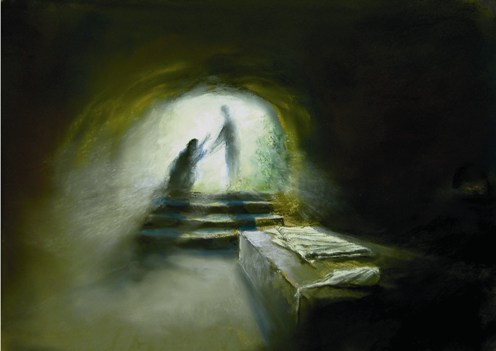
「Risen」という現在公開中の映画を観ました。イエス・キリストが十字架に磔にされ、その死を見届け、厳重にその体を墓に葬った一ローマ兵の視点からこの映画は作られています。彼はエルサレムの街中に隠れている弟子達を必死で探します。彼らがイエス様の遺体を盗んだと確信しているからです。しかし、一つ一つの調査がなされていくにつれ、彼は否定できない事実に向き合わなければならなくなります。そうです、イエス・キリストは実際によみがえられたということです。そして、その事実を知った後の彼の人生は言うまでもなく、それ以前のものとは全く異なるのです。そのキリストの復活は彼の“今”を変えたのです。
先にパウロが最も大切としていることをお分かちしましたように、この弟子達が、そして後のクリスチャンと呼ばれる者達が宣べ伝えてきたキリスト教のメッセージの中心はこのキリストの復活なのです。意外に思われるかもしれませんが、新約聖書の中の「使徒行伝」の中で、「十字架」は15回出てくるのですが、「復活」はなんと45回も出てくるのです。すなわち初代教会のキリストの弟子達を奮い立たせたのはキリストの復活であり、そのメッセージの中心には常にこの復活があったのです。
この度、私達はエルサレムにあるオリーブ山を下ってエルサレムの旧市街に向かいました。イエス様が十字架にかかる一週間前に子ロバに乗って山を下った景色がそこにあり、眼下にはイエス様がその時に通り抜けられた城壁内に通じる黄金門があります。その道すがら、私達はイエス様が十字架を直前にして祈られたゲッセマネと呼ばれるオリーブの木が植えられた園に立ち寄ります。そこには樹齢が2500年にもなるオリーブの木が今もあり、おそらくその木はイエス様が血が滴るように汗をかき祈られていたその姿を目撃したことでありましょう。その後、イエス様はそのゲッセマネで捕えられ幾つかの場所へと連行され最後に十字架刑を言い渡されます。私達はそんなイエス様が連行されたえ諸々の場所の遺跡を訪ね、そこから十字架を背負わされてゴルゴダに向かったのだというビア・ドロローサを歩きました。ゴルゴダの丘があったであろう跡地には当時の岩の丘の跡があり、その岩には聖書が記す通り、その時に起きた地震でひびわれた跡があり、その近くにはイエス様が葬られたであろう墓があります。先週もお話しましたようにこのゴルゴダの丘の側では当時、磔にされた者達の引き裂かれた手首や足首がそのまま釘着けにされている古い木々が発掘されたのです。
このようにイエス・キリストが最期の一週間に十字架に向かって歩まれた道のり、まさしく聖書に記されていて、今も私達の前に実在している場所を歩きながら、イエス・キリストはまさしく実際にここにいたのだということ、そしてこのお方は確かに十字架につけられ、葬られたということを確信しました。私達は今も残っているこれらのものを前にイエス・キリストを否定することはできないのです。
さらに聖書によりますとイエスの弟子達は実際に復活されたイエスに直接、出会っています。彼らはそのことを目撃することにより、目には見えないけれどイエスは自分達と共にいるということを確信しました。そして同時にイエスの復活は彼らに自分もこの復活の命にあずかることができるのだという確信を与えました。
映画「Risen」は「どうしてこの復活のイエスを知った今、その生き方が変わらないことがあり得ようか」というような弟子、ペテロの言葉で終わります。その通りです。このことが本当に事実であるのなら、私達は今一度、自分の人生を見直すことになります。人生を見直すとは普通なら知りえない自分の人生の終わりを知り、その自分の地上最期の日から逆算して今を考えるということであり、そうする時にキリストにある永遠の命の約束はまさしく今の私達の生き方を変える力があるのです。
このことは明らかに「死んじゃえば終わりさ」ということではなく、そこまでの幕屋での生活が終わり、すなわちそれまでの寄留者としての仮住まいが終わり、いよいよ私達が本来、住むべき永遠の家に住む、その時が始まるということなのです。パウロはそれこそが自分の希望であり、喜びであり、切望していることであり、ゆえに彼は今という時をも捨てずに生きたのです。どんなに苦しいことがあっても、彼はその最後の揺るがない希望の確信をもっていますから、前を向いてその生涯を歩み続けるのです。その彼の日々についてパウロは続く57節から58節に書いています。
「わたしたちの主イエス・キリストによってわたしたちに勝利を賜る神に、感謝しよう。わたしの愛する兄弟たち、こういうわけですから、動かされないようにしっかり立ち、主の業に常に励みなさい。主に結ばれているならば自分たちの苦労が決して無駄にならないことを、あなたがたは知っているはずです」
パウロはは死んで今は墓に眠るキリストの亡骸に向かって、この言葉を言っているのではないのです。今も生きている死を打ち破った勝利者キリストゆえに、彼はこの言葉を私達に語りかけているのです。
もし、このことがパウロの妄想であるのなら、一人の奇人が思い込みでキリストの復活を信じたのだろうと私達は言うことができたでしょう。しかし、この「全ての労苦が決して無駄にならない」というパウロの言葉を支持する者達が、彼亡き後にも続々とこの地上に起き、今日にいたっているのです。そして、それは皆さんもそうでありましょう、私達が主に結ばれている限り、この主の復活の命にとどまっている限り、私達がなす主の業は、それがたとえ苦労で満ちていても、それは決して無駄にはならないのです。
先ほどイエス・キリストの最後の一週間に起きた出来事を否定することはできないとお話しました。そうです、エルサレム入場から十字架にかけられ、葬られたという事実です。しかし、イエスの復活をどうでしょう。どうしてこのことを実証できましょうか。実証できるのです。それはパウロを初め、イエスに出会った弟子達の変化です。復活されたキリストに出会った人間に当然、起きるであろう変化です。そのことにより彼らのそれまでの生き方は変えられ、彼らはイエスのために生きるようになりました。イエスのために生きることとは彼らにとってどういうことだったのでしょう。そうです、彼らは自分が行きつくことができる所まで行き、命がけでこのイエスを伝えたのです。そして、それぞれがその行きついた場所で殉教していきました。そして、その彼らが蒔いた種の収穫の一つが私であり、あなたなのです。このことは事実であり、私達はこれを否定することはできません。そして、このことはイエス・キリストが本当に復活されたということをぬきにして考えることはできないのです。
三浦綾子さんは「わたしにはまだ死ぬという仕事がある」と言われました。既に彼女は地上でのその最後の仕事も終え、主のみもとにいます。しかし、ここにいる私達にはまだその大きな仕事が残されています。その備えはできていますか。キリストの復活の力に私達はあずかっていますか。そのところがはっきりとしているのなら、その最後の仕事はおのずと成し遂げられるでしょう。そしてこの備えがなされているのなら、私達の今日の生き方も変わるのです。否、変わらざろうえないのです。そう、それまで闇に包まれていた私達の最期の行き先が、今や光に照らされているのですから。その光は私達が今、歩んでいるその道をも照らしているのですから。
私たちが母親の胎内で過ごした10ヶ月が、この地上における人生への準備期間であったように、この地上における人生は永遠の世界に向けた準備期間と言うことができます。「死」は永遠の世界を開く扉です。その日は私達がこの地上で幕屋、すなわち仮の宿に住む最後の時となりますが、それは本当の最後ではありません。死はこの地上における人生の終りの日であると同時に、永遠の始まりの日なのです。そして死ななければ主のもとに行けないということを思う時に、人が最も恐れる死ということにすら私達は神の光と慰めを見ることができるのです。
「この地上には永遠の都はない。きたらんとする都こそ、わたしたちの求めているものである」ヘブル13章14節 お祈りしましょう。
“My present self” and “Easter”
2016, March 27
2 Corinthians 5:1-10
What are the difference between humans, animals, and plants? There are many valid answers to this question. But one is mentioned in the bible in Ecclesiastes 3:11. “He has made everything beautiful in its time. He has also set eternity in the human heart; yet no one can fathom what God has done from beginning to end.”
Yes, animals and plants live according to the flow of time as morning, day, and night or asspring, summer, fall, and winter. They do not think why the cherry blossoms bloom in the spring or why the salmon go upstream in the summer. They have no clock or calendar to follow, it is already set within their bodies as what we call instinct. When the leaves start to fall in the autumn the bear doesn’t look at his calendar to plan when he will hibernate for the winter, nor does a rabbit think that their turn for attention is here when easter comes around. And of course “eternity” would never even cross their minds.
Yet, humans living in this frame of time, we think of things beyond this frame which we call“eternity”. In Ecclesiastes, it says that God has given us these thoughts of eternity from the beginning. And along with our thoughts of “eternity” he has spoken to us about “eternal life”.
Yet, when we hear things such as “eternity”, we humans tend to think, “Well, eternity sounds nice, but rather than that, make ‘the present’ easier for us. Do something about ‘this’ or ‘that’!” It is in fact a common thought. thousands of years ago before there were clocks or electricity, human life must have been quite simple. They didn’t watch TV, drive in traffic, nor take exams for school. They didn’t have appointments at 3:45, or an SAT test on April 26th to take. They probably had lots of time to look up at the stars and quietly think.
But we have our hospital appointment tomorrow at 2:30 to this about or the taxes that need to be filed by April 15th. We are always concerned about time, and being too busy with the daily errands, “eternity” is far too long out of our range of worries.
But if the Bible is indeed true, there is nothing more important than this in the world. This is because our life is only but a single moment before “eternity”. And furthermore, the influence of eternal life on our current lives is great.
It is written in 2 Corinthians 5:1-4, “For we know that if the earthly tent we live in is destroyed, we have a building from God, an eternal house in heaven, not built by human hands. Meanwhile we groan, longing to be clothed instead with our heavenly dwelling, because when we are clothed, we will not be found naked. For while we are in this tent, we groan and are burdened, because we do not wish to be unclothed but to be clothed instead with our heavenly dwelling, so that what is mortal may be swallowed up by life.”
Paul, the writer of Corinthians, uses two words very clearly in this passage. The first word is “tent”, and the second is “eternal house”. We are quite familiar with the use of a tent. It would have been used as a mobile living space for shapers or nomads who move from one place to another frequently. In contrast to that, an “eternal house” would be a living space for permanent settlement without the need to set up and teardown depending on the circumstance.
With this in mind, what do you think the “tent” represents? And what does the “eternal house” represent? Paul represents the “tent” as our own “physical body”, and the “eternal house” as our “spiritual body”.
Have you ever spent a night in a tent? If it is only a day or two it is fine, but if it is to continue longer, it gets to be fairly tiresome. When I was in my teens, I bout a two man tent for about $20 with a friend. We traveled from Kanagawa Prefecture to Shikoku island by bike. We were cramped in the little tent. I woke up with a sore neck from sleeping in an awkward position, and the tent full of condensation from our breaths. After a while a stench built up and it became very unpleasant. After about a week of tent living, you’ve had enough of it. What first started as a trip to relax the heart and body ended up causing more stress and tired me out.
Does this not also apply to our physical bodies? It is fine when we are young and healthy but as time passes our body starts to tire in many places. Our shoulders get stiff, our stomach feels heavy, our knees hurt, and we require medicine. This is the experience of our body’s tiredness.
And so Paul said, “while we are in this tent, we groan and are burdened”(2). As long as we have this body, we suffer through each experience. Not only is it suffering of the body but it also includes the “thoughts and desires of the flesh” so we suffer mentally. This is what our lives are like while we live in our “tents”.
But Paul says as written in verse 2, that we have a “building from God”. That is that our degenerating bodies will be changed to spiritual bodies. It states in Philippians 3:21, “who, by the power that enables him to bring everything under his control, will transform our lowly bodies so that they will be like his glorious body.” And the fact that this will happen to our bodies is related to this day, Easter.
In the Bible is a man named Paul. At first he persecuted the church of Christ. To explain in extreme terms, he had a zeal for annihilating Christianity from the face of the earth. But through various circumstances, he had a change of heart and began to live entirely the opposite from before. Yes, he devoted himself to Christianity and risked his life to spread it.
For such a dramatic change there must be a strong motive. HIs dramatic change and new passion was not temporary. For him to devote his whole life, there was a strong source, a reason, to his passion which drove him. It is written,
“For what I received I passed on to you as of first importance: that Christ died for our sins according to the Scriptures, that he was buried, that he was raised on the third day according to the Scriptures, and that he appeared to Cephas, and then to the Twelve. After that, he appeared to more than five hundred of the brothers and sisters at the same time, most of whom are still living, though some have fallen asleep. Then he appeared to James, then to all the apostles, and last of all he appeared to me also, as to one abnormally born. For I am the least of the apostles and do not even deserve to be called an apostle, because I persecuted the church of God.” (1 Corinthians 15:3-9)
Paul writes that his diving force is of first importance that “Christ died for our sins according to the Scriptures, that he was buried, that he was raised on the third day”, and he gave his everything in spreading this news. And what we can learn from this is that other than the fact that Christ died for our sins, everything written is on the resurrection of Christ.
If it had been that “Christ died for our sins and his his body still remains in that tomb”, Paulwould not have devoted his life. This is because, no matter how great the accomplishment was, even if Christ’s death was for our sins, if he is dead, that is the end. Paul also says, “If the dead are not raised, ‘Let us eat and drink, for tomorrow we die.’” (Corinthians 15:32)
What Paul is saying is, If death is the end, why not live in pleasure. If we are eventually going to die and return to dirt, let’s enjoy this world. The last day may even be tomorrow.
I saw a movie currently showing in theaters called “Risen”. It is a movie made from the perspective of a Roman soldier who watched the crucifixion of Jesus Christ and put his body into the tomb. He franticly searches the city for the decibels in hiding because he is convinced that Jesus’s body was stolen by them. But as his investigation continues, he is forced to face the truth: that Jesus Christ truly rose from the dead. And after he learns this truth, his life is changed. Christ’s resurrection changed his “present” life.
As we have talked about what Paul valued most, what the apostles and the Christians that came after have continued to proclaim is the message of Christ’s resurrection. It may surprise you but in the book of Acts, the word “cross” is used 15 times but the word resurrection is mentioned 45 times. In other words, Christ’s resurrection was what strengthened the disciples of the first generation churches, and was always at the heart of their messages.
This past trip, we went down the Mount of Olives to Old Town Jerusalem. One week before his crucifixion, Jesus rode down that very mountain on the back of a donkey. Below is the Golden Gate that Jesus rode through on the temple wall. From there we went to Gethsemane, a garden where an olive tree grows, the place where Jesus went to pray the night before his crucifixion. There, an olive tree of 2500 years still stands. That tree must have seen Jesus praying with sweat running down like blood. From this place Jesus was captured and taken to several places until he was sentenced to death on the cross. We visited the ruins of these places Jesus was taken, and from there walked the path of Via Dolorosa that Jesus walked carrying the cross to Golgotha. The place where the hill of Golgotha is thought to have been is a rocky hill. On that rock is a crack, the crack that is mentioned in the bible made by an earthquake. And near there is what is thought to be Jesus’ tomb. As I spoke of last week, by the side of the hill, the remains of the hands and feet of the crucified still nailed on wood have been excavated.
As we walked the vary places Jesus walked in the last week before his crucifixion as recorded in the bible, we made certain that Jesus truly did live and die on the cross. With such evidence before us, we cannot deny Jesus Christ.
As the Bible says, the apostles saw Jesus after his resurrection. By witnessing this, theyconfirmed that Jesus is always by their side even if they cannot see him. They were also convicted that they can be part of this resurrecting life.
The movie “Risen” ends with the line “I believe I will never be the same again” by apostle Peter. Quite so. If this is indeed the truth, we will once more reexamine our lives. To look back an reexamine our lives is to recognize the end and count back from the remaining days on earth to the present time. But the promise of eternal life in Jesus has the power to change the way we live today.
This is not that “death is the end” but that the life in a tent has ended, the life of being a temporary residence has ended, and the time to live as we were meant to in our eternal house has begun. This was Paul’s hope, joy, and desire, and so he lived without waisting the present life. No matter how painful things were, he was able to live on with unwavering confidence for the future. He writes of his days in verse 57 and 58,
“But thanks be to God! He gives us the victory through our Lord Jesus Christ. Therefore, my dear brothers and sisters, stand firm. Let nothing move you. Always give yourselves fully to the work of the Lord, because you know that your labor in the Lord is not in vain.” (Corinthians 15:57-58)
Paul did not say this to the dead body of Christ in his tomb. He said this because Christ lives on in victory over death. If this was all Paul’s dilution, we could say that Jesus’ resurrection was just an illusion of one eccentric man. But the words “your labor is not in vain” has, even after his death, been supported and passed on to this day. Is this not true for us? As long as we are bound to the Lord, as we remain in his eternal life, the Lords works through us is never in vain even in times of trouble.
Earlier I stated that it is impossible to deny what had happened in the last week before the death of Jesus Christ. Yes, it is true that he entered Jerusalem, hung on the cross, and died. But what about his resurrection. How can we prove this. We can prove it. Beginning with Paul, the changes that occurred in the lives of the apostles. The sudden changes in the people that saw Jesus after his resurrection. With this event, their ways were changed and since have devoted their whole lives to Jesus. What did it mean to live for Christ. It meant that they went as far as they could risking their lives to share about Jesus. They witnessed wherever they were. and one seed from that harvest is me and another is you. It is the truth which we cannot deny. It is a fact that cannot stand without the event of Jesus’ resurrection.
Ayako Miura said, “I still have the unfinished job to die”. Now she has finished this this last job on earth and has joined Jesus. But we here still have that job to fulfill. Are you prepared? Have you entrusted yourself to Christ’s resurrection. If your answer is clear, that last job will be naturally accomplished. And if you are prepared, the way we live today will also change. No, we have no choice but to change. The end drawing nearer in darkness has suddenly lit up with light. That light also shines on the path we walk today.
Just as how the10 months we spent in our mother’s womb was a preparation period, our lives here on earth is a time of preparation for the eternal life awaiting us. “Death” is the gate to the eternal world. That day will be the last in the temporary tent on earth, but not truly the end.
Death is the end of life on earth but the beginning of eternity. When we realize that death is the only way to Christ, we care able to find comfort and light in what humans fear most. “For here we do not have an enduring city, but we are looking for the city that is to come.” (Hebrews 13:14) Let’s pray.
Translated by Shirah Vogt
本日のおもちかえり
2016年3月27日
1)伝道の書3章11節を読みましょう。なぜ神様は人間だけに「永遠を想う思い」をお与えになったのだと思いますか。
2)確かに私達は永遠を思いますが、それよりも「今のこと」に心が奪われる傾向があります。なぜですか。
3)コリント第二の手紙5章1節―4節を読みましょう。このところの「幕屋」を私達の肉(体と精神)、そして「永遠の家」を「霊の体」とすると、ここから分かってくることは何ですか。
4)幕屋はテントとして考えることができます。テントに三年暮らすことがしんどいように、肉体にはしんどさがともないます(疲労、病気、怪我、そして最後には死)。それに対して霊の体が私達に約束するものは何ですか。
5)この私達が与えられる「霊の体」とイエス・キリストはどんな関連がありますか。Ⅰコリント15章3節-9節を読みましょう。
6)パウロは「もし、死人がよみがえらないのなら、「わたしたちは飲み食いしようではないか。明日も分からぬ命なのだ」(コリント第一の手紙15章32節)と言いました。なぜパウロは復活の意義をこのように考えているのですか?このような生き方はどんな暮らしとなりますか。
7)「永遠の命」は今のあなたと何の関係がありますか。コリント第一の手紙15章57節‐58節を読みましょう。「私達の労苦が決して無駄にならない」という根拠はどこにありますか。
