
 イスラエルの三代目の王であった知者ソロモンはこのような言葉を伝道の書に残しました。『祝宴の家に行くよりは、喪中の家に行くほうがよい』(新改訳 伝道の書7章2節)。このソロモンの言葉は私達の意表をつくものです。なぜなら、誰しもが喪中の家に行くよりも祝宴の家に行くことを望むからです。なぜソロモンは「祝宴の家に行くよりは、喪中の家に行くほうがいい」と言ったのでしょうか。
ソロモンはこの言葉のすぐ後にこう書いています『そこには、すべての人の終わりがあり、生きている者がそれを心に留めるようになるからだ』(新改訳 伝道の書7章2節)。そうです、喪中の家に行くことは人の最後を目の当たりにすることであり、その最後の日を迎えることは他人事ではなく、必ず自分にもその日が来ることを心にとめるからだというのです。すなわち、私達の人生は永遠に続くものではなく、やがて終わりがくるのです。
ソロモンのこの言葉はさらに私達に「死から逆算して人生の計画を立てる」ことを私達に勧めているとも言えますでしょう。確実に来る私達の終わりを知り、そこから逆算して、今という時をどのように生きるのかと考えるということです。あの実存主義を唱えたハイデガーは「人は、いつか必ず死ぬということを思い知らなければ、生きているということを実感することもできない」と言いましたが、これはまさしくソロモンが言っていることの真意だと思われます。
チェザーレ・ボルジャというイタリアの政治家は「私は生きているときに、死以外のあらゆるものに対して備えをしていた。今、私は死なねばならぬ。そして、まだなんの備えもない」と言いました。三浦綾子さんは生前「私にはまだ死ぬという仕事がある」と言い、それは「死ぬという大仕事」なのだということをほのめかしました。そして、彼らが言っている死への備えとはお墓を買いましたとか、遺産の手続きも済みましたとか、そういうことではないのです・・・。
本日、礼拝でお話した「日英両語メッセージ原稿」、および「本日のおもちかえり」です。↓
マック
まずは死の解決を!
2014年4月20日
イースターおめでとうございます!Happy Easter! イースターとはどんな日なのか。最近ではバレンタインほどではありませんが、日本でもうさぎの形をしたチョコレートがこのシーズンには売られているようですし、「エッグハンティング」という言葉も浸透しつつあるようです。
しかし、本当の意味でのイースターを知っている人は決して多くはありません。そうです、イースターとはイエス・キリストが死から復活してよみがえったということを喜ぶ日なのです。そこで今日は毎年、そうしていますようにこのイースターという日が私達に与え続けている約束についてお話しさせていただきます。
イスラエルの三代目の王であった知者ソロモンはこのような言葉を伝道の書に残しました。『祝宴の家に行くよりは、喪中の家に行くほうがよい』(新改訳 伝道の書7章2節)。このソロモンの言葉は私達の意表をつくものです。なぜなら、誰しもが喪中の家に行くよりも祝宴の家に行くことを望むからです。なぜソロモンは「祝宴の家に行くよりは、喪中の家に行くほうがいい」と言ったのでしょうか。
ソロモンはこの言葉のすぐ後にこう書いています『そこには、すべての人の終わりがあり、生きている者がそれを心に留めるようになるからだ』(新改訳 伝道の書7章2節)。そうです、喪中の家に行くことは人の最後を目の当たりにすることであり、その最後の日を迎えることは他人事ではなく、必ず自分にもその日が来ることを心にとめるからだというのです。すなわち、私達の人生は永遠に続くものではなく、やがて終わりがくるのです。
ソロモンのこの言葉はさらに私達に「死から逆算して人生の計画を立てる」ことを私達に勧めているとも言えますでしょう。確実に来る私達の終わりを知り、そこから逆算して、今という時をどのように生きるのかと考えるということです。あの実存主義を唱えたハイデガーは「人は、いつか必ず死ぬということを思い知らなければ、生きているということを実感することもできない」と言いましたが、これはまさしくソロモンが言っていることの真意だと思われます。
チェザーレ・ボルジャというイタリアの政治家は「私は生きているときに、死以外のあらゆるものに対して備えをしていた。今、私は死なねばならぬ。そして、まだなんの備えもない」と言いました。三浦綾子さんは生前「私にはまだ死ぬという仕事がある」と言い、それは「死ぬという大仕事」なのだということをほのめかしました。そして、彼らが言っている死への備えとはお墓を買いましたとか、遺産の手続きも済みましたとか、そういうことではないのです。
彼らの言うところの備えとは、必ず迎えるその最後の日、すなわち死とは何なのかということを知ること、そして、その日から逆算して、その日に向けて今日という一日をどう生きるのかという備えなのです。この「死」ということについて、聖書に記録されている一つの出来事があります。
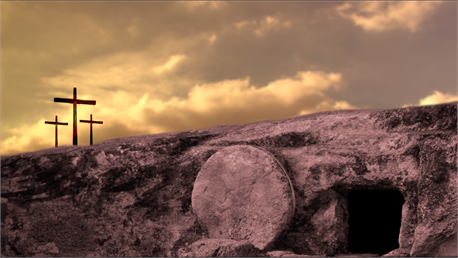
1週の初めの日、夜明け前に、女たちは用意しておいた香料を携えて、墓に行った。2ところが、石が墓からころがしてあるので、3中にはいってみると、主イエスのからだが見当らなかった。4そのため途方にくれていると、見よ、輝いた衣を着たふたりの者が、彼らに現れた。5女たちは驚き恐れて、顔を地に伏せていると、このふたりの者が言った、「生きた方を死人の中にたずねているのか。6そのかたは、ここにはおられない。よみがえられたのだ。まだガリラヤにおられたとき、あなたがたにお話しになったことを思い出しなさい。7すなわち、人の子は必ず罪人らの手に渡され、十字架につけられ、そして三日目によみがえる、と仰せられたではないか」。(ルカ24章8節)。
このところに書かれていることは今から2000年前、エルサレムのとある墓で起きました。読んでお分かりのように十字架にかけられたイエス・キリストの亡骸に香料を塗ろうと、女たちが夜が明ける前にその墓に向かったところ、その墓を塞いでいた大きな石が傍らに転がっており、中を見るとイエスの亡骸がどこにもなかったということです。そして、その時に御使いが彼女達にこう言ったというのです「生きた方を死人の中にたずねているのか。その方はここにはおられない。よみがえられたのだ」。
この言葉はこれらに加えられることもなく、削除されることもなく、2000年来、この地上を生きた人間に語り告げられていき、私達もその日のエルサレムの出来事に心をとめているのです。そうです、イエス・キリストは死を打ち破り、よみがえられたというのです。この出来事が世界をひっくり返し、この劇的なニュースは今も、私達の心を大きく揺さぶっており、そのことを喜ぶイースター礼拝が今日、全世界の教会で捧げられています。そこに集う者達は、イエスの復活という作り話を聞くために日曜日の朝、床から起き上がって教会に来ているのではなくて、このキリストの復活を信じて、同時にそのキリストの復活の命に自分もあずかるべく、もしくはその復活の命に自分が預かっていることを喜び、今朝の礼拝に集っているのです。
聖書の中にはパウロという人がいます。彼はかつてキリスト教徒を迫害すること、もっと過激に言いますのなら、この地球上からキリスト教を消滅させることに情熱を注いでいた人でしたが、その後、回心してキリストを命がけで伝える人となり、実際にその宣教ゆえに殉教した人です。
神様は時にこのような極端な人を用いられます。まさしく対極にいた人がこちらに来て、そこでも最前線で自分が信じ、確信するところに突き進んだのです。私達の言動は心から湧き出てくるものであり、それらには出所があるということを数週間前にお話ししました。ですから当然、パウロの劇的な変化と、その情熱の継続にも原因といいましょうか、彼を突き動かしたものが必ずあったわけで、その原因について彼はこう書き記しています。
3わたしが最も大事なこととしてあなたがたに伝えたのは、わたし自身も受けたことであった。すなわちキリストが、聖書に書いてあるとおり、わたしたちの罪のために死んだこと、4そして葬られたこと、聖書に書いてあるとおり、三日目によみがえったこと、5ケパに現れ、次に、十二人に現れたことである。6そののち、五百人以上の兄弟たちに、同時に現れた。その中にはすでに眠った者たちもいるが、大多数はいまなお生存している。7そののち、ヤコブに現れ、次に、すべての使徒たちに現れ、8そして最後に、いわば、月足らずに生れたようなわたしにも、現れたのである。9実際わたしは、神の教会を迫害したのであるから、使徒たちの中でいちばん小さい者であって、使徒と呼ばれる値うちのない者である。(Ⅰコリント15章3節-9節)
このパウロを突き動かしたことは「キリストが私たちの罪のために死んだこと、そして葬られたこと、聖書にかいてあるとおり、三日目によみがえったこと」ということであり、彼はこの事実を伝えることにその人生の全てを注ぎ込みました。
「キリストが私達の罪のために死に、葬られた、今もその亡骸はあの墓にある」ということであるのなら、パウロはそのキリストのために命をかけることはなかったのではないかと思います。なぜなら、「どんな偉大なことを成し遂げても、死んでしまえば終わり」だからです。そのあたりの気持ちをパウロはこう言っています「もし、死人がよみがえらないのなら、「わたしたちは飲み食いしようではないか。明日も分からぬ命なのだ」(コリント第一の手紙15章32節)
パウロは死がすべての終わりなら、今日を享楽と共に生きようではないかというのです。どっちにしろ死んで土となるのなら、土になってしまう前にこの世で楽しもうではないか。もしかしたら、その最後の日は突如、明日くるかもしれないのだから、少しぐらい人に迷惑をかけようが、誰かが自分のために涙を流したり、傷ついても、今、この時に自分がしたいことをして生きればいいではないかというのです。
先ほど「死から逆算して人生の計画を立てる」と申しましたが、開き直って享楽に徹して生きる生き方も「死」に対して私達が取りうる選択肢の一つです。しかし、その様はニーチェが「神なき世界は虚無に包まれる」と言ったその言葉通りの世界です。
パウロの人生には「キリストの復活」という確信が与えられました。さらに、彼が得た確信は「その復活の命に自分もあずかることができる」ということでした。そして、このことを「死から逆算して今を考える」ということにあてはめますのなら、彼の死は終わりではなく、そこから永遠の命が始まるということであり、そのことを知っているということから今の自分がどう生きるべきかということを考えるということでした。
このことは明らかに「死んじゃえば終わりさ」ということではなく、その先にも命があるということですから、もっと言いますとそれがパウロの希望であり、喜びであり、切望することですから、彼は今というこの時をも捨てずに生きるのです。どんなに苦しいことがあっても、彼はその最後の揺るがない希望の確信をもっていますから、前を向いてその生涯を歩み続けるのです。その彼の日々についてパウロは続く57節から58節に書いています。
「わたしたちの主イエス・キリストによってわたしたちに勝利を賜る神に、感謝しよう。わたしの愛する兄弟たち、こういうわけですから、動かされないようにしっかり立ち、主の業に常に励みなさい。主に結ばれているならば自分たちの苦労が決して無駄にならないことを、あなたがたは知っているはずです」
彼は死んで今は墓に眠るキリストの亡骸に向かって、この言葉を言っているのではないのです。今も生きているキリストゆえに、彼はこの言葉を言っているのです。もし、パウロだけなら、たまたま一人の奇人が思い込みでキリストの復活を信じたと私達は言うことができたでしょう。しかし、この「全ての労苦が決して無駄にならない」というパウロの言葉を支持する者達が、彼亡き後にも続々とこの地上に起き、今日にいたっているのです。そして、それは皆さんもそうでありましょう、私達が主に結ばれている限り、この主の復活の命にとどまっている限り、私達がなす主の業は、それがたとえ苦労で満ちていても、それは決して無駄にはならないのです。
三浦綾子さんは「わたしにはまだ死ぬという仕事がある」と書かれたと申し上げました。既に彼女は地上でのその最後の仕事も終え、主のみもとにいます。しかし、ここにいる私達にはまだその仕事が残されています。その備えはできていますか。キリストの復活の力に私達はあずかっていますか。そのところがしっかりとしているのなら、その最後の仕事はおのずと成し遂げられるでしょう。そして私達の死についてキリストにある準備がなされているのなら、今日という生き方も変わるのです。そう、それまで闇に包まれていたその私達の行き先が、今や光に包まれているのですから。その光が今を生きる私達の歩むべき道をも照らしているのですから。お祈りしましょう。
“First, the resolution of death!”
By Rev. Makoto Okura
April 20, 2014
Happy Easter, everyone! Easter, though it is not as popular as Valentine in Japan these days, chocolate in the shape of a rabbit seems to have been sold for this season, and the word “egg hunting” also seems to be taking root.
However, many people have never known Easter in the true sense of the word. That is, Easter is the day to rejoice in the fact that Jesus Christ was resurrected from the dead. So, today I would like to talk about the promise that Easter has been continuously giving to us, as I have done every year so far.
Solomon who was a wise man and the third king of Israel left the word in Ecclesiastes 7:2 (NIV) as follows: “It is better to go to a house of mourning than to go to a house of feasting”. This word of Solomon surprises us, because everybody would like to go to a house of feasting rather than going to a house of mourning. Then, why Solomon said this?
Right after the word, Solomon wrote as follows: “For death is destiny of every man; the living should take this to heart”. (Ecclesiastes 7:2 – NIV) That’s right, here Solomon meant to say that to go to the house of mourning is to witness the end of the life of people, and to remind us that it is not someone else’s affair, but the day will surely come to each one of us. In other words, life is not intended to last forever, and the end will come soon or later to our lives.
These words of Solomon seem to recommend us to plan our lives by calculating back from our deaths. That is to say, knowing that our end will surely come, and think how to live our lives now by calculating back from that time. Martin Heidegger, who is known for the existentialism once said, “People can not realize their existences, unless knowing that a man will surely die some day“. I think that this is exactly the true meaning of what Solomon wrote.
The Italian politician Cesare Borgia said, “When I was alive, I prepared against everything but death. I must die now, but I have not prepared whatsoever for death“. Ayako Miura, while she was still alive, said, “I still have a work to do, that is to die”. She hinted that there will be “a big job ahead”. What those people said about preparing for death was not such as buying a grave and completing the procedures for inheritance.
Rather, what those people really meant to say was to prepare for the day that will be surely coming someday, knowing what is “death“. And to prepare for how to live today by calculating back from that day. About this “death”, there is an event recorded in the Bible as follows:
“On the first day of the week, very early in the morning, the women took the spices they had prepared and went to the tomb. They found the stone rolled away from the tomb, but when they entered, they did not find the body of the Lord Jesus. While they were wondering about this, suddenly two men in clothes that gleamed like lightning stood beside them. In their fright the women bowed down with their faces to the ground, but the men said to them, “Why do you look for the living among the dead? He is not here; he is risen! Remember how he told you, while he was still with you in Galilee; ‘The Son of Man must be delivered into the hands of sinful men, be crucified and on the third day be raised again.’” Then they remembered his words.” (Luke 24:1-8)
What is written here happened about 2000 years ago at a certain grave site in Jerusalem. As you understand by reading it, before dawn, the women went to the tomb of Jesus who had been crucified, in order to put spices on the corpse of Jesus. But, they found the big stone that blocked the tomb was rolled away, and could not find the corpse of Jesus inside the tomb. And then, the angels appeared and said to the women, “Why do you look for the living among the dead? He is not here; he is risen!“
For the past 2000 years, this verse has been repeatedly spoken among the people on this earth, without adding or deleting a word. And we too pay attention to the event that happened in Jerusalem on that day. Yes, Jesus Christ won against death, and was resurrected on that day. This event has been toppling the world, and this dramatic news has been shaking up our hearts strongly to this date. Today, to celebrate the occasion, Easter worship services are conducted all over the world. Those who attend the services got up early on Sunday morning to come to the churches, not to listen to the story of the resurrection of Jesus, but to worship God in the belief that Jesus was risen indeed. At the same time, we are gathering here this morning to experience the power of his resurrection or to rejoice in the power which we have already received.
There is a man named Paul in the Bible. He once persecuted Christians. Drastically speaking, he had a passion for wiping out Christianity from this earth. But later, he was converted to a Christian, risking his life to spread the gospel. Indeed, he was martyred for his evangelism.
Occasionally God uses an extreme person like Paul. Indeed, a person on the opposite side came across the boundary to believe in Jesus, and advanced to the front line of evangelism with conviction. Several weeks ago, I told you that our word and action spring out from our hearts based on some causes. Therefore, of course there must be some motivation or cause for the dramatic change of Paul, and his endless passion for evangelism. Paul wrote about his motivation in I Corinthians 15:3-9 as follows:
“For what I received I passed on to you as of first importance; that Christ died for our sins according to the Scriptures, that he was buried, that he was raised on the third day according to the Scriptures, and that he appeared to Peter, and then to the Twelve. After that, he appeared to more than five hundred of the brothers at the same time, most of whom are still living, though some have fallen asleep. Then he appeared to James, then to all the apostles, and last of all he appeared to me also, as to one abnormally born. For I am the least of the apostles and do not even deserve to be called an apostle, because I persecuted the church of God.”
What motivated Paul is that Christ died for our sins, and was buried, and was raised on the third day according to the Scriptures. And he spent his entire life, risking his life for telling this fact.
If the fact is “Christ died for our sins, and was buried, and his corpse is still in his grave now”, then I think that Paul did not risk his life for Christ. Because, whosoever made great accomplishments in life, will be soon forgotten after his or her death. Paul wrote his feeling about this in I Corinthians 15:32 as follows: “If the dead are not raised, let us eat and drink, for tomorrow we die.”
Here, Paul is saying that if death is the end of all, let us enjoy today by eating and drinking. If we die and returned to the soil anyway, let us enjoy ourselves now before death. Maybe, suddenly, the end of the world may come tomorrow, so, even if we may cause a little nuisance to people around us, or may hurt someone, causing tears to shed, it does not matter. Let us live as we please, doing whatever we want to do now! That was his idea.
I told you earlier that we should plan our lives by calculating back from our deaths. Devoting our lives to pleasure is one of the options of attitudes towards death. However, the outcome will be like “a world without God, which is void”, as Nietzsche said.
Paul had the life-time conviction that “Christ was resurrected”. More over, he had the conviction that he too could be resurrected like Christ. And, if the idea of “planning our lives by calculating back from our deaths” is applicable, his death is not the end of life, but the beginning of eternal life. With this knowledge, we can plan how to live our lives today.
For Paul, death is not the end of life, but the beginning of a new life. That was his hope, joy, and desire. That is why he did not give up his hope and lived, even when he faced extreme difficulties. Because of his unshakable conviction and hope, Paul continued to walk through his life, facing ahead. About those days in his life, he wrote in I Corinthians 15:57-58 as follows: “But thanks be to God! He gives us victory through our Lord Jesus Christ. Therefore, my dear brothers, stand firm. Let nothing move you. Always give yourselves fully to the work of the Lord, because you know that your labor in the Lord is not in vain.”
Paul did not say this word toward the corpse of Christ laying in the tomb. Because Jesus lives even now, he said this word. If Paul was the only one who believed in the resurrection of Christ, they could have said that it was a delusion of an eccentric man, but after Paul was gone, there have been many people on this earth who support Paul’s word, “your labor in the Lord is not in vain.” to this day. And you would be one of them. As long as we are connected with the Lord, and remain in the power of his resurrection, whatever and how difficult it is, our labor in the Lord is not in vain.
Earlier, I mentioned that Ayako Miura wrote, “I still have a work to do, that is to die”. She has already finished her last work on this earth, and is now with the Lord. But, the last work on this earth is still reserved for each one of us here. Are you ready for it? Are you in the power of Christ’s resurrection? If you have the firm conviction of this, your work will be naturally accomplished. And when we are prepared for our death in Christ, our way of life today will be changed. If so, our destination of life that was previously shrouded in darkness is now in the light. And the light will guide us through the way of life, for us to live now.
Let’s pray.
Translated by Hideyuki Honda
本日のおもちかえり
2014年4月20日
1)あなたはイースターについて何か思い出がありますか。
2)伝道の書7章2節(新改訳聖書)には『祝宴の家に行くよりは、喪中の家に行くほうがよい』と書かれています。この言葉を読む時、あなたはどんなことを思いますか。
3)上記、伝道の書の言葉は『そこには、すべての人の終わりがあり、生きている者がそれを心に留めるようになるからだ』と続きます。この言葉にはどんな意味があるでしょうか。「死から逆算して人生の計画を立てる」ということはどういうことでしょうか。
4)ハイデガーは「人は、いつか必ず死ぬということを思い知らなければ、生きているということを実感することもできない」と言いました。なぜですか。
5)あるイタリアの政治家は「私は生きているときに、死以外のあらゆるものに対して備えをしていた。今、私は死なねばならぬ。そして、まだなんの備えもない」と言い、三浦綾子さんは生前「私にはまだ死ぬという仕事がある」と言いました。「死の備え」「死ぬという仕事」をあなたはどのように考えますか。
6)Ⅰコリント15章3節-9節を読みましょう。パウロにとって最も大切なことは何だったのでしょうか。なぜ彼は「もし、死人がよみがえらないのなら、「わたしたちは飲み食いしようではないか。明日も分からぬ命なのだ」(32節)と言ったのでしょうか。
7)Ⅰコリント15章57節-58節を読みましょう。「労苦が無駄にならない」ということは私達にとってどんな意味がありますか。
