
 日本のテレビ番組で「ドキュメント72時間」という番組がありまして、その番組は文字通り72時間、一つの場所にカメラを構え、そこに訪れてくる人達を取材します。ある時は東北の漁港にあるうどん自動販売機の前、ある時は新宿歌舞伎町の朝まで営業している喫茶店、そこにやってくる人達が時折見せる心の様子から色々なことを考えさせられる番組です。
そして、先日観ましたのが都内にある「占いの館」に集まってくる人達への取材で、私は占い師の話を聞きにくる人達を見ながら、最初は「気休めか冗談で楽しんでいるんだろ」と思っていたのですが、実際のところ、皆、占い師が言うことに真剣に耳を傾けているのです。そんな彼らに共通していることは、これからの自分はどうなるのかということなのです。彼らは一様に自分はどこに向かっているのかということを知りたがっているのです。
マック
「礼拝プログラム」、「一日一生」はこちらから。本日の「日英礼拝メッセージ原稿」、「おもちかえり」はこちらから。
私達はどこに行くのか?
創世記12章1節―4節
日本のテレビ番組で「ドキュメント72時間」という番組がありまして、その番組は文字通り72時間、一つの場所にカメラを構え、そこに訪れてくる人達を取材します。ある時は東北の漁港にあるうどん自動販売機の前、ある時は新宿歌舞伎町の朝まで営業している喫茶店、そこにやってくる人達が時折見せる心の様子から色々なことを考えさせられる番組です。
そして、先日観ましたのが都内にある「占いの館」に集まってくる人達への取材で、私は占い師の話を聞きにくる人達を見ながら、最初は「気休めか冗談で楽しんでいるんだろ」と思っていたのですが、実際のところ、皆、占い師が言うことに真剣に耳を傾けているのです。そんな彼らに共通していることは、これからの自分はどうなるのかということなのです。彼らは一様に自分はどこに向かっているのかということを知りたがっているのです。
先週の日曜日、私達が自分の人生について関心を寄せることが三つあるということをお話ししました。すなわちそれは「いつ」「どこへ」「なぜ」ということであり、私達は「このことはいつ起こるのか」「私はどこへ行くのか」「なぜ、そのことが起きたのか」ということを常に考えながら暮らしています。
そして、これらの「いつ」、「どこへ」、「なぜ」ということを知ることなく、その人生を歩んだアブラハムという人の「いつ」についてお話ししました。そこで今日もこのアブラハムを通して「どこへ」ということについてお話ししたいと思います。アブラハムの人生が私達の人生の何かに重なり合い、天来の光が私達の心を照らしてくださることを願っております。
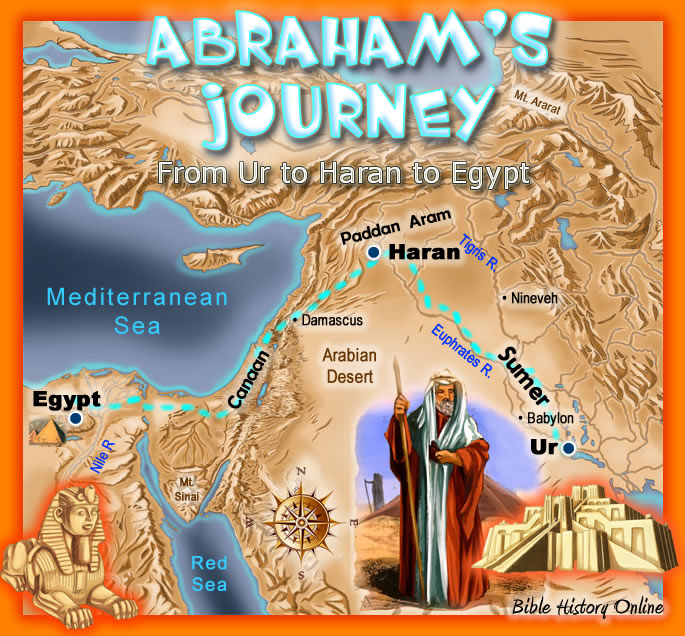
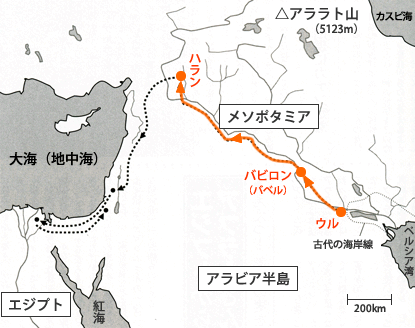
そもそもアブラハムとは何者なのでしょうか。彼の父はテラと言い、このテラは息子アブラハムとその妻サラ、そしてテラの孫、ロトをつれてカルデヤのウルという彼らの土地を離れ、ハランというところに移住します。そこで父テラは亡くなり、残されたアブラハム夫妻とロトはそのハランに住んでおりました(創世記11章31節,32節)。ハランは彼らにとって異国ではありましたが、住み慣れた場所でもありました。しかし、そんなアブラハムに神様が語りかけたのです。アブラハムの第二の人生の始まりです。
 「1時に主はアブラムに言われた、「あなたは国を出て、親族に別れ、父の家を離れ、わたしが示す地に行きなさい。2わたしはあなたを大いなる国民とし、あなたを祝福し、あなたの名を大きくしよう。あなたは祝福の基となるであろう。3あなたを祝福する者をわたしは祝福し、あなたをのろう者をわたしはのろう。地のすべてのやからは、あなたによって祝福される」。4アブラムは主が言われたようにいで立った。ロトも彼と共に行った。アブラムはハランを出たとき七十五歳であった(創世記の12章1節‐4節)
この神様の語りかけについてヘブル人への手紙11章8節は「 信仰によって、アブラハムは、受け継ぐべき地に出て行けとの召しをこうむった時、それに従い、行く先を知らないで出て行った」と書いています。そうです、神様は「わたしが示す地に行きなさい」とは言いましたが、当初、具体的な行先が告げられることはありませんでした。すなわち、アブラハムは神様から「わたしが示す地に行きなさい」と言われた時に、彼らは行く先を知らずに信仰によって出ていったのです。その時はまだ神様が彼をどこに導かれるか分からなかったのです。でも彼はいで立ったのです。しかも、その時、彼の年は既に75歳だったというのです。
皆さんの中にも75歳に近い方達がいらっしゃると思いますが、もし皆さんが、神様からアブラハムが受けたような語りかけを聞きましたら、荷物をまとめて出ていきますか。アブラハムがしたことは、彼らを見送る送別会で「ところであなたたちはどこに行くの」と問われると「いや、実はまだ分からないんだ」と答えるようなことです。
先週、幼い子供たちと旅行に出かけると「いつ着くのか」という質問が何度も繰り返されたということをお話ししましたが、不思議と彼らは「どこに行くのか」ということはあまり聞きませんでした。考えますに彼らにとりまして「行き先」というのはまだ考える必要のないことだったのかもしれません。しかし、これが大人である私達でしたら、ミステリー・ツアーじゃありませんし、どこに行くのか知らされずに、車中に何時間も乗せられているということには不安を感じるに違いありません。
しかし、実際のところこのようなことを私達はその人生において体験することがあるのです。そうです、ふと私達はこう思うのです。「わたしはこれからどこに行くことになるのだろう。わたしは今、どこに向かっているのだろう」と。
私の母は私を韓国で生んでくれましたが、直後に彼女の夫、すなわち私の父を病気で亡くしました。私は幼く、その時当然、何も分かりませんでしたが、日本の国籍を離脱して異国に永住する覚悟できた母にとりまして、乳飲み子を抱え、異国にいて、その心に去来した思いはまさしく「これから私はどこへ行くのだろう」という思いであったに違いありません。帰国してもどこに行くのかあてがありませんが、とにかく私を連れて羽田空港に降り立ちました時、空港には都内の韓国人教会の牧師が出迎えに来てくださっておりまして、その時、母は思ったそうです。「あぁ、私はきっとこの教会にしばらくお世話になるのだろうな」と。そう、その教会は都内にあります善隣教会という教会で母と私はそこで一年ほど過ごすことになり、それ以降、私達親子は四つの教会を転々としました。
これは私達家族に起きた出来事でありますが、皆さんもきっとこのような経験をしたことがあるのではないでしょうか。私達夫婦は、私達家族は、これからどこに向かうのだろう。私はこれから年を取って、どこに行くのだろう。終(つい)ぞの住処はどこなのだろう。その行く手には何が待ち構えているのだろうかということを考えます時に、私達は漠然とした不安に包まれてしまうこともあり、夜も眠れなくなることがあります。否、これからそのような経験をする方がいるかもしれません。この「私はどこへ行くのだろう」という問いかけは時代を超えて、私達が共有するものです。きっとアブラハムも神様の御声を聞いた時、そのような思いをもっていたのではないかと想像します。
さて創世記12章で神の言葉を受けたアブラハムとサラの足取りを考えてみましょう。彼らの生涯は12章から25章まで記されており、それ以降は彼らの息子イサクとその子たち、ヤコブとエサウのことについて書かれ、最後にヤコブの息子ヨセフの物語をもって50章からなる創世記は終わります。この12章から25章までのアブラハムとサラの人生を創世記から観ます時にこうなります。
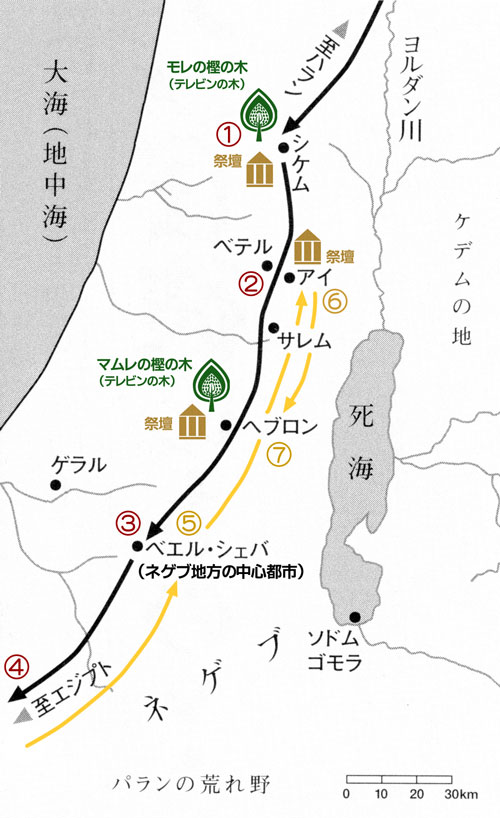 まず『あなたは国を出て、親族に別れ、父の家を離れ、わたしが示す地に行きなさい』(創世記12章1節)と言われたアブラハムは主が言われたように妻サラ、弟の子ロトと共にハランを出てシケムに移り(創世記12章6節)、そこで祭壇を築き、天幕を張りますが、そこから移動しベテルに移り(創世記12章8節)、さらにネゲブに移り住みます(創世記12章9節)。しかし、その地にききんがあり、ネゲブを離れ、異国エジプトにしばらく留まり、再び、ネゲブに戻り(創世記13章1節)、かつて暮らしましたベテルに暮らしますが(創世記13章3節)、その土地はアブラハムとロトがそれぞれ所有する家畜を養うことはできず、アブラハムはその所でロトと分かれることになります。すなわち眼下に広がる土地を前にアブラハムはロトに好きな土地を選ぶようにうながし、ロトはヨルダンの低地で主の園のようによく潤っていたソドムを選び、そこに住みます。アブラハムは彼が言った通り、その土地をロトに譲り、自らはヘブロンに下ります(創世記13章18節)。そして・・・
14ロトがアブラムに別れた後に、主はアブラムに言われた、「目をあげてあなたのいる所から北、南、東、西を見わたしなさい。15すべてあなたが見わたす地は、永久にあなたとあなたの子孫に与えます。16わたしはあなたの子孫を地のちりのように多くします。もし人が地のちりを数えることができるなら、あなたの子孫も数えられることができましょう。17あなたは立って、その地をたてよこに行き巡りなさい。わたしはそれをあなたに与えます」(創世記13章14節ー17節)。
主にある皆さん、ラブラハムがハランで御声を聞き、行き先を知らずに出てき、ここにいたるまで彼はあちこち転々としますが、彼が転々としてきた幾つもの土地こそが、実は神様が彼に示された地、彼に与えようとしている土地であったということがここから分かります。そうです、彼は既に神の約束の地にいたのです。この土地を聖書はカナンと呼び、それは約束の地と呼ばれます。これは今日、イスラエルの領土となっている場所です。
さてロトと別れたアブラハム夫妻はヘブロンにしばらく暮らしますが、またそこから再びネゲブに移り住み(創世記20章1節)、それからベエルシバに移り住み(創世記22章19節)、アブラハムの妻サラはヘブロンで死に(創世記23章2節)、後にアブラハムも妻と同じ墓に葬られました(創世記25章9節、10節)。
主にある皆さん、アブラハムは遊牧民でありましたから一つ所に長くは留まらなかったということは分かります。しかし、それにしてもこんなに彼は各地を移動していたのです。彼は確かに行先を告げられずに出ていったのですが、実際のところ彼が点々としていた場所こそは全て、神様が彼に与えると約束しておられた土地であったのです。このところから分かることは私達がたとえいかなる所に導かれようとも、そこは主が私達を遣わしてくださるカナンであり、そこにも主の支配が及んでいるということです。
先ほどお話ししましたように私達親子は行先を知らずに日本に帰国しました。しかし、主はその晩から私達が留まる場所を備えてくださっておりました。そこから主は私達を千葉県に四年、栃木県に四年、再び千葉県に一年、そして神奈川県に12年、遣わしてくださいました(思えば私は三つの小学校に通ったことになります)。そして今、それらの歩みを振り返ますのなら、それぞれの土地は私達が通過しなければならなかった土地であったということを思うのです。それぞれの土地は私達親子にとりまして主が与えてくださった約束の地、カナンでありました。
さて、創世記23章は開口一番、アブラハム妻、サラの年齢を「サラの一生は百二十七年であった」(創世記23章1節)と記しています。当時、男女は十代で夫婦になったといいますから、彼らはおそらく100年以上も夫婦として共に暮らしたと思われます。ウイキペディアによりますと結婚生活50年が金婚式、55年はエメラルド、60年はダイヤモンド、70年はプラチナだそうですが、その先は見つかりません。ということはアブラハムとサラの場合、この地上にある鉱物の価値では計れない時を彼らは共有したのです。
確かにアブラハムとサラの間にも色々な食い違いや問題がありました。決していつも夫婦円満というわけでもなかったようです。しかし、スターウォーズのフォース(力)ではありませんが、100年以上の年月は、語らずとも互いを知りうるような不思議なフォースをこの二人に与えたのではないでしょうか。
このサラの最後に対して聖書は「サラはカナンの地、キリアテ・アルバすなわちヘブロンで死んだ。アブラハムは中にはいってサラのために悲しみ泣いた」(創世記23章2節)と書いています。この悲しみ泣くという言葉は非常に強い表現だといいます。すなわちアブラハムは100年以上も共に歩んだパートナーの死を思い激しく泣いたのです。聖書はこの先にも後にもアブラハムが泣いたということを記してはおりません。
また聖書において一人の女性が何年生きたかと、その年数が記されているのはこのサラだけです。それは彼女が素晴らしい女性だったからではありませんでした。彼女にもいろいろな問題がありました。しかし、彼女は行先も知らずに神に召された夫と共にその人生を歩んだ女性でありました。そのような意味で彼はアブラハムの同志でありました。アブラハムばかりが信仰の父と呼ばれますが、それを背後にあって支え続けたサラが生きながらえた年月は、すなわち彼女の信仰の年月でもあったのです。
アブラハムはそんな妻、そんな同志の死を悲しみました。しかし、聖書は彼が彼女のために泣いたと記したそのすぐ後にこう書いています。『3アブラハムは死人のそばから立って、ヘテの人々に言った、4「わたしはあなたがたのうちの旅の者で寄留者ですが、わたしの死人を出して葬るため、あなたがたのうちにわたしの所有として一つの墓地をください」』(創世記23章2節-4節)。
アブラハムは立ち上がりました。そして、この創世記23章は残りの全てをアブラハムがサラのために墓を備えるということに費やしています。つまり彼はヘテ人の所有する土地の内から、自分の妻のためにその体を葬るための墓となる墓地を求めて彼は奔走するのです。そして、ヘテ人のエフロンからマクベラのほら穴を銀400シケルで譲り受け、その墓は最後にアブラハム自身が葬られる場所ともなるのです。
今でこそ私達は生前、自分のお墓の備えをします。そのような準備は大切なことでありましょう。しかし、驚くべきことはアブラハムは妻が死んでから墓の準備をしたということです。彼は裕福な人でしたから、あらかじめ自分と妻の墓を備えていてもおかしくありません。しかし、彼はサラの死後、それをどうにか譲り受けたのです。そうです、その時、アブラハムはヘテ人にこう言ったのです。「わたしは、あなたがたのうちの旅の者で寄留者ですが、わたしの死人を出して葬るため、あなたがたのうちにわたしの所有として一つの墓地をください」。
彼はその地にあって寄留者だというのです。寄留者とは仮りの住まいに住んでいる者です。現在いる場所というのは、一時的な自分の場所だということである。そして、その言葉にこそアブラハムの人生の歩みに対する思いが込められていました。彼は何度、神が彼に示された約束の地、カナンを転々としたことでしょう。彼はそのような自分に対して、自分は旅の者、寄留者であるということをその心に持ち続けていたのです。
この言葉から私達はすぐにあのへブル書11章を思い起こすのです。そうです、へブル人への手紙を書いた著者はアブラハムの生涯を新約の光で照らしたのです。ヘブル人への手紙11章8節―16節を開いてみましょう。(P354)
8信仰によって、アブラハムは、受け継ぐべき地に出て行けとの召しをこうむった時、それに従い、行く先を知らないで出て行った。9信仰によって、他国にいるようにして約束の地に宿り、同じ約束を継ぐイサク、ヤコブと共に、幕屋に住んだ。10彼は、ゆるがぬ土台の上に建てられた都を、待ち望んでいたのである。その都をもくろみ、また建てたのは、神である。11信仰によって、サラもまた、年老いていたが、種を宿す力を与えられた。約束をなさったかたは真実であると、信じていたからである。12このようにして、ひとりの死んだと同様な人から、天の星のように、海べの数えがたい砂のように、おびただしい人が生れてきたのである。13これらの人はみな、信仰をいだいて死んだ。まだ約束のものは受けていなかったが、はるかにそれを望み見て喜び、そして、地上では旅人であり寄留者であることを、自ら言いあらわした。14そう言いあらわすことによって、彼らがふるさとを求めていることを示している。15もしその出てきた所のことを考えていたなら、帰る機会はあったであろう。16しかし実際、彼らが望んでいたのは、もっと良い、天にあるふるさとであった。だから神は、彼らの神と呼ばれても、それを恥とはされなかった。事実、神は彼らのために、都を用意されていたのである(ヘブル人への手紙11章8節―16節)。
アブラハムの第二の人生は神と共に75歳の時に始まりました。そのことは私達が神と共に歩む人生に遅いということはないということを示しています。そして、彼は行き先を知らずに住み慣れた土地を出て行きました。それからの人生、彼は各地を転々とします。そして、その行く先々は神様が彼に与えようとされていたカナンでした。彼はそんな自らを旅人であり、寄留者と呼びました。
このことについてへブルの記者は彼がそう言いあらわすことによって、彼がふるさとを求めていたのだと書きました。そう、アブラハムが望んでいたのは、もっと良い、天にあるふるさとであり、事実、神は彼らのために都を用意されていたのだというのです。
先週、私達は「いつ」ということについて、「いつ、それが起きるのか」ということに神は注視しているのではないとお話しました。神様はその「いつ」に至るまで、そしてその「いつ」の後に続く私達の人生、そのプロセスの中で私達の心に目を向けておられるとお話しました。
同じように「どこへ」ということについても、「この先、私達はどこへ私達が向かうのか」というこの地上での行き先に神は御目を注いでおられるのではなく、その先にある天のふるさとを私達がファイナル・デスティネーションとして定め、そこに向かう私達の心を見ておられるのです。そのような意味で私達はそこに向かうまで、この地上では旅人であり、寄留者なのです。たとえ生まれてから召されるまで一つ土地から出ずにそこに暮らしたとしても、永遠という言葉の前ではそれは一瞬のことであり、私達はまさしく旅人であり、寄留者、仮の宿に住んでいる者なのです。
アブラハムが買い取った墓にはサラが葬られ、後にアブラハム、その息子イサク、その妻であるリベカ、そしてアブラハムの孫にあたるヤコブと妻レアも葬られたと聖書は記しています(創世記49章29節ー33節)。このように一族の亡き骸が皆、同じ場所に埋葬されたということの背後にはこの一族が再び天で永遠に共に生きるというアブラハムの信仰がそこにはあるのです。そして、それこそがバイブルが私たちに約束していることなのです。
主にある皆さん、私達はどこへ行くのだろうということを考えます。しかし、既に私達は神様が導かれている場所に置かれています。これから確かに私達は方々に移り住むことになるかもしれない。しかし、そこは私達にとって主が備えたもう約束の地、カナンなのです。そこから私達はまた移動するかもしれません。アブラハムが度々、ネゲブやベテルに戻ってきたというように私達はかつておった所に戻ることになるかもしれません。そして、そこもカナンなのです。文字通り、終の住処である天のふるさとに帰るその日まで、私達はアブラハムと同じように旅人であり、寄留者なのです。最終的な目的地がはっきりしている限り、私達は今、その目的地に向かっている途上なのです。へブル書の著者は『これらの人はみな、信仰をいだいて死んだ』(へブル11章13節)と書きました。私達が天のふるさとに向かっているのであるのなら、方向は間違っていません。私達はその道中を一歩一歩、信仰を抱きながら今日も歩むのです。お祈りしましょう。
Where Are We Going?
Genesis 12:1-4
January 17th 2016
I would like to tell you about a Japanese documentary TV series called “Document 72 hours”. Each episode films at a different, interesting location, and people who visit the spot are interviewed. Examples of filming locations are in front of an udon noodle vending machine in a fishery village in Tohoku, and at a café, which is open over-night in Shinjuku, Tokyo. The filming identifies peoples’ different emotions, and viewers are drawn in to think about their own reactions to what they see.
The episode I watched the other day interviewed people at a fortune-teller’s house in Tokyo. At first, I thought those people were visiting just to ease their mind, or to have fun. However, they were listening to what the fortune-teller said very seriously. What they have in common is a desire to know what’s going to happen to them. They all seemed to want to know where they are heading in their life.
Last Sunday, I talked to you about three things we all feel are important to consider in our lives, “When”, “Where”, and “Why”, and we always live our life thinking about “When is it going to happen?” “Where are we going?”, and “Why did it happen?”
I also talked about the “when” of Abraham who lived his life without knowing “when” “where” and “why”. Today we will continue to talk about the “where” through Abraham’s life. I hope that Abraham’s life will strike a chord with something in your life, and the divine light will shine our hearts.
First of all, who was Abraham? His father was called Terah. Terah took his son Abraham, Abraham’s wife Sarah, and Terah’s grandson Lot, and they moved out from Ur of the Chaldeans to Harran. Abraham, Sarah, and Lot continued to live in Harran even after Terah died. (Genesis 11:31-32) Harran was a foreign country, but at the same time, they made it home. However, God spoke to Abraham, and then his new life had begun.
12 The Lord had said to Abram, “Go from your country, your people and your father’s household to the land I will show you.2 “I will make you into a great nation,
and I will bless you;I will make your name great,and you will be a blessing.3 I will bless those who bless you, and whoever curses you I will curse;and all peoples on earth will be blessed through you.”4 So Abram went, as the Lord had told him; and Lot went with him. Abram was seventy-five years old when he set out from Harran. (Genesis 12:1-4 )
Hebrews 11: 8 describes the call of Abraham as “8 By faith Abraham, when called to go to a place he would later receive as his inheritance, obeyed and went, even though he did not know where he was going.”
That’s right. God told Abraham to “Go…to the land I will show you.” However, God didn’t tell Abraham exactly where they were going. That is, when Abraham was told by God “Go… to the land I will show you.”, Abraham left his home by faith without knowing the destination. He didn’t know where God would lead him, but he still left his home. Abraham was already 75 years old when this happened.
I think that some of you may be approaching his age. If you hear the call of God like Abraham did, would you pack your belongings and leave your home? Abraham seems to have had no doubts. I can imagine a dialogue like this. “By the way, where are you going next?” someone asked them at their farewell. “Well, we still don’t know where we are going.” Abraham answered.
Last week, we talked about when we go on a trip with small children, they always ask us “when are we going to get there?” Surprisingly, they usually don’t ask about “where are we going?” Probably, thinking about “the destination” isn’t yet the important thing for children. On the other hand, we adults would worry if we are in a car for several hours without knowing the destination, unless, of course, we are on a mystery tour.
However, we do experience something like this in our real lives. That’s right. We do think about “where are we going next? Where are we heading to?”
My mother gave birth to me in Korea. However, she lost her husband, my father, from illness right after I was born. I don’t remember what happened at the time, since I was just an infant, but my mother who renounced her Japanese citizenship and was prepared to live the rest of her life in a foreign country, must have thought about “where am I going?” We had no place to go even though we went back to Japan. However, when my mother arrived at Haneda Tokyo airport with me, a pastor from a Korean church in Tokyo was there to pick us up. My mother thought that “we will be under the church’s care for a while.” My mother and I stayed at the church called Zenrin kyokai for about a year, and after that, we spent time at 4 different churches.
This was a major event in our family life, and you have all probably had a similar significant experience.
Where are we heading to? Where am I going when I get old? Where am I going to live when I die? When we think about what’s ahead of us, we get vaguely anxious, and sometimes we have trouble falling asleep at night. No, you might have a similar experience in the future. We all have wondered about the question, “Where are we going?” I imagine that when Abraham was called by God, he probably had these kinds of thoughts.
Well, let’s go over the footsteps of Abraham and Sarah who received God’s word. The book of Genesis writes about Abraham and Sarah’s lives from chapter 12 through 25. And then, it continues the story about their son, Isaac and Isaac’s children, Jacob and Esau. Lastly, the book of Genesis, which consists of 50 chapters, ends with the story of Jacob’s son, Joseph. I will briefly go over the Genesis chapters from 12 through 15, the lives of Abraham and Sarah.
As God said Go from your country, your people and your father’s household to the land I will show you. (Genesis 12:1), Abraham left Harran with his wife, Sarah and his brother’s son, Lot, and traveled to Shechem. (Genesis 12:6) He built an altar and pitched his tent there, but they moved to Bethel (Genesis 12:8), and then moved to Negev. (Genesis 12:9) However, there was a famine in the land, so they left Negev and stayed in Egypt for a while, and once again they moved back to Negev, (Genesis 13:1) and lived in Bethel where they used to live.(Genesis 13:2) But the land could not support them while they stayed together, and so, Abraham went away from Lot . That is Abraham let Lot choose the land he wanted, and Lot chose Sodom, the whole plain of the Jordan, where enriched land like the Lord’s garden, and lived there. Abraham, gave the land to Lot as he promised and moved to Hebron. (Genesis 13:18)
And then,
The Lord said to Abram after Lot had parted from him, “Look around from where you are, to the north and south, to the east and west. 15 All the land that you see I will give to you and your offspring forever. 16 I will make your offspring like the dust of the earth, so that if anyone could count the dust, then your offspring could be counted. 17 Go, walk through the length and breadth of the land, for I am giving it to you.” (Genesis 13:14-17)
Brothers and sisters in Christ, Abraham heard God’s voice in Harran, and then he left his home without knowing the destination. He relocated many times, but all the lands he lived in were the land that God showed Abraham, the land that God was going to give to him. That’s right. He was already in the Promised Land. The Bible calls this land, Canaan, the Promised Land. Today this land is one of the Israeli-occupied territories.
Now, Abraham and Sarah separated from Lot and lived in Hebron for a while, but then they moved once again to Negev (Genesis 20:1) and then moved to Beersheba (Genesis 22:19), and then Abraham’s wife, Sarah, died in Hebron (Genesis 23:2). When Abraham later died, he was buried in the same grave as Sarah.
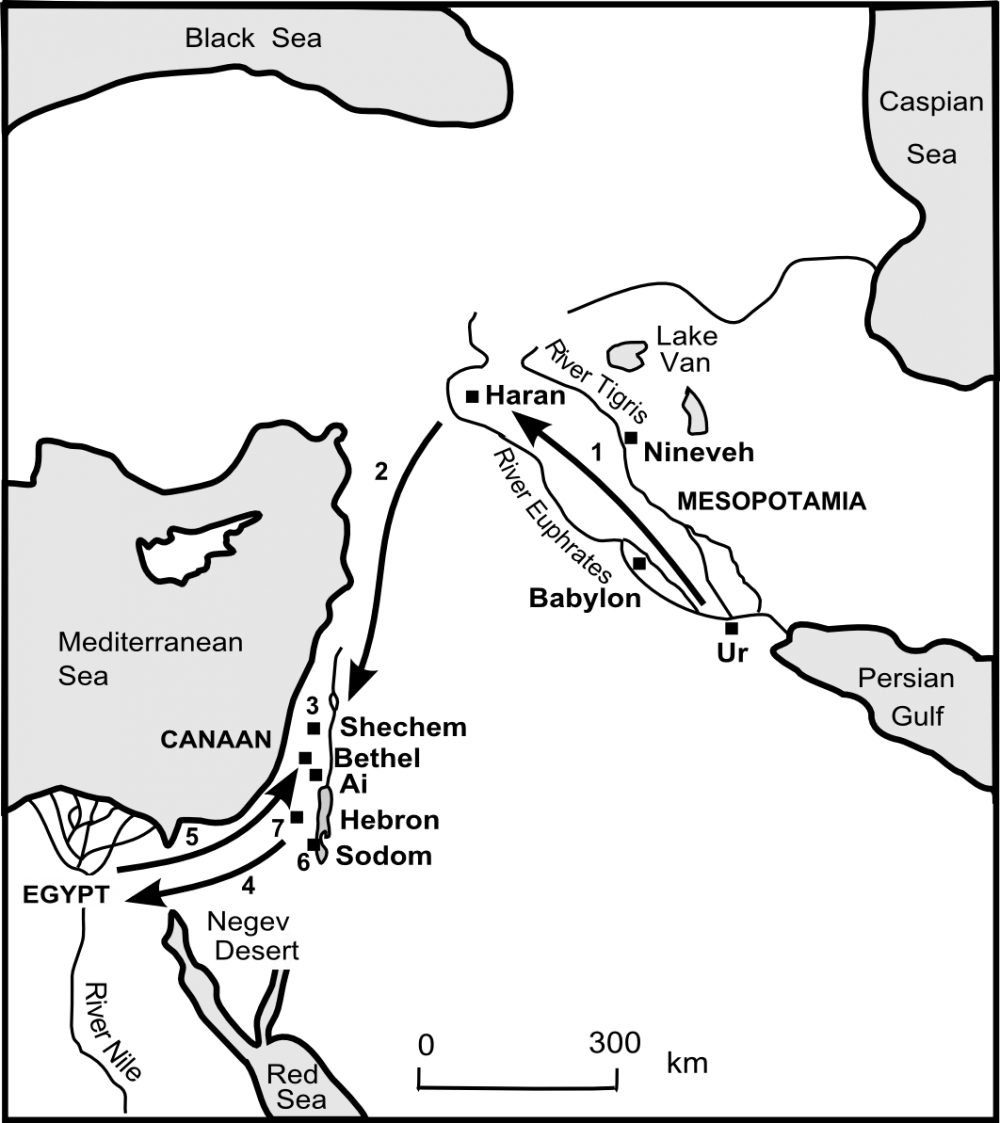
Image by The Bible Journey https://www.thebiblejourney.org/biblejourney2/23-the-journeys-of-adam-enoch-noah-abraham/abrams-journey-to-canaan/
Brothers and sisters in Christ, we know that Abraham didn’t stay in a one place long. He was a nomad and he often moved. He wasn’t told where he would be going every time he left his home. However, every land he lived in was the land God promised to give Abraham. What we can see from this story is that no matter where we are led to, the place is Canaan that God sent us. Therefore, God’s rule extends there as well.
As I talked you earlier, my mother and I returned to Japan without having a place to go. However, the Lord provided us with a place to stay from the very first night. From then, the Lord sent us to Chiba for 4 years, to Tochigi for 4 years, to Chiba once again for a year, and to Kanagawa for 12 years. (That means, I went to 3 elementary schools.) Looking back now, I believe that we had to pass by each land we lived. Every land we lived was the Promised Land, Canaan that the Lord gave my mother and me.
The beginning of Genesis chapter 23 tells us that Abraham’s wife, Sarah, lived to be a hundred and twenty-seven years old.(Genesis 23:1) People got married when they were teenagers in those days. That means, Abraham and Sarah probably lived together as a married couple for over 100 years. According to Wikipedia (Japanese page), 50 years of marriage is called a golden anniversary, 55 years is emerald, 60 years is diamond, 70 years is platinum. But, there is nothing after 70 years. That means, Abraham and Sarah shared time together which is worth more than minerals and metals on the earth.
Surely, Abraham and Sarah had many problems and conflicts. It is likely that they didn’t always have a happy married life. It’s not the force from the Star Wars, but being together for over 100 years may have given Abraham and Sarah that mysterious force that allows them to communicate with each other without saying anything.
The Bible records Sarah’s last moment. She died at Kiriath Arba (that is, Hebron) in the land of Canaan, and Abraham went to mourn for Sarah and to weep over her. (Genesis 23:2)
The word ‘weep’ is a very strong expression. That is Abraham cried hard thinking of his partner who shared her life with him over 100 years. This is the only one time recorded in the Bible that Abraham cried.
Also, the story of Sarah is the only example of the Bible recording how long a woman lived. That wasn’t because she was a great woman. She had many problems in her life. However, she lived her life without knowing the destination her husband would take her. Sarah was Abraham’s comrade. Only Abraham is called the father of our faith, but at the same time, the length of years Sarah supported Abraham records the long length of Sarah’s faith.
Abraham mourned for his wife, his comrade’s death. Then Abraham rose from beside his dead wife and spoke to the Hittites.[a] He said, 4 “I am a foreigner and stranger among you. Sell me some property for a burial site here so I can bury my dead.” (Genesis 23:3-4)
Abraham rose from beside his dead wife. The rest of Genesis chapter 23 writes about Abraham looking for a burial site for Sarah. That means, he tried hard to secure a burial site for his wife from the Hittites. And then, Abraham bought the cave in the field of Machpelah from Ephron, the Hittite, for four hundred shekels of silver. Abraham himself was buried in the same cave when his end came.
Today, most of us plan our own burial site while we are alive because we believe it is important. Surprisingly, Abraham started to look for his wife’s burial site after she died. Somehow he succeeded to do so. That’s right. Abraham said to the Hittites “I am a foreigner and stranger among you. Sell me some property for a burial site here so I can bury my dead.”
According to the Japanese translation, Abraham called himself a temporary resident. That means his current location is just a temporary location to him, and his word reflects how he had lived his life. How many times did he move from one place to another in Canaan? Abraham kept in his mind that he was a foreigner and stranger.
This Abraham’s word makes us recall the book of Hebrews chapter 11. That’s right. The author of the book of Hebrews shined Abraham’s life with the light of the New Testament.
By faith Abraham, when called to go to a place he would later receive as his inheritance, obeyed and went, even though he did not know where he was going. 9 By faith he made his home in the promised land like a stranger in a foreign country; he lived in tents, as did Isaac and Jacob, who were heirs with him of the same promise. 10 For he was looking forward to the city with foundations, whose architect and builder is God. 11 And by faith even Sarah, who was past childbearing age, was enabled to bear children because she[b]considered him faithful who had made the promise. 12 And so from this one man, and he as good as dead, came descendants as numerous as the stars in the sky and as countless as the sand on the seashore.13 All these people were still living by faith when they died. They did not receive the things promised; they only saw them and welcomed them from a distance, admitting that they were foreigners and strangers on earth. 14 People who say such things show that they are looking for a country of their own. 15 If they had been thinking of the country they had left, they would have had opportunity to return. 16 Instead, they were longing for a better country—a heavenly one. Therefore God is not ashamed to be called their God, for he has prepared a city for them.
Abraham’s new life with God had begun when he was 75 years old. It tells us that it’s never too late to walk with God. He left his home without knowing the destination, and he traveled around many lands. Each land was Canaan that God was going to give Abraham. And, he called himself a foreigner and stranger.
The author of the book of Hebrews described that Abraham was looking for his home. Yes, what he wanted was a much better home, a home in heaven. In fact, God has prepared a city for them, for Abraham and his people.
Last week, we talked about the “when”. God is not watching closely to “when it is going to happen”, but he is watching closely how we live our lives until “when it happens” and also after “when it happens”. God is paying more attention to the process of our lives.
Likewise, God is not closely watching “where we are going” while we are on the earth, but he is watching our hearts closely and sets home in heaven as our destination. In that way, we are travelers and temporary residents. Even if you lived in just a one place all your life, it is a momentary event in all eternity. We are definitely travelers and temporary residents on the earth.
The Bible records that Sarah was buried in the site that Abraham bought, and later on Abraham, Abraham’s son, Isaac, his wife, Rebecca, Abraham’s grandson, Jacob, and his wife, Leah were all buried in the same burial site.(Genesis 49:29-33) Burying the whole family’s body in the same site shows Abraham’s faith that the whole family would live together eternally in heaven. And, that’s the promise written in the Bible.
Brothers and sisters in Christ, we wonder about where we are going. But, we are already in the place where God has led us. Surely, we may live in one place to another in the future, but the place would be the Promised Land, Canaan where God has prepared for us. Like Abraham returned to Negev and Bethel multiple times, we might go back to where we used to live. And, the place is Canaan as well. Until we go back our home in heaven, we are travelers and temporary residents just like Abraham was. As long as we are clear about our final destination, we are on the way to the destination. The author of the book of Hebrews wrote, All these people were still living by faith when they died. (Hebrews 11:13) If we are heading to our home in heaven, we are facing the right direction. We will walk the way one step at a time with faith.
Let us pray.
Translated by the Scarlett Family
本日のお持ち帰り
創世記12章1節―4節
1)あなたはこれから自分はどこに行くのだろうか、どこに向かっているのだろうかと考えたことがありますか。その問いかけに対してどんな思いを抱きますか?
2)創世記12章1節‐4節を読みましょう。もし、あなたがアブラハムだったら主の言葉に従いますか。なぜですか?
3)アブラハムは創世記12章以降、10回近く、住む場所を変えています。彼らが移住していた場所は神様がアブラハムに約束されたカナンの土地であったということは何を意味していますか。
4)創世記23章1節にはサラが127歳で召されたと記しています。聖書の中で女性が召された年齢が記されているのはサラだけです。このことは何を意味しますか。夫婦(主にある兄弟姉妹)が共有する信仰にはどんなものがありますか。
5)創世記23章2節-4節を読みましょう。裕福であったアブラハムはサラが召されてから彼女を葬る土地を買いました。このことから彼は自分の人生をどのように受け止めていたのでしょうか。
6)私達は人生の旅人であり、寄留者であるということは私達の日々の生活にどんな影響を与えますか。
7)ヘブル人への手紙11章8節―16節を読みましょう。私達が最終的に行き着く場所、本当の意味での終の住み家はどこなのでしょうか。
