
 フィリップ・ヤンシー(Philip Yancey)という人がパウロのかつての生き方がどんなものであったか、彼が今の世界にいたらどんな風に受け止められていたかということについてこんなことを書いています。
「私はアムネスティ・インターナショナル(世界中で起きている非人道的行為を非難する団体)から送られてくる郵便物の中に、打たれたり、家畜用の突き棒でつつかれたり、激しい突きをくらったり、唾をはきかけられたり、感電死させられたりした男女の写真が載っているのを見ると、同じ人間にそんなことができるなんて、どんな類の人なんだと思う。そして、使徒行伝を読むと、そういう残虐なことが出来る類の人間に出会う。それは聖書中に書かれている使徒パウロである・・・」。
マック
●メッセージ音声
Podcast (iTunes)
Podcast (RSS Feed)
Podcast (Google Play Music)
本日の日英メッセージ原稿、おもちかえりはこちらから ↓
驚くべき人の回心
2017年6月25日
一般的にはあまり報じられていませんが、今年はマルチン・ルターがヴィッテンベルク教会の扉に95ヶ条からなる提題を掲示してから500年の記念の年です。マルチン・ルター?聞いたことはあるけど、誰だっけ?世界史の授業で必ず名前が出てくる人です。
16世紀の初頭、当時の教会では免罪符というものが売り出されており、人々はそれを買うことにより、自分の罪が赦されるということを教えられていました。とても残念なことですが、それは教会にとっての堕落であり、暗黒の時代です。そんな時にルターはある手紙によって、その心に熱い思いを与えられていました。その手紙が闇の中にいる彼の心に光を当て、彼は揺るぎない確信と共に立ち上がったのです。そうです、免罪符により腐敗していたキリスト教会に対して「神の救いは免罪符によるのではなく私たちの信仰によるのだ」ということを彼は明らかにしました。ルターはこの確信と共に、1517年10月、宗教改革の運動に発展する「95か条の提題」をヴィッテンベルグの教会の扉に掲示したのです。このように「信仰による救い」という揺るぎない確信を彼に与えた手紙こそ、聖書中のパウロが書きました「ローマ人への手紙」なのです。
時はルターの時代から200年余りが経ちました1738年、5月24日、ロンドンに一人の牧師がいました。彼はその夜、心重く、気がすすまなかったのですが、予定されていた教会の集会に出席していました。時間は午後9時少し前、ある人が先のマルチン・ルターが書いた「ローマ人への手紙のための序文」を読んでいました。そして、ちょうどルターが信仰とは何であり、その信仰のみが人を義とすると書いてあるあたりにきた時に、その牧師、ジョン・ウエスレィーの心に不思議な感覚がわいてきました。その時のことを彼はこう書いています。
「私は私の心が不思議にあたたまるのを覚えた。私は救われるためにキリストに、ただキリストのみに信頼したと感じだ。そして、この私の罪をキリストが取り去って下さり、罪と死との律法から私を救って下さったという確信が与えられた」。この経験がウェスレイの転機となり、18世紀、閉塞感の中を漂っていたイギリスを光の中に立ち返らせたのです。ウエスレイは後のメソジストの始まりとなり、私達の教会もこのメソジストの流れの中にいます(皆さん、聖霊はあなたが心重く、気がすすまない集会に出ている時にもはたらかれます)。
今、お話しました二人は、その人生に多大なる影響を受けた手紙に出会うことによって、人の歴史に影響を与えました。そんな彼らが影響を受けた手紙は聖書の中にあります「ローマ人への手紙」という手紙でした。私達は「人生の危機管理」という礼拝メッセージのシリーズを通して、聖書の中の人間たちの失敗をこれまで見てまいりましたが、これからしばらくこの「ローマ人への手紙」を見ていきたいと思います。この16章からなる手紙という山に今日から私達は分け入っていきます。その道のりにおいて私達は驚くべき発見をしていくことでしょう。今日はまずローマ書の1章1節から3節から見ていきたいと思います。
ここにはまずこのローマ書を書きましたパウロについて彼自らを説明している一文があります。この手紙は紀元59年頃にコリントという町から、ローマにいるキリストにある人々にパウロによって書かれた手紙です。当時、世界の都とも言われていたローマには、キリストの教えに生きる人達がいたようであります。パウロはその人達に向けて、まずその差出人として自らのことについて書いています。
1キリスト・イエスの僕、神の福音のために選び別たれ、召されて使徒となったパウロから― 2この福音は、神が、預言者たちにより、聖書の中で、あらかじめ約束されたものであって、3御子に関するものである。御子は、肉によればダビデの子孫から生れ、4聖なる霊によれば、死人からの復活により、御力をもって神の御子と定められた。これがわたしたちの主イエス・キリストである(ローマ1章1節-4節)。
キリスト教においてパウロは欠かせない人です。彼は12弟子の一人ではありませんが、まさしく彼は神の福音のために選び別れたとしかいいようのない生涯を送りました。以下、パウロがかつてサウロと呼ばれていた時代に使徒行伝が書き残している彼に対する記述です。
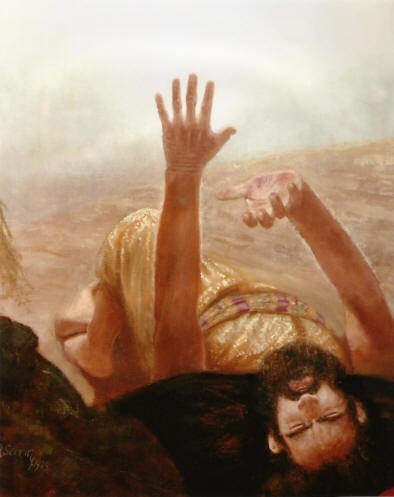
1さてサウロ(パウロ)は、なおも主の弟子たちに対する脅迫、殺害の息をはずませながら、大祭司のところに行って、2ダマスコの諸会堂あての添書を求めた。それは、この道の者を見つけ次第、男女の別なく縛りあげて、エルサレムにひっぱって来るためであった。3ところが、道を急いでダマスコの近くにきたとき、突然、天から光がさして、彼をめぐり照した。4彼は地に倒れたが、その時「サウロ、サウロ、なぜわたしを迫害するのか」と呼びかける声を聞いた。5そこで彼は「主よ、あなたは、どなたですか」と尋ねた。すると答があった、「わたしは、あなたが迫害しているイエスである。6さあ立って、町にはいって行きなさい。そうすれば、そこであなたのなすべき事が告げられるであろう」。7サウロの同行者たちは物も言えずに立っていて、声だけは聞えたが、だれも見えなかった。8サウロは地から起き上がって目を開いてみたが、何も見えなかった。そこで人々は、彼の手を引いてダマスコへ連れて行った。9彼は三日間、目が見えず、また食べることも飲むこともしなかった(使徒行伝9章1節―9節)
今日、私達はアラブ諸国から目が離せません。このところにはダマスコにいるキリスト教信者を捕まえてエルサレムに連行してくるために脅迫と殺害の息をはずませながら向かっているパウロのことが書かれていますか、このダマスコとは今日のシリアのダマスカスのことで、彼は今日、世界が注目している町に向かう途中で回心をしたのです。そう、この男なしに今日のキリスト教はないというような働きをしたパウロはかつてキリスト教徒への脅迫と殺害に情熱を注いでいました。
フィリップ・ヤンシー(Philip Yancey)という人がパウロのかつての生き方がどんなものであったか、彼が今の世界にいたらどんな風に受け止められていたかということについてこんなことを書いています。
「私はアムネスティ・インターナショナル(世界中で起きている非人道的行為を非難する団体)から送られてくる郵便物の中に、打たれたり、家畜用の突き棒でつつかれたり、激しい突きをくらったり、唾をはきかけられたり、感電死させられたりした男女の写真が載っているのを見ると、同じ人間にそんなことができるなんて、どんな類の人なんだと思う。そして、使徒行伝を読むと、そういう残虐なことが出来る類の人間に出会う。それは聖書中に書かれている使徒パウロである」。
時はイエス・キリストが十字架に架かり、葬られ、多くの者達にその復活の姿を現した後のこと、パウロはそんなイエスの弟子達に対する執拗な脅迫、殺害の息をはずませながら、その道の者を見つけ次第、男女の別なく縛りあげて、エルサレムにひっぱって来るためにダマスコに向かっていたのです。まさしく、その時にパウロがしていたことはヤンシーが書きましたように、今日、人権保護団体から非難されるようなものでした。
パウロとはそもそもどんな人だったのでしょうか。ピリピ3章5節を見ますと彼の人となりを知ることができます「私は八日目に割礼を受けた者、イスラエルの民族に属する者、ベニヤミン族の出身、へブル人の中のへブル人、律法の上ではパリサイ人、熱心の点では教会の迫害者、律法の義については落ち度のない者である」(ピリピ3章5節-6節)。
この履歴を通して、彼は自分が純粋なユダヤ人であり、しかも聖書の律法を誰よりも学び、それを厳格に守っているパリサイ人であると言っています。パリサイ人とは当時、聖書の律法を一字一句守ることを大切にしていた人でした。パリサイ人とは「分離された者」という意味で、彼らの関心は常に「どうしたら人は汚れに染まらずに、自分の身を清く保つことができるか」ということに置かれていました。
彼らはそれを必死に守っていました。その律法を守ることにおいて、パウロは何の落ち度もない者であったと自分で言っています。そして、これはあながち嘘ではなかったと思います。それほどに彼は完全なパリサイ人として生きていたようです。そして、彼らと違い、それら律法を知らない、守らない一般大衆を「地の民」と呼び、見下し、さげずんでいました。
そのパリサイ人であったパウロはまた、使徒行伝22章3節においては「ガマリエルの門下生」であったと記されています。ガマリエルとは当時の律法学の最高権威者であります。その門下生の中でもパウロは際立っていたのではないかと言われています。故にその彼の内には律法に対する高度な知識と燃えるような熱心さがあったと思います。そして、その熱心さはイエス・キリストを信じる群れと称するキリスト教会への迫害へと激しく向けられていきました。そう、彼はその内なる情熱の方向を間違えていたのです。
パウロはおそらくユダヤ人達やキリスト者達からイエスについて、その人格とその教えについて聞いていたに違いありません。しかし、それらの証言は彼にとりましては、キリストに対する敵意を駆り立てるものであり、イエスの弟子たちはペテン師に違いないという思いに拍車をかけたに違いありません。
近頃、イエスという名のユダヤ人教師が十字架にいおいて処刑された。そして、その弟子達がどうやら彼が復活したと言っているらしい。しかし、私が忠実に守っている律法によれば「木にかけられた者は神に呪われた者」(申命記21章23節)と言われている。十字架につけられて、よみがえってメシアなどと呼ばれている、そんな者を信じている集団は、狂信集団にすぎず、危険極まりなく、撲滅以外にない。ですから彼は強い信念をもって、殺害の息をはずませていたのです。
そんなパウロですが、ある時、今日もエルサレムを訪ねますとその旧市街にありますステパノ門という門の側である経験をしました。それは、ステパノという人の死でありました。ステパノはキリスト者でありました。ある時、このステパノがその信仰ゆえに議会において尋問を受けたことが使徒行伝6章に記されています。それによるとステパノは「リベルテンの会堂に属する人々、クレネ人、アレキサンドリア人、キリキアやアジアからきた人々などが彼と議論したが、彼は知恵を御霊に満たされていたので、それに対抗できなかった」(使徒行伝6章9節、10節)と書かれています。
ステパノはその時、御霊に満たされて壮大なメッセージを語りました。それはユダヤ民族の歴史というものに神がどのように関わってきたかということであり、その歴史においてユダヤの民がどれほど、その心を頑なにしているかということでした。民衆はこれを聞いて、心の底から激しく怒り、ステパノに向かい歯ぎしりをして、彼に詰め寄り、市外に引き出して、それぞれ代わる代わる石を彼に投げつけました。その石が彼の頭や体に命中し、その衝撃により気を失い、流血しているような時にステパノは祈り続けていました。そして、大声で叫んで言いました「主よ、どうぞ、この罪を彼らに負わせないでください」(使徒行伝7章60節)。
この時、私達が渾身の力を込める時に決まってそうするように、彼らは上着を脱いで思いきり石をステパノ目がけて投げていました。そして、聖書はその上着は「サウロ(パウロ)という若者の足元に置いた」(使徒行伝7章58節)と記しています。そう、パウロは人々が思い切りステパノに石を投げることができるようにと彼らの上着を預かったのです。
このことによりステパノは殉教します。すなわちパウロはステパノが死んでいく様を一部始終、間近に見ていたのです。熱心なキリスト者であったステパノの主張は明らかにパウロを苛立たせたでしょう。彼が石で打たれて殺されることは彼の願いでもあったことでしょう。しかし、彼にはどうしても理解できない、受け入れ難いことがありました。それは、聖書が記しているようにこのステパノの顔が「天使の顔のようであった」(輝いていた)(使徒6章15節)ということ、そして、彼が石で打たれて意識が薄れていく時に「この罪を彼らに負わせないでください」(使徒7章60節)と叫んだことでした。
ステパノの姿と言葉はパウロの心の中にはないものでした。自分はパリサイ人として知識と尊敬を得ている。律法を守るべくガムシャラに頑張っている。しかし今、打たれているステパノのような輝きと、自分を打つ者に対して許しを祈る心が自分にはあるだろうか。聞くところによればステパノの祈りはイエス・キリストが十字架の上で「父よ、彼らをお許し下さい。彼らは自分で何をしているのか分からずにいるのです」という祈りに倣っているものらしい。彼はステパノの死後、事ある度にこの出来事を心に思い巡らしたに違いありません。
時折、わいて来るこの時の出来事が心に引っかかりながらも、彼は変わらずに殺害の息をはずませてキリスト教徒への迫害へと突き進んでいました。そして、その道を急いでいる時、ダマスコの近くに来た時に、突然、天から光がさして彼をめぐり照らし、彼はその光により地に倒れたのです。するとその時、天から「サウロ、サウロ、なぜわたしを迫害するのか」と呼びかける声がしました。
彼は尋ねました「主よ、あなたは、どなたですか」すると「私は、あなたが迫害しているイエスである」という声がありました。彼と共にいた同行者たちは物も言えずに立っていて、声だけは聞こえたようですが、誰も何も見えなかったと聖書は記しています。この時から彼は三日間、目が見えず、食を取ることもありませんでした。
この不思議な出来事がキリストの迫害者パウロの生涯の転機となりました。宗教的な言葉で言えば、回心となったのです。この時のことを後に思い起こしましたパウロは『1キリスト・イエスの僕、神の福音のために選び別たれ、召されて使徒となったパウロ』(ローマ1章1節)とあの日、あの時に自分は神の福音のためにキリストにあって選び別たれて召されて使徒となったのだと思い起こしたに違いありません。
彼はその後、アラビアの荒野で三年の年月を過ごしたと聖書は記しています。この年月の詳細に関して聖書は沈黙を保っていますが、彼はこの間、自分の人生をかけて熱心に学んだ聖書とイエス・キリストとの関係についてじっくりと黙想し、学び直したのではないかと言われています。そう、その時の確信を続くローマ1章2節は言っているではありませんか「2この福音は、神が、預言者たちにより、聖書の中で、あらかじめ約束されたものであって、3御子に関するものである。御子は、肉によればダビデの子孫から生れ、4聖なる霊によれば、死人からの復活により、御力をもって神の御子と定められた。これがわたしたちの主イエス・キリストである」(ローマ1章1節-4節)。彼は荒野で日夜、徹底的に聖書を調べ、この福音は既に聖書の中にあらかじめ約束されていたものであって、これらは全て御子キリストに関することではないかと確信したのです。
この回心とこれらの荒野で日々を通して、それまでは「どこの馬の骨か」という見方しかしていなかった「イエスこそが神の子である」という確信をパウロは得ました。先にお話しましたように「木にかけられる者は呪われる」と書かれている言葉に従い、イエスの十字架はおよそ汚わらしいこと、忌むべきこと、受け入れ難いことであったということがパウロのそれまでの確信でした。しかし彼はその「呪いの象徴」であった十字架が「自分の罪の身代わりであり、愛の象徴」であったということを知ったのです。
主にある皆さん、もしかしたら皆さんの中にキリスト教について今、一生懸命に学んでいる人がいるかもしれません。色々な書物を読んでこのキリストは本当に本物なのかどうかを学んでいるかもしれません。しかし、率直に言わせてもらいますと、皆さんはイエス・キリストという方に対してパウロがしたほどの検証をしていないと思います。彼は筋金入りの律法学者であり、ユダヤ人であり、ユダヤの歴史、ユダヤの律法を知り尽くしていたのです。その彼が自らのユダヤ人の歴史、すなわち天地創造からその時に至るまで、イスラエルにはたらきかけた神の足跡を全て検証し、そしていたった結論はイエス・キリストは神の子であり、この方こそがメシアだということだったのです。
キリストの十字架の意味を知った時に、彼は自分自身に対する理解にも光が当てられました。パリサイ派に属する者こそが義しい人だと思っていた彼が、ローマ3章10節で彼が言っているように「義人はいない、一人もいない」という理解へと変わりました。自分こそが義しい人だと思っていたその彼が「自分こそが罪人の頭だ」(テモテへの第一の手紙1章15節)と言う者となりました。その自己認識が全く変わってしまったのです。そうです、人は神の光に近づき、それに照らされてはじめて本当の自分の姿を見ることができるのです。人間が作ったネオンの明かりのもとではこの自分の姿は見えないのです。そこで見えるのはせいぜい自分以外の人の欠点ばかりなのです。
パウロは気がついたのです。自分のいたらなさ、小ささ、心にある汚さ、そんな者が神に仕えているといいながら、実は神の座に座っていたということを。どんなに優秀な頭脳を兼ね備え、百戦錬磨で議論に打ち勝ったとしても、誰にもできない洗練された言葉で長い祈りをしたとしても、そんなことは無に等しいということを彼は悟ったのです。
自分の本当の姿を知ったパウロはそんな思い上がった者のためにキリストは十字架に架かって下さったのだと自分の罪を知り、それと引き換えにその罪を赦すキリストの驚くべき愛を知りました。迫害の息を弾ませていた彼は180度、生きる方向転換をして、今度はキリストを伝える者となったのです。
私たちの中に今日、この教会に集っている者を縛り上げて、打ち叩こうと思ってこの場に来ている人はおそらくいないと思います。これから家路に着く時に、フリーウエイを運転中に突如、空からの眩しいばかりの光に照らされて、車を路肩に止めてしまう方も、おそらくいないと思います。そのような劇的な回心はおそらくないでしょう。
しかし、パウロの回心を思う時に、私たちはパウロの思いが聞こえてくるようです。パウロによれば、本当の意味における罪とは一つしかありません。それは、「神の前に己の義をたてること」です。神の前に自らを正しい者とする生き方、それこそがパウロの生涯でした。しかし、そんな自分は正しいと思っていたパウロがイエスの光に照らされた時、そして、その視力を失い共の者に手を引かれなくては歩けなくなった時に、彼はつくづく思ったことでしょう。「何と自分は無力で自惚れていたのだろうか」。自分が信念をもってやってきたことは、まさしく神に反することだったのだ。彼はそのことに気がつきました。それが、彼の回心でありました。
わたしは先にパウロがかつて誇りと思っていたことについてお話ししました。すなわち彼自身が書いているように『5わたしは八日目に割礼を受けた者、イスラエルの民族に属する者、ベニヤミン族の出身、ヘブル人の中のヘブル人、律法の上ではパリサイ人、6熱心の点では教会の迫害者、律法の義については落ち度のない者である』(ピリピ3章5節-6節)ということでした。これが彼のかつての誇りだったのです。。
しかし、パウロがキリストに出会い、そのキリストを知った時に彼の心に変化が起こりました。続けてこう書いています。『7しかし、わたしにとって益であったこれらのものを、キリストのゆえに損と思うようになった。8わたしは、更に進んで、わたしの主キリスト・イエスを知る知識の絶大な価値のゆえに、いっさいのものを損と思っている。キリストのゆえに、わたしはすべてを失ったが、それらのものを、ふん土のように思っている。それは、わたしがキリストを得るためであり、9律法による自分の義ではなく、キリストを信じる信仰による義、すなわち、信仰に基く神からの義を受けて、キリストのうちに自分を見いだすようになるためである』(ピリピ3章7節-9節)。
それまでは、自らの知識と力を誇っていた。しかし、あのイエスの声を聞いた時から、自分の心に起きた回心。彼は、その時から本物を見出しました。そして、それはそれまで自分で築き上げてきたもの全てに置き換えても余りあるものとなったのです。
日本の四字熟語に「一期一会」という言葉があります。私たちの人生は人の出会いによって大きく変わることがあります。しかし、イエス・キリストとの出会いほどに大切な出会いはありません。教会への迫害の息を弾ませていたパウロを、絶大に価値あることのためにその生涯を捧げさせる者とされた神の愛は、今日も私たちの上に注がれているのです。この日が私たちにとってのダマスコ途上への道となることを心より祈り願っています。お祈りしましょう。
Amazing Conversion
June 25, 2017
Although it doesn’t seem to be getting much media coverage, this year is the 500th anniversary from the year when Martin Luther posted his Ninety-five Theses on the door of the Wittenberg Church. Martin Luther; does the name sound familiar? You may remember hearing his name in history class.
In the beginning of the16th century, the church at the time sold what is known as indulgences, and the people were taught that their sins will be forgiven if they purchase these indulgences. Unfortunately the church had become corrupted and it was a very dark period. But it was during such times when Luther read a certain letter which filled his heart with a burning passion. In a period of spiritual darkness, this letter shined a light on Luther’s heart and gave him an unwavering conviction. At a time when the church was being corrupted by its abusive use of indulgences, Luther made it clear that salvation does not come through the purchase of indulgences, but through faith in God. It was with this renewed conviction that Luther posted his Ninety-five Theses on the door of the Wittenberg Church on October of 1517, and this event greatly advanced what is known today as the Protestant Reformation. And this letter which led Luther to the truth that salvation is “by faith alone”, was a letter written by Paul which is found in our Bible, the Letter to the Romans.
On May 24, 1738, around 200 years from the time of Luther, a certain preacher was in London. That night, though he was feeling depressed, he “went very unwillingly” to a service at a local church. It was about a quarter before nine, and someone was reading Luther’s Preface to the Epistle to the Romans. And as they read from the portion where Luther describes what true faith is and that justification comes through faith alone, this preacher, John Wesley, felt a strange feeling in his heart. Wesley recounted this experience and wrote:
“I felt my heart strangely warmed. I felt I did trust in Christ, Christ alone for salvation, and an assurance was given me that he had taken away my sins, even mine, and saved me from the law of sin and death.” This event was a great turning point for Wesley, and in 18th century England where they had become spiritually stagnated, he brought about a great revival. Wesley began what is know today as the Methodist movement, and our church is one of many churches that have its roots in the Methodist movement. Remember that even when you attend a service unwillingly and with a heavy heart, the Holy Spirit is still at work.
Both of these leaders were greatly inspired by a letter, and because of this letter they were able to be great inspirations themselves and changed the course of human history. This letter was none other than the Letter to the Romans. During the past couple of months, we learned from the mistakes of several Biblical figures through our sermon series titled “Life’s Crisis Management”, but starting today I would like to begin a series of messages on the Letter to the Romans. Today we will begin our journey into this mountain made up of 16 chapters. I am confident that we will make amazing discoveries along the way. Today, we will start by examining the beginning verses of the first chapter of Romans.
Here we first find a sentence where Paul, the author of Romans, gives us a description of himself. This letter was written by Paul in 59 AD in the city of Corinth and was addressed to the Christians living in Rome. In those days Rome was considered the capital of the world, and there were already people there who lived by the teachings of Christ. Paul begins by introducing himself to the recipients of his letter:
“1 Paul, a servant of Christ Jesus, called to be an apostle and set apart for the gospel of God— 2 the gospel he promised beforehand through his prophets in the Holy Scriptures 3 regarding his Son, who as to his earthly life was a descendant of David, 4 and who through the Spirit of holiness was appointed the Son of God in power by his resurrection from the dead: Jesus Christ our Lord” (Romans 1:1-4).
Paul is an essential figure within Christianity. Although he was not one of the Twelve Disciples, when we look at his life and work, there is no question that he was indeed set apart for the gospel of God. In the Book of Acts, an account is written about Paul when he was still know by the name Saul:
“1 Meanwhile, Saul was still breathing out murderous threats against the Lord’s disciples. He went to the high priest 2 and asked him for letters to the synagogues in Damascus, so that if he found any there who belonged to the Way, whether men or women, he might take them as prisoners to Jerusalem. 3 As he neared Damascus on his journey, suddenly a light from heaven flashed around him. 4 He fell to the ground and heard a voice say to him, “Saul, Saul, why do you persecute me?”5 “Who are you, Lord?” Saul asked.“I am Jesus, whom you are persecuting,” he replied. 6 “Now get up and go into the city, and you will be told what you must do.”7 The men traveling with Saul stood there speechless; they heard the sound but did not see anyone. 8 Saul got up from the ground, but when he opened his eyes he could see nothing. So they led him by the hand into Damascus. 9 For three days he was blind, and did not eat or drink anything” (Acts 9:1-9).
Today, we cannot take our eyes off of the Arab States. Here it is written that Paul was breathing out murderous threats against Christians as he headed to Damascus to take the Christians there as prisoners to Jerusalem, and the Damascus written here is the same Damascus in Syria today, and Paul’s conversion took place as he was heading to this city that is drawing the world’s attention right now. And it is written that this man Paul, without whom what we know today as Christianity would have not existed, was known for persecuting and breathing murderous threats against Christians.
The writer Philip Yancey gives us a modern day description of how Paul was before his conversion:
“I get mailings from Amnesty International, and as I look at their photos of men and women who have been beaten and cattle-prodded and jabbed and spit on and electrocuted, I ask myself, “What kind of human being could do that to another human being?” Then, I read the book of Acts and meet the kind of person who could do such a thing, now an apostle of grace, a servant of Jesus Christ, the greatest missionary history has ever known”.
It was after Jesus was crucified, buried, and showed His resurrected self to the disciples, when Paul appeared on the scene and began relentlessly persecuting and threatening anybody that belonged to the Way, rounding up men and women alike, and he was heading to Damascus to capture the believers and bring them back to Jerusalem as prisoners. As Philip Yancey wrote, the things Paul was doing at the time would be condemned by human rights organizations today.
So what kind of person was Paul anyway? In Philippians 3, Paul wrote the following description of himself, saying that he was “5 circumcised on the eighth day, of the people of Israel, of the tribe of Benjamin, a Hebrew of Hebrews; in regard to the law, a Pharisee; 6 as for zeal, persecuting the church; as for righteousness based on the law, faultless” (Philippians 3:5-6).
Here he gives us his track record and states that he is a pure Hebrew and that as a Pharisee, he studied the Scriptures more than anyone else and have followed its decrees faultlessly. The Pharisees were known during those days for their strict obedience to every word of the law. The word Pharisee means “set apart”, and the main concern of these Pharisees was on how they can remain pure and keep themselves from coming in contact with anything unclean.
The Pharisees were fervent in their obedience to the law. Paul says that in this he was faultless. I believe he was not lying when he said this. We can assume that he really was perfect in his discipline as a Pharisee. And he considered everybody who didn’t follow or had no knowledge of the law as a sinner and looked down on them with scorn.
It also says in Acts 22:3 that as a Pharisee, Paul studied under Gamaliel. Gamaliel was a leading authority among the Pharisees at the time. Paul must have been at the top of his class, as we see in his expert knowledge of the law and his passion in obeying it. And this passion led him to become a fervent persecutor of the followers of Jesus Christ. In this way his passion was misguided.
Paul must have heard from his fellow Jews and from the Christians about the character and teachings of Jesus. But hearing their testimony about Jesus must have only fueled his animosity towards Christ and deepened his suspicion toward Jesus’ followers who he viewed as a bunch of con men.
He heard how a teacher named Jesus had been crucified recently. He heard that the disciples are claiming that this Jesus has risen from the dead. But according to the law he lived by, “anyone who is hung on a pole is under God’s curse” (Deuteronomy 21:23). He must have thought that these people who believe in this Messiah that rose from the dead after being hung on a tree must be a group of maniacs and a threat that must be eradicated. Because of this, Paul was determined to get rid of these believers.
One day Paul visited Jerusalem and he had an unforgettable experience near a place that is known today as St. Stephen’s Gate in Jerusalem’s Old City. There he witnessed the death of Stephen. Stephen was a Christian. In chapter 6 of Acts, we read how Stephen was put on trial for his faith by the Sanhedrin: “9 Opposition arose, however, from members of the Synagogue of the Freedmen (as it was called)—Jews of Cyrene and Alexandria as well as the provinces of Cilicia and Asia—who began to argue with Stephen. 10 But they could not stand up against the wisdom the Spirit gave him as he spoke” (Acts 6:9-10).
Stephen was filled by the Holy Spirit and delivered an extraordinary speech before the Sanhedrin. He spoke of how God had always guided the Jewish people throughout their history, and how they had continued to be disobedient and stubborn toward God. When they heard this, they became furious, gnashed their teeth and rushed at him, and they dragged him out of the city and began stoning him. While the stones struck his head and body, as he bled and began losing consciousness, Stephen kept praying. Then he fell to his knees and cried out “Lord, do not hold this sin against them” (Acts 7:60).
At that moment, the people took off their coats as they got ready to stone Stephen. And it is recorded here that they “laid their coats at the feet of a young man named Saul” (Acts 7:58). In other words, Paul willingly volunteered to watch over their coats so they could stone Stephen without interruption.
As a result of this, Stephen became a martyr. Paul was watching the whole time as Stephen was being stoned to death. Stephen’s unwavering testimony as a follower of Christ must have irritated Paul. He too must have desired that Stephen will be stoned to death. But there was something about Stephen that he could not comprehend. He couldn’t understand why Stephen’s face “was like the face of an angel” (Acts 6:15) and why Stephen cried out “Lord, do hold this sin against them” (Acts 7:60) as he was being stoned.
Stephen’s words and attitude was something Paul didn’t find within himself. As a Pharisee, he had gained knowledge and respect. He has diligently obeyed the law. But he didn’t have the light that illuminated Stephen as he was being stoned, and did he have the heart to pray for the forgiveness of those who persecuted him. He had heard somewhere that Stephen’s prayer was modeled after the prayer of Jesus, who prayed as He was on the cross, “Father, forgive them, for they do not know what they are doing”. After witnessing the death of Stephen, Paul must have replayed that scene in his head over and over.
Even as the memory of that event still lingered in his mind, he continued to breathe murderous threats and was determined to capture the Christians. But as he hurried along his way and came near Damascus, suddenly a light from heaven flashed around him and he fell to the ground. And he heard a voice say to him, “Saul, Saul, why do you persecute me?”
Paul asked “Who are you, Lord?” and the voice replied, “I am Jesus, whom you are persecuting”. It is written that those who were with him stood speechless and heard the voice but did not see anyone. And for three days Paul was blind and did not eat or drink.
This miraculous event became the great turning point of Paul’s life. In religious jargon this was his “conversion”. When he wrote in the beginning of Romans that he is “a servant of Christ Jesus, called to be an apostle and set apart for the gospel of God”, Paul must have remembered that day when he was called to be an apostle of Christ, that moment when he was set apart for the gospel of God.
The Bible tells us that Paul spent the next three years in the desert of Arabia. We find no record in the Bible of what went on during those years, but it is said that he spent time relearning the Scriptures which he had studied his entire life and discovered how it all related to Jesus Christ. We see him confirm this truth in beginning of Romans where he wrote of the gospel as “2 the gospel he promised beforehand through his prophets in the Holy Scriptures 3 regarding his Son, who as to his earthly life was a descendant of David, 4 and who through the Spirit of holiness was appointed the Son of God in power by his resurrection from the dead: Jesus Christ our Lord” (Roman 1:2-4). In the desert, he spent days and nights thoroughly examining the Bible and became fully convinced that this gospel had been promised beforehand in the Scriptures, and that it was all pointing to Jesus Christ.
Through his conversion and the days he spent in the desert, he was given the conviction that the Jesus whom he once persecuted is indeed the Son of God. As the law stated “anyone who is hung on a pole is under God’s curse” (Deuteronomy 21:23), Paul once viewed the cross of Jesus as something unclean, cursed, and a thing to be despised. But he discovered that the cross is not a “symbol of God’s curse” but a “symbol of God’s love”, of the love of Christ who gave His life for the forgiveness of sins.
There may be some of you here today who are studying very hard about Christianity. You may be reading different books to find out if Jesus is the real deal. But I believe none of us have examined the person of Jesus Christ more thoroughly than Paul. He was a hard-core Pharisee, a Hebrew of Hebrews, and had a perfect knowledge of the law and the history of Israel. And as Paul examined all the evidence of how God worked throughout the history of Israel, from the creation of the heavens and earth up until his time, he reached the conclusion that Jesus Christ is indeed the Son of God and the Messiah.
When Paul came to know the meaning of Jesus’ cross, he was also given a new perspective of himself. He once believed that the righteous are those who live by the teachings of the Pharisees, but his understanding changed and he later wrote in Romans 3:10 that “There is no one righteous, not even one”. He used to consider himself righteous, but later he referred to himself as the worst of sinners (1 Timothy 1:15). His self-awareness had been completely changed. As we see in Paul, only when we draw closer to God and are illuminated by His light can we see our true selves. We cannot see our true selves under the artificial lights that we humans create. The only thing we would see through those lights would be the imperfections of others.
Paul realized how inadequate, petty, and unholy he was, and that while he claimed to serve God, he was only placing himself on God’s throne. No matter how intelligent he was, no matter how many debates he could win or how eloquently he could pray, he realized that these things were worthless compared to the worth of knowing Jesus Christ.
When Paul saw how arrogant he had been before God, he finally understood that Jesus died on the cross to save a sinner like him, and as he saw his own sinfulness, he came to know the depth of Christ’s love and forgiveness. This man who was once a leading persecutor of Christians made a 180 degree turn and became a leading evangelist for Christ.
I presume that there is no one here this morning who came here to round us up and take us as prisoners. It is also very unlikely that as you head home after this service, you will be stopped on the freeway by a sudden flash of light from heaven. This kind of miraculous conversion rarely happens.
But as we reflect upon Paul’s conversion, we are reminded that there is really only one type of sin. That is the sin of placing your own righteousness above God. Before his conversion, Paul lived believing that he was blameless before God. But after the light of Christ flashed around him and he was blinded and could not go anywhere without someone’s help, he must have thought to himself, “how powerless and yet arrogant I had been before God”. The things he had been doing with conviction was actually against the will of God. He realized this, and this realization led to his conversion.
Earlier we read the list of things Paul once put his confidence in. In that list he tells us that he was “5 circumcised on the eighth day, of the people of Israel, of the tribe of Benjamin, a Hebrew of Hebrews; in regard to the law, a Pharisee; 6 as for zeal, persecuting the church; as for righteousness based on the law, faultless” (Philippians 3:5-6). These were the things Paul were proud of before his conversion.
But after he met Christ, a big change happened in his heart and he wrote about this in the verses that follow: “7 But whatever were gains to me I now consider loss for the sake of Christ. 8 What is more, I consider everything a loss because of the surpassing worth of knowing Christ Jesus my Lord, for whose sake I have lost all things. I consider them garbage, that I may gain Christ 9 and be found in him, not having a righteousness of my own that comes from the law, but that which is through faith in Christ—the righteousness that comes from God on the basis of faith” (Philippians 3:7-9).
Paul used to put his confidence in his own knowledge and strength. But from the moment Christ spoke to him on the way to Damascus, his heart had been changed. He realized the surpassing worth of knowing Jesus, and that it was worth losing everything in order to gain Christ and be found in Him.
We have a phrase in Japanese called “ichi-go ichi-e” which teaches us that each encounter we have with a person is a once-in-a-lifetime encounter. Our lives are greatly influenced by the people we meet. But there is no greater encounter than an encounter with Jesus Christ. The love of God that turned a persecutor of the church into an evangelist who dedicated his life to telling people about Jesus, that same love is being offered to us today. My hope and prayer is that today will be the day you meet Jesus on the way to Damascus. Let’s Pray.
Translated by Keita Machida
本日のおもちかえり
2017年6月25日
1)使徒行伝9章1節―9節を読みましょう。ここからパウロのどんなキャラクターが分かりますか。この出来事によりパウロは視力を失いました。このことはパウロにとってどんな経験となりましたか。
2)ピリピ3章5節-6節に書かれている自分の履歴についてパウロはどう思っていましたか。その時のパウロの誇りは何でしょうか。人は何を誇りとして生きますか。あなたが誇りとしていたものは何ですか。
3)使徒行伝7章54節―60節を読みましょう。ステパノが石に打たれていたのを間近に見ていたパウロはどんなチャレンジをステパノから受けたと思いますか。パウロがもっていない何をステパノは持っていましたか。
4)パウロはダマスコに向かう途中で復活のイエスの声を聴き、後にアラビアの荒野に退き、そこで三年を過ごしました(ガラテヤ1章11節―24節)。彼はそこで毎日、何を思い、何をして過ごしたと想像できますか(ローマ1章2節-4節の確信はどこから来ましたか。パウロの経歴を考慮して考えてみましょう)。
5)かつてパウロが誇りとしていたもの(ピリピ3章5節-6節)とピリピ3章7節-9節に書かれていることの違いは何ですか。パウロの心の中にどんな変化が起きたのでしょうか。
6)あなたの今の誇りは何ですか。
