
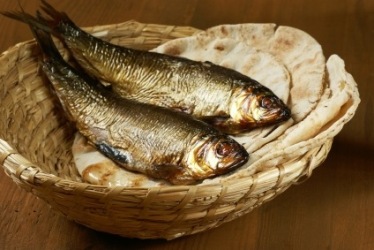
 聖書を読んでいくのなら私達は神様が私達の目には全く価値がないと思われるようなものから大いなることをなされたお方であるということに気がつきます。何よりも私達、人間を神は塵から造られたと創世記は記しています。そうです、私達がいつも踏み歩いているこの大地の土から私達は造られたのです。サムソンは捨ててあるようなロバの顎骨で数千の敵を打ち負かし、一本の杖によってモーセは数百万ものイスラエルの民を導き、子供が遊ぶようなパチンコ(石投げ)とどこにでも転がっている石ころでダビデは巨人ゴリアテを倒し、まだ未成年のような社会的には全く無力なマリアからイエス・キリストは生まれ、全くの無名、無学、もっと言いますのなら欠点ばかりが目につく荒削りの12弟子にイエス・キリストの宣教は託され、そのキリストはその生涯、最初で最後の晴れ舞台であったエルサレム入場を子ロバに乗ってなされ、どこで切り出されたかも分からない荒削りの二本の木が今日も私達の世界の唯一の希望のシンボルとなっているのです。そして、言うまでもないこれら私達の目には箸にも棒にもひっかからないようなものによって、神の栄光はあますところなく輝いているのです。
Broadcast live streaming video on Ustream
マック
「礼拝プログラム」、「一日一生」はこちらから。本日の「日英両語礼拝メッセージ原稿」、「おもちかえり」はこちらから ↓
主の御手が動く時
ヨハネ6章1節―14節
2014年11月16日
「キリストを知る」という標語を掲げて私達はこの一年、ヨハネによる福音書から礼拝メッセージを見ています。今日はその6章に記録されているある出来事をみてまいりましょう。聖書を拝読します。
1そののち、イエスはガリラヤの海、すなわち、テベリヤ湖の向こう岸へ渡られた。2すると、大ぜいの群衆がイエスについてきた。病人たちになさっていたしるしを見たからである。3イエスは山に登って、弟子たちと一緒にそこで座につかれた。4時に、ユダヤ人の祭である過越が間近になっていた。5イエスは目をあげ、大ぜいの群衆が自分の方に集まって来るのを見て、ピリポに言われた、「どこからパンを買ってきて、この人々に食べさせようか」。6これはピリポをためそうとして言われたのであって、ご自分ではしようとすることを、よくご承知であった。7すると、ピリポはイエスに答えた、「二百デナリのパンがあっても、めいめいが少しずついただくにも足りますまい」。8弟子のひとり、シモン・ペテロの兄弟アンデレがイエスに言った、9「ここに、大麦のパン五つと、さかな二ひきとを持っている子供がいます。しかし、こんなに大ぜいの人では、それが何になりましょう」。10イエスは「人々をすわらせなさい」と言われた。その場所には草が多かった。そこにすわった男の数は五千人ほどであった。11そこで、イエスはパンを取り、感謝してから、すわっている人々に分け与え、また、さかなをも同様にして、彼らの望むだけ分け与えられた。12人々がじゅうぶんに食べたのち、イエスは弟子たちに言われた、「少しでもむだにならないように、パンくずのあまりを集めなさい」。13そこで彼らが集めると、五つの大麦のパンを食べて残ったパンくずは、十二のかごにいっぱいになった。14人々はイエスのなさったこのしるしを見て、「ほんとうに、この人こそ世にきたるべき預言者である」と言った(ヨハネ6章1節―14節)。
聖書において福音書と呼ばれるマタイ、マルコ、ルカ、ヨハネにはイエス・キリストの言動が記録されています。当然、その記録の中には彼らが同じ出来事を見聞きして記したものも多くあり、その内容はだいたい同じなのですが、細かいところにおいて、マタイが記録していることを、ヨハネが記録していなかったりとか、若干の違いがあります。しかし、そのこと自体が聖書が正確に記録されているものであるということを証明しています。なぜなら私達も一つの出来事を見聞きしてそれを各々、記録するならば、それぞれの観方によってその内容も異なるからです。かえってその内容が全く同じであるということの方が怪しいものです。どこかの国のように、国の指導者に対する支持率が100パーセントなんてことはありえないのです。
福音書の中には多くの奇跡も記録されているのですが、その奇跡の中で四つの福音書、全てに記録されている奇跡は一つしかありません。それが、今日見てまいりますイエス様が「二つの魚と五つのパンから5000人もの人達を養ったという奇跡」です。いいえ、実際にはこの5000人とは男性の数だと記されていますから、女性や子供を入れますと実に10000人はゆうに超える人達がそこにいたのではないかと想像します。
この出来事にはイエス様以外に五種類の人(達)が関わっています。今日はその一つ一つを見てまいりたく願っております。それでは最初の人です。その人達はこの時にイエス様のもとに集まって来た群衆です。
そもそもなぜ、こんなにたくさんの人達がイエスのもとに来たのでしょうか。読み過ごしてしまいそうな理由をヨハネは書き留めています。『そののち、イエスはガリラヤの海、すなわち、テベリヤ湖の向こう岸へ渡られた。すると、大ぜいの群衆がイエスについてきた。病人たちになさっていたしるしを見たからである』(1,2)
すなわち、こういうことです。この群衆の関心は奇跡をすることができるイエスから自分も何か恩恵をいただけるのではないかということです。彼らの思いはとにかく何でもいいからイエスから引き出されるものに自分もあずかることができたらという思いであり、これは私達の心をよく示しています。この神様は自分の人生にどれだけのことをしてくれるのだろうか。この神によって自分はどれだけの危機を免れ、どれだけ豊かになれるのか、どれだけの願いが叶えられるのか、そんなことを私達も考えるのです。「神と自分」の関係の中心はあくまでも「自分」なのです。
この同じ出来事を記録しているマルコによる福音書には、これらの人達を見てイエス様が「飼う者のない羊のようなその有様を深くあわれんで、色々と教え始められた」(マルコ6章34節)と言われたということが書かれています。「飼う者のない羊」、それはどんな羊なのでしょうか。
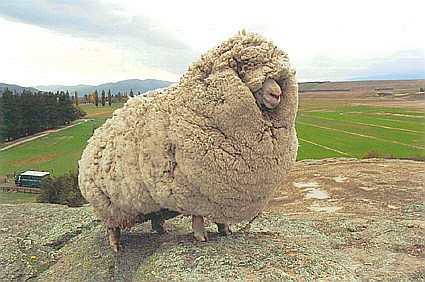
この写真はタスマニアで、群れから離れて、6年間放浪した後に見つかった羊です。その毛は6年間、刈られることがありませんでしたので、このような姿となりました。見てお分かりのようにこの羊の目はその毛によってほぼおおわれており、その毛は20キロもあったそうですから、この時に見つからなければ、この羊はその毛の重さと、視界を失うことにより、命を亡くしていたことでしょう。毛ゆえに肥えているように見えますが、実際のところこのような姿では牧草や水にありつくのも難しく、羊毛に隠れていた体はガリガリにやせていたことでしょう。
羊は身を守る牙や爪もなく、人間の保護を必要とします。聖書の中でイエス・キリストは人を羊としてたとえ、ご自身をその牧者としています。その私達の牧者なるイエス様の目に、そこに集まった群衆はこの羊のような姿として目に映ったのかもしれません。本来、牧者なる方の保護とケアーのもとに私達は生きるべきなのに、その牧者から離れ、その結果、自分の魂をケアーすることができず、それゆえに心身に積もった多くの思い患いや我欲により、不自由なる身となり、自分がどこに向かうべきか、その視界までもふさがれ、ただただ、イエス様から何かをしてもられるのではないかという思いで、集まって来ている、それがこの群衆でした。
二人目の人を見ましょう。それはピリポです。時は遅く、夕食時となりました。ですからイエス様はこの地方出身で、地元のことを良く知っているピリポに「どこからパンを買ってきて、この人々に食べさせようか」と尋ねました。しかし、それは「ピリポをためそうとして言われたのであって、ご自分ではしようとすることを、よくご承知であった」(ヨハネ6章6節)と書かれています。この問いかけに対してピリポはどうしたでしょうか。ピリポはイエスに「二百デナリのパンがあっても、めいめいが少しずついただくにも足りますまい」と言いました。
そうです、ピリポはここで自分の脳をフルに回転させたのです。そうです、人は色々な脳力を持っています。ある人は哲学的な脳、芸術的な脳、詩的な脳、創造的な脳、数学的な脳。ピリポはこの数学的な脳に長けていたようでありまして、まさしく彼はその脳をフルにはたらかせ、自分なりの考えをイエス様に伝えたのです。彼はその状況を見、イエス様の言葉を聞いた時にこんなことを考えたに違いありません。
「ざっとこの群衆を見積もっても10000人、それに対して一人の労働者が稼ぐ日当はだいたい一デナリ、その一デナリで20人の食事がとれる。しかし、仮に200デナリがあったとしてもこの群衆に分け与えたとしても全く足りない」これが彼の見積もりでした。そして思ったことでしょう。「イエス様、確かにあなたはあのカナで水をブドウ酒に変えました。しかし、今はあの時とはけた違いの群衆に私達は取り囲まれているのです!」そして、こうも考えていたことでしょう。「実際にそれ以上のお金があったとしてもいったいこの田舎町のどこからそれだけの食べ物を供給できるのですか。もう、全くもってして、このことは不可能です!」。ピリポはきわめて現実的な人で、彼が考えたことは十分に道理にかなっており、彼はその自分の見積もりをイエス様に差し出したのです。これがピリポの姿でした。
三人目の人を見ましょう。ペテロの兄弟、アンデレです。兄弟姉妹と言いましても色々とありまして、その中で兄だけが目立つとか、妹だけが注目を浴びるなんてことが時々あります。この兄弟の場合もそうで、聖書はペテロについては多くのことを記していますが、アンデレに関してはあまり記事がなく、その数少ない記事の一つがこの箇所なのです。
アンデレはきっとイエス様とピリポの間になされた会話を聞いていたのでしょう。彼はとにかく群衆の中に分け入り、何か食べ物をもっている人はいないか探し始めたのでしょう。しかし、その中にそのような食べ物を持っているものはなく、否、きっと持参している人もいたのでしょうが、先にお話しましたように彼らは受けることだけを期待して集まっているのであって、自分の何かを差し出すことなどは考えることなく、中には自分が食べるものをもっていた人もいたでしょうが、それを惜しんだり、あるいは理由をアンデレに尋ねれば、到底、不可能に思えることに思え、かろうじてその中で一人の子供がもっている弁当をアンデレは見出し、その子を連れてイエス様のもとに戻ってきたのです。
それが子供であっても、有無を言わさずにその子の弁当を持ってくるわけにはいきませんから、その子供にも大人たちにするように説明をしたことでしょう。そして、その子はそのアンデレの言葉に同意して、自分の弁当を脇に抱えながら、アンデレに手を引かれるようにしてイエス様の前に進み出たのでしょう。そして、彼はイエス様に言うのです。「ここに大麦のパン五つと、魚二匹とを持っている子供がいます。しかし、こんなに大勢の人では、それが何になりましょう」(ヨハネ6章9節)。
よくよく考えればこれは子供に対して失礼な言葉です。この子は何か役に立てばと思って来たのに、その自分を連れてきた人が「こんなに大勢の人では、それが何になりましょうか」などと言うのですから。先ほどイエス様はピリポを試したとお話しまいたが、このアンデレもある意味、試されたのでありましょう。ピリポは頭の中で電卓をはじきましたが、アンデレはそれでもとにかく群衆の間に出て行きました。
このアンデレの姿を見ていた他の弟子達はそのことを驚くこともなかったのではないかと想像します。なぜなら、彼はいつもそんな男だったからです。アンデレは聖書の中に三回だけ出てくるのですが、その三回ともに共通していることがあります。ヨハネ1章40節-42節にはアンデレは兄弟ペテロをイエス様に紹介し、彼をイエス様のもとに連れてきたことが書かれています。
『40 ヨハネから聞いて、イエスについて行ったふたりのうちのひとりは、シモン・ペテロの兄弟アンデレであった。41 彼はまず自分の兄弟シモンに出会って言った、「わたしたちはメシヤ(訳せば、キリスト)にいま出会った」。42 そしてシモンをイエスのもとにつれてきた。イエスは彼に目をとめて言われた、「あなたはヨハネの子シモンである。あなたをケパ(訳せば、ペテロ)と呼ぶことにする」』(ヨハネ1章40節-42節)。
またヨハネ12章にはこう記されています。『20祭で礼拝するために上ってきた人々のうちに、数人のギリシヤ人がいた。21彼らはガリラヤのベツサイダ出であるピリポのところにきて、「君よ、イエスにお目にかかりたいのですが」と言って頼んだ。22ピリポはアンデレのところに行ってそのことを話し、アンデレとピリポは、イエスのもとに行って伝えた。(ヨハネ12章20節-22節)。
ここでもアンデレとピリポが出てくるということは、この二人は仲がよかったのかもしれません。イエスに会いたいというギリシア人のことを知ったピリポはまずアンデレのもとに行ってそれを伝え、アンデレはすぐにイエス様にこのギリシア人を紹介したのです。そうです、そしてもう一つの出来事は今、見ていることであり、すなわち聖書に三度だけ記されているアンデレは、全て誰かをイエス様のもとに連れていく者として記されているのです。
もしアンデレが子供を見つけてイエスのものとに連れてこなければ、この奇跡は起きませんでした。アンデレがペテロをイエスのもとに連れてこなければ、どうなったことでしょうか。異邦人であるギリシア人がイエスのもとに来たことを知ったイエス様はこう言っています。『23すると、イエスは答えて言われた、「人の子が栄光を受ける時がきた。24よくよくあなたがたに言っておく。一粒の麦が地に落ちて死ななければ、それはただ一粒のままである。しかし、もし死んだなら、豊かに実を結ぶようになる』(ヨハネ12章23節ー24節)。そうです、それまでユダヤ人だけに向けられているイエスの宣教が外国人にまで広がりつつあるということ、それはまさしくイエス様の地上でのはたらきがいよいよその最後に来ており、一粒の麦が地に落ちて死ぬことにより、その未はユダヤ民族を超えて、全世界のあらゆる民族の間で多くの未を結ぶことを示す大切なしるしとなったのです。
皆さん、アンデレは何か特別なことをしているわけではないのです。彼はただとにかく人をイエス様のもとに連れていっているのです。イエス様のもとに連れて行きさえすれば、あとはイエス様がテイクケアーをしてくださるという彼なりの信仰でありましょう。そんな彼の心がこれら三つの出来事にあらわれているのです。
それでは四人目の人を見ましょう。そう、名も記されていない子供です。一つ分かることはこの子はよく食べる子だったということです(笑)。五つのパンと二匹の魚は一人の子供が食べるのにはなかなかの量でしょう。ここには大麦のパンと書かれていますが、それは人が食べるパンの中で一番、質素なパンだったようです。この辺りからこの子の家庭が見えてきます。この子の親は我が子を愛し、何かしらの理由でその日の朝、彼にこのお弁当を持たせたのでしょう。決して家庭は裕福ではないけれど、育ち盛りの子供にひもじい思いをさせたくなく、質よりも量とばかりに、この子を愛する親はそんな弁当をもたせたのでしょう。
この子にとって、このランチを捧げるということは自分がもっている全てを捧げるということを意味しました。それが多い、少ないということではなくて、この子は何かに役立つようにと、それを心から捧げようとしたのです。先ほどお話しましたように、自分は何をしてもらえるかということだけを考えている大人達には、この子のような思いをもつ者はなく、またこの子はピリポのように頭の中で常識的な計算をすることもありませんでした。
そのような意味ではある注解者が書いておりますが、ここには二つの奇跡があります。一つ、それはイエスがこの群衆を養ったという奇跡。そして、もう一つ、それはこの子が自分の持っているものをイエスに捧げたという奇跡。イエス様はこの子の心に起きた奇跡的な献身を用いて、ご自身のしるしをなされたのです。主にある兄弟姉妹、どうぞ、覚えてください、まずこの子の心に奇跡が起こり、それからイエス様の驚くべきしるしが起きたのです。
私達が主のために何かをさせていただく時、私達はそれをどう評価するのでしょうか。イエス様の評価はどんなものなのでしょうか。そのイエス様のお心が分かる二つの出来事があります。
41イエスは、さいせん箱にむかってすわり、群衆がその箱に金を投げ入れる様子を見ておられた。多くの金持は、たくさんの金を投げ入れていた。42ところが、ひとりの貧しいやもめがきて、レプタ二つを入れた。それは一コドラントに当る。43そこで、イエスは弟子たちを呼び寄せて言われた、「よく聞きなさい。あの貧しいやもめは、さいせん箱に投げ入れている人たちの中で、だれよりもたくさん入れたのだ。44みんなの者はありあまる中から投げ入れたが、あの婦人はその乏しい中から、あらゆる持ち物、その生活費全部を入れたからである」(マルコ12章41節-44節)。
レプタもコドラントもローマの通貨貨幣のことで、ある注解書は、このレプタ二つは一回の入浴料だったと書かれています。そうです、それは今日の数ドルと言っていいでしょう。その日、イエス様が見た光景は多くの金持ちがたくさんのお金をさいせん箱に入れている光景であり、それに比べたらレプタ二つはわずかなものです。このマルコの記述を見てください。金持ちは多くのお金を「投げ入れていた」のです。でもこのやもめはわずかなものを「入れた」のです。金持ちが投げ入れたものは、さぞかし大きな音をたてて箱の中に落ちたことでしょう。まわりの人達もその音に気がついたことでしょう。しかし、このやもめが入れたものは、その音すら聞こえないものでした。しかし、どうぞ覚えてください、イエス様はこのやもめが誰よりも多くを捧げたと評価したのです。こんな出来事もありまいた。
3イエスがベタニヤで、らい病人シモンの家にいて、食卓についておられたとき、ひとりの女が、非常に高価で純粋なナルドの香油が入れてある石膏のつぼを持ってきて、それをこわし、香油をイエスの頭に注ぎかけた。4すると、ある人々が憤って互に言った、「なんのために香油をこんなにむだにするのか。5この香油を三百デナリ以上にでも売って、貧しい人たちに施すことができたのに」。そして女をきびしくとがめた。6するとイエスは言われた、「するままにさせておきなさい。なぜ女を困らせるのか。わたしによい事をしてくれたのだ。7貧しい人たちはいつもあなたがたと一緒にいるから、したいときにはいつでも、よい事をしてやれる。しかし、わたしはあなたがたといつも一緒にいるわけではない。8この女はできる限りの事をしたのだ。すなわち、わたしのからだに油を注いで、あらかじめ葬りの用意をしてくれたのである。9よく聞きなさい。全世界のどこででも、福音が宣べ伝えられる所では、この女のした事も記念として語られるであろう」(マルコ14章3節-9節)。
イエス様はこの突拍子もない女性に対して、ああだこうだと言って彼女をとがめている者達の言葉を聞きつつ、ご自身のこの女に対する評価をしました。それは「この女はできる限りのことをしたのだ」ということです。そうです、私達の目は「何が捧げられたか」ということに向けられますが、イエス様はそのことに関心はなく、常に「それはどんな心で捧げられたか」ということを見つめられたのです。
さて、それでは五人目の人についてお話しましょう。他にこの物語にはどんな登場人物がいますか。そう、五人目はこの話を今まで見てきた私達です。こんな問いかけはいかがですか。あなたはイエス様の周りに集まった群衆ですか。あなたは、ただ、イエス様から自分は何をいただけるのか、そのことだけを求めていますか。その自分の願いが叶わないなら、この神は自分とは関係がないと、そこを立ち去りますか。あなたはピリポですか?あなたの信じてる神様は、あなたの所有しているものによって量られますか。あなたが神様のために何かをなす時、それはあなたの能力によって決まりますか。神のなされることは、私達が何をもっているかとか、何ができるかということによって決まるのでしょうか。もし、そうであるのなら、私達は何を信じているのでしょうか。私達の所有物を信じ、私達の能力を信じているのです。神様は私達の手の中に収まる電卓、私達の脳みその中に収まるお方なのでしょうか。
私達はそれでも主が何かをしてくださると自分の出来ることをしようとするアンデレでしょうか。彼の兄弟、ペテロは聖書中に何度も出てきますし、イエス亡き後も信徒の間のリーダーとなり、その目覚ましいはたらきを聖書は記録しています。しかしアンデレはお話しましたように、人をイエスに連れてくることに徹したのです。とにかく自分は人をイエス様のもとに連れてくるのだ。その先はイエス様にお委ねするのだ。確かにそうしたからといって、どうなるか分からない。でも、自分は自分ができることをする。それがアンデレです。
私達は自分の全てを神様のために用いてもらおうと心に願うこの子供のようなものでしょうか。アンデレでさえ、この子を連れてきておきながら「こんな二つの魚、五つのパンが何になりましょう」と本心を言い表しました。しかし、この子の心にはとにかく自分のもっている最善をイエス様のために用いてもらおうという思いしかなかったに違いありません。この子は一匹の魚と二つのパンは自分のためにとっておいて、後の残りは捧げますとは言いませんでした。この子は自分が持っている全てをイエス様に差し出したのです。
聖書を読んでいくのなら私達は神様が私達の目には全く価値がないと思われるようなものから大いなることをなされたお方であるということに気がつきます。何よりも私達、人間を神は塵から造られたと創世記は記しています。そうです、私達がいつも踏み歩いているこの大地の土から私達は造られたのです。サムソンは捨ててあるようなロバの顎骨で数千の敵を打ち負かし、一本の杖によってモーセは数百万ものイスラエルの民を導き、子供が遊ぶようなパチンコ(石投げ)とどこにでも転がっている石ころでダビデは巨人ゴリアテを倒し、まだ未成年のような社会的には全く無力なマリアからイエス・キリストは生まれ、全くの無名、無学、もっと言いますのなら欠点ばかりが目につく荒削りの12弟子にイエス・キリストの宣教は託され、そのキリストはその生涯、最初で最後の晴れ舞台であったエルサレム入場を子ロバに乗ってなされ、どこで切り出されたかも分からない荒削りの二本の木が今日も私達の世界の唯一の希望のシンボルとなっているのです。そして、言うまでもないこれら私達の目には箸にも棒にもひっかからないようなものによって、神の栄光はあますところなく輝いているのです。
ここまでお話して、なぜこの出来事だけが四つの福音書全てに納められているかというその意味も分かったように思えます。ここに私達が問われる生き方があるのです。もし、私達が信仰者であるのなら、心から願うことはこの一度の人生に神様が介入なさって、その御業を見せていただくことでしょう、神を信じているといいながら、その神のみわざを一度も見たことがないという方はいませんか。今日の出来事は私達に何を語っているのでしょうか。
主にある兄弟姉妹、あなたは今日、この礼拝に何をしにきたのですか。何かいいものがないかなと思って来たのですか。御利益を求めて、何かお得なものを探しにきたのですか。いいえ、私達は礼拝を捧げにここにきたのです。そして、その礼拝の対象となるお方を私達は主と呼ぶのです。そうです、その方は私達の主(あるじ)なのです。たとえそれが私達の目には見栄えのしないもののようであったとしても、それが自分が捧げうる最善のものであるということを主にお捧げしてみましょう。このパンと魚の奇跡は「アンデレに導かれてイエス様に全てを捧げようとした子供の奇跡的な思い」と「主イエス・キリスト」によって起きたということを心に刻みましょう。主のしるしをこれからも見続けたいという方、まだそれを今まで見たこともないという方、わたしたちに問われていることは何なのでしょうか。お祈りしましょう。
When hands of Jesus touch us
John 6:1-14
November 16, 2014
Our theme for this year is “to know Christ” and we have been studying the Gospel according to John. This morning, I would like to study an episode recording in Chapter 6. Let’s read it.
Some time after this, Jesus crossed to the far shore of the Sea of Galilee (that is, the Sea of Tiberias), 2 and a great crowd of people followed him because they saw the signs he had performed by healing the sick. 3 Then Jesus went up on a mountainside and sat down with his disciples. 4 The Jewish Passover Festival was near. 5 When Jesus looked up and saw a great crowd coming toward him, he said to Philip,“Where shall we buy bread for these people to eat?” 6 He asked this only to test him, for he already had in mind what he was going to do. 7 Philip answered him, “It would take more than half a year’s wages to buy enough bread for each one to have a bite!” 8 Another of his disciples, Andrew, Simon Peter’s brother, spoke up, 9 “Here is a boy with five small barley loaves and two small fish, but how far will they go among so many?” 10 Jesus said, “Have the people sit down.” There was plenty of grass in that place, and they sat down (about five thousand men were there). 11 Jesus then took the loaves, gave thanks, and distributed to those who were seated as much as they wanted. He did the same with the fish. 12 When they had all had enough to eat, he said to his disciples, “Gather the pieces that are left over. Let nothing be wasted.” 13 So they gathered them and filled twelve baskets with the pieces of the five barley loaves left over by those who had eaten. 14 After the people saw the sign Jesus performed, they began to say, “Surely this is the Prophet who is to come into the world.” (John 6:1-14)
All four gospels of the Bible (according to Matthew, Mark, Luke, and John, respectively) record the activities of Jesus Christ. These disciples witnessed some of the same episodes in person and recorded them in roughly the same way. But, there are minor differences among the descriptions of such episodes. But such differences attest to the credibility of the events recorded in the Bible. Even if we observe the same event and we record it, there is bound to be differences in the way each of us record it. If they are all identical with no differences, it is rather suspicious. It is difficult to believe when some country claims that all 100% of the people supports the leader.
The books of the gospel record many miracles. But there is only one miracle that was recorded in all four of the gospels. That miracle is the one we are studying today, in which Jesus fed 5000 people with 2 fish and 5 loaves of bread. We know that this number 5000 refers to men only. If so, if we include women and children as well, there must have been over 10,000 people.
We see five types of characters in this episode besides Jesus. I would like to look at each of these characters. The first character is the crowd that was gathered around Jesus in this episode.
Why were there so many people around Jesus at this time? John recorded one possible reason for this: Some time after this, Jesus crossed to the far shore of the Sea of Galilee (that is, the Sea of Tiberias), 2 and a great crowd of people followed him because they saw the signs he had performed by healing the sick. (John 6:1-2)
This makes sense. This crowd came to Jesus because they heard that he had healed many. So they also must have wanted to get benefit from Jesus. They just wanted to get something, anything, from this Jesus. This is a natural reaction for all of us when we hear about such a powerful individual. What would this God do to better my life? How could this God protect me from dangers? How rich can I become? How many of my wishes can this God grant me? We all think alike. The relationship between “God and I” here is strictly self-centered.
When Mark recorded this same episode, he wrote that “When Jesus saw the crowd, he had compassion on them, because they were like sheep without a shepherd. So he began teaching them many things.” (Mark 6:34) A sheep without a shepherd. What would that be like?
This picture shows a sheep that was discovered in Tasmania after it had been lost for 6 years. It’s hair had not been sheared for 6 years. That is why this sheep looked like this. As you can see, the eyes of the sheep are almost entirely covered by the hair. They say the hair weighed 20 kilograms (44 pounds). If this sheep was not discovered much longer, the sheep would have lost sight and would have lost its life because of this overgrown hair. The hair makes this sheep look fat and healthy. But, underneath, this sheep must have been starving since it was very difficult to graze grass and drink water in such a condition.
A sheep has no fangs or claws to protect itself. It needs human protection. In the Bible, Jesus Christ said people were like sheep and he was the shepherd for them. So, in the eyes of Jesus, the crowd gathering around him looked like sheep without a shepherd. They needed protection and care from the shepherd. But, they had left the shepherd, and could not take care of their spirit themselves. They were overwhelmed by anxiety and greed. They lost the freedom. They could not even see where they were going. And, the crowd came to Jesus, hoping to get some or any benefit from this person called Jesus.
The second character is Philip. Philip was from this district and knew the area. So, Jesus asked Philip: “Where shall we buy bread for these people to eat?” It is also written here that: “He asked this only to test him, for he already had in mind what he was going to do.”(John 6:6) How did Philip respond? Philip said to Jesus: “It would take more than half a year’s wages to buy enough bread for each one to have a bite!” (John 6:7)
Philip utilized his brain to its fullest to respond. Each of us has different brain power. Some are philosophical, artistic, poetic, creative, and some are mathematical. It seems Philip was good with numbers. Based on his strong point, he came up with this response to Jesus. When asked by Jesus, Philip must have been thinking this way:
“I would estimate the crowd to be around 10,000 people. One man can make roughly 1 Denar a day, enough to feed 20 people. Even if he worked for 200 days, it would be far from enough to feed this large crowd.” That was Philip’s response. He was saying “Jesus, you did change water into wine at the wedding at Cana. But, we are surrounded by a crowd far greater than that.” He was also thinking that: “Even if we had enough money at hand, where in this countryside could we find enough supply of food to feed these people? It is simply impossible.” Philip was very practical. His thoughts were logical. He presented his answer based on his estimation. And that was the only thing Philip could do.
Let’s look at the third character, namely Andrew, Simon Peter’s brother. Brothers and sisters come in all flavors. Sometimes only the older brother stands out. Some other time only the younger sister is the center of attention. The Bible talks a lot about Peter but very little about this Andrew. This is one of those rare occasions Andrew is mentioned in the Bible.
Andrew must have overheard the conversation between Jesus and Philip. Andrew decided to walk among the crowd looking for anyone with some food in his possession. But, he could not find any such individual. Or rather, there must have been some people with food, but they came to Jesus looking to get something from Jesus. Giving something to others was the last thing they had in mind. So, Philip could not find any volunteer to offer any food. After a great difficulty, Andrew managed to find a boy carrying a lunch with him, and Andrew brought this boy to Jesus.
Of course Andrew could not force the boy to offer his lunch to Jesus. Andrew must have tried to persuade the boy to volunteer. And this boy must have agreed Andrew. Andrew took this boy by hand and the boy came to Jesus carrying his lunch. Andrew says to Jesus: “Here is a boy with five small barley loaves and two small fish, but how far will they go among so many?” (John 6:9)
If you think about what Andrew said, we can say that these words of Andrew are kind of insulting to the boy. This boy agreed to help and came with Andrew. But, Andrew was saying that what the boy was offering would not be of too much help. I said earlier that Jesus was testing Philip. Andrew was being tested also. Philip was good with numbers. Andrew decided to go into the crowd looking for a solution.
This action by Andrew was not surprising to the other disciples. Andrew was such a man of action. Andrew is mentioned three times in the Bible. There is a common scheme in all of these. In John 1:40-42, Andrew searched out his brother Peter and introduced him to Jesus.
40 Andrew, Simon Peter’s brother, was one of the two who heard what John had said and who had followed Jesus. 41 The first thing Andrew did was to find his brother Simon and tell him, “We have found the Messiah” (that is, the Christ). 42 And he brought him to Jesus. Jesus looked at him and said, “You are Simon son of John. You will be called Cephas”(which, when translated, is Peter). (John 1:40-42)
John Chapter 12 also says: 20 Now there were some Greeks among those who went up to worship at the festival.21 They came to Philip, who was from Bethsaida in Galilee, with a request. “Sir,” they said, “we would like to see Jesus.” 22 Philip went to tell Andrew; Andrew and Philip in turn told Jesus. (John 12:20-22)
Here, Andrew and Philip were mentioned together. Perhaps they were close to each other. When Philp learned about Greeks who wanted to meet Jesus, Philip told about them to Andrew. Then, Andrew immediately introduced the Greeks to Jesus. And, the third episode about Andrew is what we just read earlier. So, each of these three mention that Andrew was someone who took action to bring people to Jesus.
If Andrew did not find the boy and did not bring the boy to Jesus, this miracle would not have happened. What if Andrew did not bring Peter to Jesus, what would have happened to Peter? When the gentile Greek people were brought to Jesus, 23 Jesus replied, “The hour has come for the Son of Man to be glorified. 24 Very truly I tell you, unless a kernel of wheat falls to the ground and dies, it remains only a single seed. But if it dies, it produces many seeds. (John 12:23-24) The gospel of Jesus had been limited to the Jewish people before. The work of Jesus on this earth was coming to its end. The kernel of wheat was to about to fall to the ground to die. This action by Jesus marked the important step for the gospel to extend far beyond the Jewish people to the rest of the world.
Andrew was not doing anything special. He just brought people to Jesus. He believed that if only people came to Jesus, then Jesus would take care of them. This was the way Andrew believed, and he took action accordingly.
Then, let’s look at the fourth character: This is the boy, the nameless boy. I can see immediately that this boy had a very good appetite. Five loaves of bread and two fish was much more than a boy could handle. The Bible says these were barley loaves of bread. This was not a luxury food item. We can see what his family was like. His parents, loving parents, had prepared his lunch for him in the morning before he left. The family was not rich. But his loving parents had made sure to provide the boy with enough quantity to satisfy his healthy appetite.
For this boy, volunteering to offer his lunch meant that he was offering all he had. The size of his lunch was not important. This boy wanted to help and offered everything he had. Adults in this crowd were thinking only about what they could get. They could not think like the boy did. And the boy was not like Philip, who could only think about numbers.
One commentator said that there are two miracles taking place in this episode. One is that Jesus fed the crowd. And the other is this boy offered what he had to Jesus. Jesus saw the amazing giving spirit of this boy, and Jesus followed it with his miracle. Please note that a miracle happened first in the heart of this boy, and then the amazing sign was revealed by Jesus.
When we offer something to God, how do we assess such deeds? How does Jesus assess such deeds of ours? There are two episodes offering the answers to these two questions:
41 Jesus sat down opposite the place where the offerings were put and watched the crowd putting their money into the temple treasury. Many rich people threw in large amounts.42 But a poor widow came and put in two very small copper coins, worth only a few cents. 43 Calling his disciples to him, Jesus said, “Truly I tell you, this poor widow has put more into the treasury than all the others. 44 They all gave out of their wealth; but she, out of her poverty, put in everything—all she had to live on.” (Mark 12:41-44)
Small copper coins, worth only a few cents. Some commentary says these were just enough to pay for taking one bath. Let’s say it was worth few dollars of today. On that day Jesus saw many wealthy people offering a great amount of money. Compared to that, what this poor widow offered was very little. Please note what Mark wrote carefully. It says that these rich people “threw in” large amounts, but this widow “put” in two very small copper coins. What the rich threw in must have made a loud clanking sound, enough for other people to take notes. But what this widow offered did not even make any sound. But, Jesus said that this widow put more than anyone else. Then, there was this episode:
3 While he was in Bethany, reclining at the table in the home of Simon the Leper, a woman came with an alabaster jar of very expensive perfume, made of pure nard. She broke the jar and poured the perfume on his head. 4 Some of those present were saying indignantly to one another, “Why this waste of perfume? 5 It could have been sold for more than a year’s wages and the money given to the poor.” And they rebuked her harshly. 6 “Leave her alone,” said Jesus. “Why are you bothering her? She has done a beautiful thing to me. 7 The poor you will always have with you, and you can help them any time you want. But you will not always have me. 8 She did what she could. She poured perfume on my body beforehand to prepare for my burial. 9 Truly I tell you, wherever the gospel is preached throughout the world, what she has done will also be told, in memory of her.” (Mark 14:3-9)
People were critical of the surprising action of this woman. People did not appreciate her action. But, Jesus saw something else in her. Jesus said: “She did what she could.” We tend to think what was offered. Jesus, however, does not care what. He cares more about the heart behind such offerings.
Let’s look at the fifth character. Was there a fifth character in this story? Yes, there is. And that is us, who have been watching this episode. How about this question? Are you the crowd gathering around Jesus? Are you here thinking only what you can get out of Jesus? Or, are you like Philip? Does your God measure your faith with the size of your possession? When you do things for God, would that depend on what you can? But, think about it. Would God care what we possess or what we can do? What do we believe in? Do we believe in what we possess or what we can do? Can we quantify God with our calculators? Would we be able to contain him in our minds?
Would we be like Andrew who did what he could, believing that Jesus would take care of the rest? The Bible mentioned Peter, his brother, many times. Peter would become a strong leader among the disciples after Jesus’s departure. But, Andrew just concentrated on bringing people to Jesus. He just tried his best to bring people to Jesus and left the rest to Jesus. Andrew did not know what would happen to these people. But, what he could do was to bring them to Jesus.
Or, are we like the boy who wanted to be of help to God in some way. Andrew expressed his doubts, saying:”What good would two fish and five loaves of bread do?” But the boy just wanted to offer everything he had to Jesus so that Jesus could make the best use of it. The boy did not keep one fish and two loaves for himself and offered the rest to Jesus. This boy offered everything he had to Jesus.
When we study the Bible, we come to realize that God can do great things out of seemingly useless things we belittle. The Genesis recorded that God had created us, people, from dust. We were made out of the dirt on which we walk all the time. Samson defeated thousands with a jaw bone of a donkey; Moses lead millions of Israelites with one walking staff; David killed the giant Goliath with a rock using a sling shot, a toy for a child; Jesus Christ was born from Mary, a very young and powerless girl; Jesus Christ deligated the work of his mission to nameless, unlearned, imperfect, and unpolished 12 disciples; Jesus entered Jerusalem, the first and the final visit to the town, on a colt of a donkey; And the symbol of our only hope today is made up from two logs making up the rough cross. The glory of God shines strongly and all over the world today from these seemingly insignificant and worthless things.
Perhaps we can understand whey this particular episode is contained in all four of the gospel books. This is pointing out to us how we should live our life. All of us who believe in God wish that God comes into our life and reveals his work. Perhaps some of you claiming to believe in God has never observed God in action. What does this episode tell us?
Bothers and sisters in God, why did you come to this worship service this morning? Did you come to find some benefits? Did you come looking for some reward or something you can get? No, we came this morning to offer our worship service. Our service is offered to worship God. We refer to God as the Lord. We should offer the very best to this Lord, even if it might seem to be of little value in our eyes. Let us offer our soul to God. Please recall that this miracle of bread and fish took place because of the boy Andrew brought to Jesus and the amazing heart of the boy. And, finally because of Jesus who responded to them. If you want to continue to observe signs from God, or if you have never seen one yet, let us ask what is being asked of us from God.
Let us pray.
Translated by Dr. Yasuhisa Hosomatsu
本日のおもちかえり
2014年11月16日
1)ヨハネ6章1節―14節を読みましょう。群衆はなぜイエスについてきたのですか(1節、2節)。なぜ、奇跡は人を惹きつけるのですか。
2)同じ出来事を記録しているマルコは、この群衆を見たイエス様は「飼う者のない羊のようなその有様を深くあわれんで、色々と教え始められた」(マルコ6章34節)と記録しています。「飼う者のない羊」のような人間とは、どんな姿の人間なのでしょうか。
3)ピリポはイエス様に「二百デナリのパンがあっても、めいめいが少しずついただくにも足りますまい」と言いました。ここからピリポのどんな人となりを知ることができますか。あなたが信じている神様はあなたの見積もりよりも小さなお方ですか。
4)アンデレは「ここに大麦のパン五つと、魚二匹とを持っている子供がいます」(ヨハネ6章9節)とイエス様のもとに子供を連れてきました。これに合わせてヨハネ1章40節-42節、ヨハネ12章20節-22節を読みましょう。これらからアンドレがどんな人間だったか分かりますか。あなたは誰かをイエス様のもとに連れてきたことがありますか。その時のあなたの役割は何ですか(ピリポの見積もりと合わせて考えてみましょう)。
5)五つのパンと二匹の魚を捧げた子供の心にはどんな思いがったと思いますか。無から有を生み出し、天地万物を支配している方に「五個のパン」と「百万個のパン」に何か違いがありますか。
6)マルコ12章41節-44節とマルコ14章3節-9節を読みましょう。ここからイエス様のどんなお心を私達はうかがい知ることができますか。
7)あなたは群衆ですか。アンデレですか。ピリポですか。子供ですか。
