
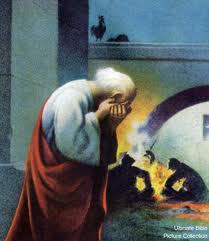
 己を信じていた男の自信がもろくも崩れました。それは自他ともに認める失敗であり、修正できない挫折でした。その残りの人生、どこにいっても後悔が彼を追いかけてきたことでしょう。しかし、彼はそんなところから神の愛を知りました。そうです、それは破れて知った愛なのです・・・。
マック
「礼拝プログラム」、「一日一生」はこちらから。本日の「日英礼拝メッセージ原稿」、「おもちかえり」はこちらから ↓
破れて知る神の愛
2015年8月16日
私達の人生には色々な通過点があります。幼い子供が幼稚園、小学校に入り、その先に進学し、やがて巣立っていく。その中には喜びがあり、楽しみがあり、同時に悲しみや苦しみというものが含まれています。その間に多くの出会い、そして別れを経験することでしょう。修羅場と呼ばれるものをくぐりぬけることもあるかもしれません。
簡単に通りぬけることができる通過点もあれば、なかなかクリアーできない通過点もありましょう。忘れてしまうような通過点もあれば、人生の節目となるような通過点もありますでしょう。今日、私たちが見ていくペテロに起きたことは彼にとりましてまさしく人生の転換点になるような通過点でした。この通過点を通ることにより、後の彼が神様によりどのように用いられていくかということのターニングポイントとなりました。そして、特筆すべきことは、この通過点は彼にとって喜びの通過点というよりも、後悔と悲痛をともなうものでした。それはできることなら避けたい、向き合いたくはないと思われる通過点でした。いかがでしょうか、皆さんにもそんな通過点がありましたか。今、そんなところを歩んでいるという方はいますか。
かってイエス様は弟子たちの前でこんなことを言われました。「あなたがたは皆、わたしにつまづくであろう」(マルコ14章27節)。この言葉は、自分と共に3年半、活動を共にして弟子たちに向かって言われたのですから、それはインパクトのある言葉でした。この言葉を受けてペテロは「たとい、皆の者がつまづいても、わたしはあなたにつまづきません」(マルコ14章29節)と言いました。しかし、イエス様はペテロに向かい「あなたによく言っておく。きょう、今夜、にわとりが二度なく前に、そう言うあなたが三度わたしを知らないと言うのであろう」(マルコ14章30節)と言いました。
それに対してペテロは「たとえあなたと一緒に死なねばらなくなってもあなたを知らないなどとは決して申しません」(マルコ14章31節)となんとも威勢のいいことを宣言したのです。この言葉のまわりには他の弟子達がいました。彼らの前で「たとい、みんなの者がつまづいても」と大言壮語したのです。それを聞いていた弟子達は腹がたったでしょうね。何もお前だけ出し抜いて、俺たちを引き下ろすことはないではないかと!
皆さん、このような類のことを言ったことがありますか。これはそうとうに覚悟のいる言葉で、もしかしたら後で恥をかかなければならない発言となりうるものですから、多くの人にとりましては口に出して言うことはひかえる言葉です。しかし、心の中では思っていることがないでしょうか。お互いを見回して「あいつには無理だろうけど、俺ならできる」と。心に手をあててみれば、こんなことの一つや二つ、すぐに思い起こされるのではないでしょうか。ペテロはとても単純な男ですから、そんな心にあることを口に出してしまったのです。
そして、この会話がなされた直後に先週、お話ししましたようにイエス様は捕えられていくのです。その時です、この威勢のいいことを言った手前、ペテロは剣をぬき、イエス様を捕えに来た大祭司の僕の右耳を切り落としてしまったのです。「一緒に死なねばならなくとも」と息巻いてしまった彼なりの精一杯の心意気だったのでしょう。
耳が切り落とされるというのですから、そこは鮮血がとび散るような惨状となったことでしょう。耳は切り落とされたのですから、イエス様は地に落ちている耳を拾われ、その耳を癒されたのです。このようにイエス様がペテロの尻拭いをされましたから、その場はどうにか保たれました。そうでなければペテロは周りにいる兵士たちによって八つ裂きにされていたかもしれません。いずれにせよ、イエスは捕えられ、ペテロは八つ裂きにあうこともなく、しかし、かつてのあの勇ましい言葉を捨てることができず、この後もイエス様が連れて行かれた大祭司の中庭までなんとか入りこんだのです。その中庭でペテロの心臓は、はりさけんばかりに高鳴っていたことでしょう。もしかしたら自分も捕えられてしまい、刑に処する可能性があるからです。
この大祭司の中庭でのペテロの姿については四福音書全てが記録を残しています。その晩は寒い夜だったようで、その中庭では火が起こされていたようです。ペテロはそのたき火を前に座っていました。そうしましたら、ひとりの女中が彼のところにきて「あなたもあのガリラヤ人イエスと一緒だった」と言った。(マタイ26章69節)するとペテロは、みんなの前でそれを打ち消して言いました「あなたが何を言っているのか、わからない」(マタイ26章69節ー70節)。そう言って入口のほうに出ていきますと、他の女中が彼を見て、そこにいる人々に向かって、「この人はナザレ人イエスと一緒だった」(マタイ26章71節)と言います。そこで彼は再びそれを打ち消して「そんな人は知らない」と誓って言いました(マタイ26章72節)。しばらくしましたら、今度はそこに立っていた人々が近寄ってきて「確かにあなたも彼らの仲間だ。言葉づかいであなたのことがわかる」(マタイ26章73節)と言い、彼は「その人のことは何も知らない」(マタイ26章74節)と言って、激しく誓いはじめた。そうしましたら、すぐ鶏が鳴いたのです。ペテロは「鶏が鳴く前に、三度わたしを知らないと言うであろう」と言われたイエスの言葉を思い出し、外に出て激しく泣いた(マタイ26章75節)。
マルコ伝によりますとこの女中はペテロをじっと見つめて問いかけました。じっと見つめられて彼の心臓の鼓動はいかなるものだったでしょうか。ペテロはたき火の側にいたようです。ヨハネはペテロが「立って火にあたっていた」と記し、マタイとルカはその「火の側に座っていた」と記しています。ペテロの姿が目に浮かびます。落ち着くことなく、彼は立ったり、座ったりとしていたのでしょう。
ヨハネは最後にペテロに問うた人は、数十分前に彼が耳を切り落としたマルコスの身内だったと記しています。その人は言うのです「わたしはあなたをあの園であの人と一緒にいるのを見たではないか」(ヨハネ18章26節)と言うのです。これに対してペテロは激しく誓い、マタイは「呪いの言葉さえ口にしながら、「嘘なら自分に呪いがかかってもよい」「そんな人は知らない」と激しく誓った(マタイ26章74節)と記しています。そして、イエス様が言われたように鶏が鳴いたのです。
彼のこの時の気持ちはいかほどだったでしょうか。死んでもあなたについて行くと言った自分の言葉、しかし、それにもかかわらずイエスを裏切った三回の言葉がくるくると心をめぐったことでしょう。ルカ伝では三回の否認の後、主が言われたように鶏が鳴いた後、裁判のために中庭を抜けていくイエス様が「振り向いてペテロを見つめられた」(ルカ22章61節)とあります。そして「彼は外に出てはげしく泣いた」(62)のです。
主にある兄弟姉妹、これがペテロがその人生に通った一つの通過点でした。言うなれば人生の汚点、弁解の余地がない自分の本当の姿です。これが自分だという姿です。一時間の間にイエス様が言われたことと自分が言ったことを忘れることなどできません。そのことが脳裏をクルクルと廻ったことでしょう。自分がイエスを守るとか、死に至るまでついていくなどとはとんでもない話で、今こうしている間にもイエス様の命はまさしく奪われようとしている。そして、実際にイエス様は不正な裁判により、これから十字架に磔にされて殺されるのです(マタイ16章1節-8節)。
このイエスの十字架の死は、彼の心にぬぐうことができない自己嫌悪と苦悩をもたらしたに違いありません。イエス様はどんなにさみしく、悲しい思いで死んでいかれたのだろうか。どんなに自分を恨んでいるだろうか。一緒に死にますといいながら、なぜ自分はあの時、一緒に死ねなかったのだろうか。そんな思いが繰り返し繰り返しペテロの心に迫ったに違いありまえん。この出来事は彼の心に生涯、残る挫折として敗北として刻みこまれたに違いありません。主にある兄弟姉妹、このような後悔と共に今も日々、過ごしているという方はいませんか。神はこのペテロの心をそのまま放っておいたでしょうか。
こんな時に一つのことが起こりつつありました。安息日が終わった朝方、数人の女性が死んで葬られたイエスの墓に香料を塗るために墓に向かいました。しかし、そこで見たのは空の墓でした。そして、そこにいた御使いは言いました『6 するとこの若者は言った、「驚くことはない。あなたがたは十字架につけられたナザレ人イエスを捜しているのであろうが、イエスはよみがえって、ここにはおられない。ごらんなさい、ここがお納めした場所である。7 今から弟子たちとペテロとの所へ行って、こう伝えなさい。イエスはあなたがたより先にガリラヤへ行かれる。かねて、あなたがたに言われたとおり、そこでお会いできるであろう、と』(マルコ16章6節-7節)
ガリラヤとは今もイスラエルに地名として残っている場所です。イエス様はその地方にあるガリラヤ湖周辺を宣教活動の拠点としました。そのことはイエス誕生の700年以上も前に預言者イザヤによって預言されていたのです。15「ゼブルンの地、ナフタリの地、海に沿う地方、ヨルダンの向こうの地、異邦人のガリラヤ、16暗黒の中に住んでいる民は大いなる光を見、死の地、死の陰に住んでいる人々に、光がのぼった」(マタイ4章15節‐16節)。
そうです、ガリラヤとは異邦人が住む土地であり、まさしくそこに住んでいる者たちは暗黒の中に住む者、そこは死の地、死の陰と呼ばれている場所でありました。そして、何を隠そうペテロをはじめ、イエス様の弟子の幾人かはこのガリラヤの出身でした。そのガリラヤに私はあなたたちよりも先に行っているから、そのことを弟子とペテロのところに行って伝えなさいというのです(マルコ16章7節)。イエス様は再び暗黒の中に住んでいる者達のもとに戻っていくというのです。
この言葉に従ったのでしょう、弟子たちは故郷ガリラヤに戻り、ある晩、ガリラヤ湖で一晩中、網を投げて漁をしていました。しかし、何もとれない。その時に岸に立っておられるイエスの姿を見出だすのです。それと知ったペテロは湖に飛び込み、イエスのおられる岸まで泳いでいきます。一晩中、湖上にいた彼の体は冷えきったいたでしょう。そこにきて、湖に飛び込んでしまったペテロ。びしょびしょになって陸にあがってみると、イエス様によってイエス様によって炭火がおこされ、魚が焼かれていました。
そして、イエス様はペテロに語りかけたのです。『ヨハネの子、シモンよ、あなたは私を愛するか』と。皆さん、実はこの言葉の背後にはこのような意味があります。最初の二階、イエス様は『愛する』という言葉をアガパオというギリシア語で聞いています。これはアガペーの愛です。神の愛、無条件の愛です。つまり、このアガペーの愛で『ペテロよ、私を愛するか』と言うのです。かつてのペテロなら『ああ、そうです、私はあなたが私を愛してくださる、そのアガペーの愛であなたを愛します』と答えたことでしょう。しかし、彼はここで「あなたを愛します』というフィレオの愛で答えます。これはアガペーではなく、兄弟愛を示します。アガペーを神の完全な愛とするのなら、フィレオの愛とはそこにまではいたらない人間的な親愛を表しました。
ペテロは一度目にアガペーで聞かれ、フィレオで答え、二度目にもアガペーで聞かれ、またフィレオで答えます。そして、三度目にイエス様はフィレオで聞くのです。『そうか、あなたは私をフィレオの愛で愛するか』。彼は答えます「はい、フィレオの愛で愛します」。
これがイエス様を三度否んだペテロの変化です。あの苦い経験を通して、彼は自分の内にはもはや「アガペーで愛します」と断言できるようなものはないということを悟りました。イエス様、私はフィレオの愛で精一杯なのですと。イエス様はそれを受け止め、「ペテロよ、それではあなたは、そのフィレオの愛で私を愛するか」と言われたのです。
イエス様はアガペーにアガペーで答えることを望んではいませんでした。人は自分勝手でありまして愛する人にこう願います。「私があなたを愛している愛と等しい愛でわたしを愛してください。あるいは、それ以上の私への愛を求めます」と。「もし、あなたがそのような愛にいたらないのであるのなら、あなたと私の関係はそこでご破算です」と。主にある皆さん、これが私達が言っている「I LOVE YOU」の内実です。
イエス様は無条件の愛でペテロを愛しましたが、ペテロはそのような愛を持ち合わせてはいませんでした。イエス様はそれならダメだと言わず、そのあなたが願うフィレオの愛で私を愛しなさいと言われ、さらにはそんな彼に新しい使命、すなわち「あなたは私の羊を養いなさい」と語られたのです。
イエス様は彼の裏切りはおろか、その彼の勇気、指導者としての能力を問うてはいません。かつてイエス様が言われたように、この人間が初代教会の岩になるペテロになるために、ペテロは愛と献身において他の弟子達に勝るものを身につける必要がありました。そして、そこのいたらせる通過点は『自分自身の自己破産』というスピリチャル・バンクラプシーという不思議な方法でした。福音の光は人の挫折により、輝きます。なぜなら、その時に壊れたところに神の愛と恵みが注ぎこまれるからです。この失敗と挫折なくして使徒行伝におけるペテロの姿はありません。
彼は破れて神の愛を知りました。もっと言いますと彼は破れたから、自己破産したから、イエス様を知ることができたのです。そして、ここに来てはじめて私たちはイエス・キリストが語られたあの意味不明の言葉の意味がはっきりと分かるのです。『こころの貧しい人達はさいわいである、天国は彼らのものである』(マタイ5章3節)『悲しんでいる人達はさいわいである。彼らは慰められるであろう』(マタイ5章4節)。
福音書の中で一番古いのはマルコ伝だと言われていますが、他の福音書はこのマルコ伝を参考にして書かれたと言われていますが、このマルコ伝はマルコがペテロの言動を記したと言われています。かつてのペテロなら自分の体裁を大切に、こんな大失敗は隠したに違いないと思うのですが、彼が自分の大失敗をマルコに語ることができたということ、そして、ペテロの大失敗が四つの福音書に記されているということは驚きです。
こんな伝説があります。いつの時代も人は人の失敗談を喜びますが、ペテロの失態と挫折は多くの人達の知る所になり、人々はペテロが通ると鶏の鳴き声をまねたといいます。かつてのペテロなら顔を真っ赤にして食ってかかっていたでしょうが、破れてイエスの愛を知った彼にはもはやそうする必要はありませんでした。その挫折と引き換えに彼が得ることができたことに彼は絶大な価値を見出したからです。まさしく、このペテロの挫折と、それに対するイエス・キリスト愛こそが彼のライフメッセージとなったことでしょう。そして、そのメッセージによりいったいどれだけの人がイエスのうちに己が希望を見出していったことでしょうか。
言うまでもない、このことは私達一人ひとりにとりましても何と大きな励ましであり、慰めでありましょう。キリストを裏切り、十字架への道に進ませたこのペテロの失敗、それを包み込み「お前がアガペーの愛でわたしに応えることができずとも、私はあなたをアガペーの愛で愛しているよ」と言ってくださる主との出会いがそこにはあるからです。
ペテロが実際にイエス様を否定した大祭司の館の跡地が今もエルサレムにあり、そこには鶏鳴(けいめい)教会があり、世界中の観光客がそこにはやってきます。そして、そこにはペテロの銅像が建っています。そして、その彼の頭上には鶏がいるのです。
主にある兄弟姉妹、皆さんの中にもペテロと共有できるような体験はありませんでしたか。今、そのただなかを歩んでいるという方はいませんか。私たちは後悔の念や敗北感を背負って残りの生涯を歩んでいくのでしょうか。信頼していた自分に失望しているという方はいませんか。「わたしはあなたたちより先に暗黒の地、ガリラヤに行くだろう」。私たちの心の闇やイエス様は先に行かれ、私たちを待っていてくださいます。あなたのガリラヤでイエスにお会いしたいという方はおりませんでしょうか。お祈りしましょう。
“We know God’s love through our broken hearts”
Aug 16, 2015
We have various rites of passage, or what we might call passage points, during our life. A small child enters kindergarten, elementary school and proceeds to higher levels of education, one day leaving home. Along the way we meet many people, some who become long-term friends and others who are friends for a short period of time before we separate. Our passage points include times of joy, sorrow and sometimes hardship. And there are times when we might feel that our life is a like a battlefield.
Some point of passages will be easy for us to go through, some difficult to get past. And while the memory of many of these passages will fade with time, there will be a small few that we will see as turning points in our life. This passage point that Peter went through became his turning point. This turning point changed the way God used him for the rest of his life. It is worth mentioning that this turning point was not a joyful one for Peter, rather it gave him pain and regret. What do you think about him, and how about for you? Has your life had some kind of turning point? Or perhaps you are passing through this kind of turning point right now?
Near the end of His ministry Jesus reminded his disciples of the scripture, “I will strike the shepherd, and the sheep will be scattered.” (Mark 14:27). The words made an impact on His disciples because they had been with Jesus for three and half years. Therefore, Peter immediately declared, “Even if all fall away, I will not.” (Mark 14:29). But Jesus said to him “Truly I tell you, today—yes, tonight—before the rooster crows twice you yourself will disown me three times.” (Mark 14:30)
But Peter insisted emphatically, “Even if I have to die with you, I will never disown you.” (Mark 14:31). What brave words he declared! He said that in front of his fellow disciples. They might well have gotten angry hearing his words of boasting.
Have you ever said things of this sort? These are the kind of words that require care and forethought before speaking out because they could be the kind of statements that would make you feel ashamed later on. But because Peter’s character is direct and straightforward and impulsive, he spoke out what he was thinking in his mind. While these are words which most people usually refrain from uttering, does your mind ever think about saying such things? Are these the type of statements that sometimes are thought of in your inner self?
Soon after this conversation, Jesus was arrested, and at that moment Peter swings his sword and cuts off the right ear of the high priest’s servant. This was his emotional gut reaction because he had insisted to Jesus “Even if I have to die with you, I will never disown you.”
He cuts off the ear, so the place must have been bloody. Jesus picked up the ear and healed the servant. Because Jesus made up for Peter’s hasty deed, Peter was not arrested or killed by the soldiers who surrounded him. Since he was not stabbed or beaten, he is determined to still hold to his brave words and follows Jesus, entering the courtyard of the high priest, his heart beating quickly at the possibility of being captured in that place.
This incident at the place of High Priest is recorded in all four gospels. The night was cold and because of that, there was a fire there. Peter was sitting out near the fire in the courtyard, and a servant girl came to him. “You also were with Jesus of Galilee,” (Matthew 26:69). But he denied it before all of them. “I don’t know what you’re talking about,” he said. (Matthew 26:70) Then he went out to the gateway, where another servant girl saw him and said to the people there, “This fellow was with Jesus of Nazareth.” (Matthew 26:71) He denied it again, with an oath: “I don’t know the man!” (Matthew 26:72). After a little while, those standing there went up to Peter and said, “Surely you are one of them; your accent gives you away.” (Matthew 26:73) Then Peter began to call down curses, and he swore to them, “I don’t know the man!” (Matthew 26:74) Immediately a rooster crowed. Then Peter remembered the word Jesus had spoken: “Before the rooster crows, you will disown me three times.” And he went outside and wept bitterly. (Matthew 26:75)
Let’s look specifically at some of the accounts that are given in the individual gospels. According to Mark, the servant girl stared at him and asked her question. How hard was Peter’s heart beating at that time? According to John, he was standing near the fire, and according to Matthew and Luke, he was sitting near the fire. We can imagine the scene. He was sitting and standing because he was scared in that situation.
According to John, one of the high priest’s servants, a relative of the man whose ear had been cut off asked Peter, “Didn’t I see you with him in the garden?” (John 18:26). According to Matthew, then he began to call down curses, and he swore to them, “I don’t know the man!” (Matthew 26:74), and a rooster crows as Jesus had foretold.
And Peter’s feelings at that time? He had insisted “Even if I have to die with you, I will never disown you.” but against the words, he denied Jesus three times. He cursed and swore. And according to Luke, The Lord turned and looked straight at Peter (Luke 22:61). And then Peter went outside and wept bitterly (Luke 22:62).
Dear brothers and sisters, this is the passage, the turning point, that Peter went through. This is the stain on his life, and he does not have any excuse. This was his true self. He never forgets what he said and what Jesus said would happen, all within an hour. He lied about protecting Jesus and following Him to the end. And now at that moment Jesus was alone, arrested and being tried away from Peter.
This incident likely filled Peter with agony and self-hatred. Peter might have well wondered what Jesus would think about him as he awaited morning and the events that would lead of the crucifixion. Perhaps thinking – Jesus must be disappointed me. I insisted I would die with Him, but now I am not even with Him. Peter must have thought repeatedly about these things. This incident would have been carved on his heart. Is there anyone here who lives with such regrets for some incident in their life? And would God leave such a person with this kind of bitter disappointment?
After the body of Jesus was buried, a couple of women went to his tomb and found that it was empty. An angel appeared to them and said “Don’t be alarmed. You are looking for Jesus the Nazarene, who was crucified. He has risen! He is not here. See the place where they laid him. But go, tell his disciples and Peter, ‘He is going ahead of you into Galilee. There you will see him, just as he told you.’” (Mark 16:6-7)
Now Galilee is a place in Israel with that name even to this day. Jesus focused on that place for much of his mission on earth, and that place was predicted more than 700 year before by the prophet Isaiah.15 “Land of Zebulun and land of Naphtali, the Way of the Sea, beyond the Jordan, Galilee of the Gentiles—16 the people living in darkness have seen a great light; on those living in the land of the shadow of death a light has dawned.” (Matthew 4:15-16)
Yes, Galilee was the place of Gentiles, and they lived in darkness and the shadow of death, and as you know, Peter and a couple of the other disciples were from the Galilee. The angel had told the woman to go and tell the disciples and Peter, ‘He is going ahead of you into Galilee. There you will see him, just as he told you.” (Mark 16:7) Jesus said He would be back to the place that you call the land of Gentiles and the land of the shadow of death.
Shortly after the resurrection, the disciples followed the message of the angel and went to Galilee and resumed their lives as fishermen. The last chapter of the book of John relates how one night they couldn’t catch any fish. Come morning as they reached shore, a man asked them if they had caught fish and when they said no, he suggested they cast their nets again. Immediately over 100 fish filled their nets. Finally recognizing the man as Jesus, Peter dived into the water and swam to Him. Peter had been on the boat all night, therefore his body must have been cold. When he came to Jesus with his wet body, Jesus made fire and prepared the fish to eat.
Jesus asked Peter at the shoreline of Galilee that morning: “Simon son of John, do you love me?” As you already know, there is a meaning in this question. Jesus asked “do you love me” three times, and twice he used the word AGAPE. This AGAPE means LOVE in Greek, the AGAPE that is the love of God, the love that is unconditional love. Twice Jesus asked Peter with AGAPE – do you love me? If these questions had been asked prior to Jesus’ arrest, Peter would have replied “I love you, Lord”, using the AGAPE love in his response. After all he had declared at that time “Even if I have to die with you, I will never disown you.” He was confident that he had unconditional love for Jesus, But after his failure he could not respond with AGAPE, because he knew who he really was. After that, he knew he did not really have AGAGE love at all. Instead Peter responded I love you with the PHILIA type of love which is more like brotherly love. If we say the love of AGAPE is the love of a perfect God, than the love of PHILIA is more like human love.
Jesus asked him do you love me with AGAPE and Peter replied I love you with PHILIA, and Jesus asked again do you love me with AGAPE, and Peter replied PHILIA again. Finally, Jesus asked him the third time do you love me, but this time with the PHILIA love, and Peter responded I love you with PHILIA.
Peter was changed after he denied Jesus three times. After that, he found that he could not say I love you with AGAPE. He understands that he does not have such love within him. PHILIA is enough for him, and Jesus accepted it and asked him do you love me with your PHILIA love.
Jesus did not expect Peter to respond with AGAPE. We are self-centered, so we wish to say to people “please love me more than I love you or at least love me like I love you. If you do not have that love, our relationship will be over”. This is often the content of what we are saying with, “I love you”.
Jesus loves Peter with unconditional love, but Peter does not have that kind of love. Jesus did not reject the love of his PHILIA, but asked him to love me with that love. And He also gave him a new mission, “feed my sheep”.
Jesus did not make issue of Peter’s betrayal, or test him about his bravery or his leadership skills. As Jesus mentioned before, Peter needed this experience to be a rock of the faith, and the only way he could get to the place was to go through his own passage point of spiritual bankruptcy. The light of Gospel will shine on one’s failure because God pours His love and grace into the broken heart. If he did not experience his failure of denying Jesus three times, he would did not encountered the deep love of Jesus, his unconditional AGAPE love on the shoreline of Galilee. Without his failure, he would not have reached that point of passage of knowing his weaknesses so that God could later use him as the spirit filled man we see in the book of Acts.
Peter found the love of God by his heart being broken. He could know the love of God because he failed, and now we understand the meaning of the words of Jesus; “Blessed are the poor in spirit, for theirs is the kingdom of heaven. (Matthew 5:3) Blessed are those who mourn, for they will be comforted. (Matthew 5:4)
The oldest gospel is the book of Mark, and other gospels were written with the knowledge and information from Mark’s book. Mark had heard the testimony of Peter. Peter could have chosen to hide and not share his failure, but now he was changed by the failure. All four gospels write about his failure.
There is a legend. People love gossip and enjoy someone’s failure in any age. Peter’s failure was well known among people and they would imitate a rooster’s crow when they saw Peter. If Peter was the man he used to be, he would have gotten mad, but since he is now the one who was broken and knew the love and grace of Jesus, he did not get mad. He found significant value in learning from his failure and discouragement. His failure along with Christ’s love is the life message that he eagerly preaches, and an enormous number of people found hope in Jesus Christ through his testimony.
There is the church of Saint Peter Gallicantu in Jerusalem. The church was built on the same place of the court of the High Priest. A lot of tourists come to the church from all over the world. There is a statue of Peter at the church. We find the rooster on the top of his head.
There is the church of Saint Peter Gallicantu in Jerusalem. A lot of tourists come to the church from all over the world. There is a statue of Peter at the church. He holds the key for heaven which was given by Jesus but also there is a rooster at his feet. The rooster speaks of his failure, yet Jesus still gave the key to heaven to Peter.
Dear brothers and sisters, have you also had experiences like Peter? Is there anyone who is walking through a time of passage right now? Is there anyone disappointed with themselves right now? Are we going to walk hindered by our regrets and failures? Galilee is described as a place of darkness, yet Jesus is there and he is waiting for us. He is there in our darkness. Is there anyone who wants to meet with Jesus at your Galilee? Let us pray.
Translated by Makoto Okura & Jay Walker
本日のおもちかえり
2015年8月16日
1)過去の人生に経験した試練というものを、あなたは今、どのように評価していますか。その試練から得ることができたものは何ですか。
2)ペテロはイエス様の十字架の直前に「たとえあなたと一緒に死なねばらなくなってもあなたを知らないなどとは決して申しません」(マルコ14章31節)と言いました。なぜ、彼はこのようなことを言えたのですか。
3)マタイ26章69節‐75節を読みましょう。この時のペテロの心境はどんな状態だったと思いますか。あなたならどうですか。
4)鶏が鳴いた後、中庭をぬけていくイエス様が「振り向いてペテロを見つめられた」(ルカ22章61節)とあります。イエス様のまなざしはどんなものだったと思いますか。
5)マルコ16章6節―7節を読みましょう。なぜこのところでイエス様はペテロを名指ししたのですか。なぜイエス様はガリラヤで彼らを待ったのですか。
6)マタイ4章1節ー5節を読みましょう。ガリラヤが異邦人の地であり、暗黒の中に住む死の地、死の陰であったということは5)のイエス様の言葉と関係していますか。
7)ヨハネ21章15節―17節を読みましょう。なぜイエス様のアガペーの愛(神がもつ無条件の愛)の問いかけに対してペテロはフィレオの愛(人の間の友愛)で答えたのですか。
