
「なぜ、このような苦しみを受けるのか」、そんな経験をしたヨブについて今日はお話しします。あなたはこの「なぜ」に答えることができますか。
マック
「礼拝プログラム」、「一日一生」はこちらから。本日の「日英礼拝メッセージ原稿」、「おもちかえり」はこちらから。
さいわいな時も、試みの時も
ヨブ:試みのただ中で忘れてはならないこと
2015年12月6日
聖書の中には色々な人物が出てきますが、その中で私達の心をとらえて離さない人の一人にヨブという人がいます。ヨブは紀元前約1800年頃、ウヅに住んでいた人で、信仰に篤く神を畏れ、悪を避けて生きており、人々から尊敬を受けている人格者で7人の息子と3人の娘をもち、羊7千匹、らくだ3千頭、牛5百くびき、雌ロバ5百頭の財産を持ち、彼のもとで働く者も多くおり、東の国の人の中で(ということは関東地方とかイーストコーストではという意味でしょう)最も大いなる人だったと聖書、ヨブ記は記しています。すなわち一言で言いますのなら彼は否を見つけることが難しいほどの敬虔さと信仰、道徳観を持っていた理想的な人間だったということです。「あれさえあれば、これさえなければいい人なのにねー」というのが大抵の人間なのですが、彼の場合、まさしく全てを持ち合わせているような人だったのです。
しかし、この彼にある日、突然、震災と人災がまとめて降りかかってきました。ヨブ記をそのまま読みましょう。13ある日ヨブのむすこ、娘たちが第一の兄の家で食事をし、酒を飲んでいたとき、14使者がヨブのもとに来て言った、「牛が耕し、ろばがそのかたわらで草を食っていると、15シバびとが襲ってきて、これを奪い、つるぎをもってしもべたちを打ち殺しました。わたしはただひとりのがれて、あなたに告げるために来ました」。16彼がなお語っているうちに、またひとりが来て言った、「神の火が天から下って、羊およびしもべたちを焼き滅ぼしました。わたしはただひとりのがれて、あなたに告げるために来ました」。17彼がなお語っているうちに、またひとりが来て言った、「カルデヤびとが三組に分れて来て、らくだを襲ってこれを奪い、つるぎをもってしもべたちを打ち殺しました。わたしはただひとりのがれて、あなたに告げるために来ました」。18彼がなお語っているうちに、またひとりが来て言った、「あなたのむすこ、娘たちが第一の兄の家で食事をし、酒を飲んでいると、19荒野の方から大風が吹いてきて、家の四すみを撃ったので、あの若い人たちの上につぶれ落ちて、皆死にました。わたしはただひとりのがれて、あなたに告げるために来ました」。(ヨブ1章13節‐19節)
およそ人が望むもの全てを持っていた者がその全てを失いました。まさしく「さいわいな時」と「試みの時」をこれだけ劇的に経験した人もいないでしょう。彼は財産だけではなく、自分の子達も全て失いました。
ソロモンは伝道の書に記しています。『地の上に空なことが行われている。すなわち義人であって、悪人に臨むべきことが、その身に臨む者がある』(伝道の書8章14節)。まさしくソロモンはここでヨブのことを言っています。彼の陥ったような状況になりますと、私達は赤裸々に神に対する不信の言葉や、さらには神を呪うなんてことをしかねないものです。しかし、ヨブは違いました。この状況の中で彼はこう言ったのです。「わたしは裸で母の胎を出た。また裸でかしこに帰ろう。主が与え、主が取られたのだ。主の御名はほむべきかな」(ヨブ1章20節)。この時点で彼は神を非難することなく、このことにより罪を犯しませんでした。
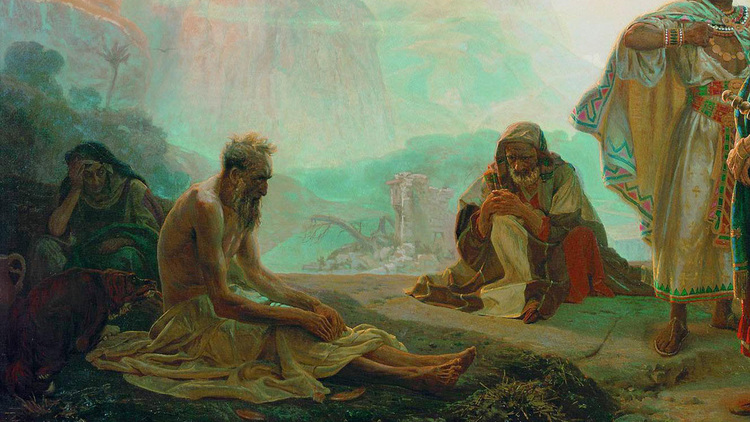
さらにヨブはこれらに加えて彼のからだ、足の裏から頭の頂にいたるまで皮膚病に冒され、陶器の破片をもって自らの体をかきむしり灰をかぶって座したとヨブ記は記しています。当時の社会では皮膚病になるということは社会からの隔離を余儀なくされることを意味しました。全てを失っても、まだ健やかな体さえあればと思うのですが、彼はそれすらも失ったのです。灰の中に変わり果てた姿で座るヨブに対して彼の妻は言います。「あなたはなおも堅く保って、自分を全うするのですか。神をのろって死になさい」しかしヨブは彼女にこう答えます。「あなたの語ることは愚かな女の語るのと同じだ。われわれは神から幸をうけるのだから、災をもうけるべきではないか」。なぜ神を畏れて、神の前に真実に生きようとしている者が災難にあうのでしょうか。このところに我々人類が答えを見出すことができずにいるテーマを見るのです。
この災いの後、ヨブを慰めようと彼の三人の友人、テマン人エリパズ、シュヒ人ビルダテ、ナアマ人ゾパルがヨブを訪ねてきました。彼らは認めがたいほどに変わり果てたヨブの姿を見、声をあげて泣き、自分の上着をさき、天に向かって塵をあげ、七日七夜、彼と共に地に座していましたが、ヨブの苦しみが非常に大きいのを見てひと言も言葉をかける者はいませんでした(ヨブ2章11節‐13節)。
しかし、その沈黙が破られる時がきました。ヨブが心のうちにある思いを話し出したのです。「1この後、ヨブは口を開いて、自分の生れた日をのろった。2すなわちヨブは言った、3「わたしの生れた日は滅びうせよ。『男の子が、胎にやどった』と言った夜もそのようになれ・・・。・・・11なにゆえ、わたしは胎から出て、死ななかったのか。腹から出たとき息が絶えなかったのか。12なにゆえ、ひざが、わたしを受けたのか。なにゆえ、乳ぶさがあって、わたしはそれを吸ったのか。13そうしなかったならば、わたしは伏して休み、眠ったであろう」(ヨブ3章1節-3節、11節-13節)。
私達はこのヨブの言葉によって、ヨブも私達と同じ人の子だったということを知ります。災いの直後、彼は神様に必死にしがみついていたのでしょう。しかし、灰の中に座り、陶器の破片で自らの体をかきむしるような時を過ごし、彼はついに自らが生まれた日を呪ったのです。
この後、ヨブと友人達の間で実に34章ものページを割くような議論が続きます。さすがにこの34章もの議論を今日、全て見ることはできませんが、その会話を要約しますと、その議論の中心となっている命題には「あなたが受けた災いはあなたの罪が原因となっているのではないか」ということがあります。
ヨブの友人達は皆「神は義しい人には災いをお与えにならないから、ヨブには何か隠れたところでなされた罪があるに違いない。だからあなたは今、悔い改めるべきだ」というのです。それはすなわち因果応報(いんがおうほう)ということで、災いを受けたのには原因があり、その原因はすなわちヨブよ、それはあなたの罪だということです。だから、そのことを認めて悔い改めよというのです。ヨブはしかしながら自分には問題がなく、自分は神の前に正しく歩んできたのだというのです。こういう議論が延々と続き、態度を変えないヨブに対して友人たちも愛想をつかし、ヨブも友人達に対して憤り失望して、互いに語ることが尽きてしまいます。ヨブは「何のためにあなたたちはここ来たのか、私を責めるためなのか、私はあなた達の意見などは聞かずに、人を介せずに神様と直談判したいのだ」とまで言います。
その時にそれまでその年が若かったために発言を控えていたエリフという若者が自らの思いを語ります。ヨブと三人の者達の会話を一部始終、聞きながらいてもたってもいられなくなったのです。「自分は若いからこれまで発言を控えてきたが、必ずしも年長者が知恵を持つわけではない。だから私も思うところを話そう。ヨブはあくまでも自分の正しさを主張するが、自分の正しさではなく神の義さというものを認めるべきだ。人の知恵は神の前に顧みるに値しないほどにちっぽけなものであり、神の御旨を全て計り知ることなどは人にはできないからだ」と。
先の三人はヨブの苦難を指摘し、その原因を分析し、それに対して人間的な解決方法を指摘していたのに対して、エリフはヨブの目を苦難とその原因の追究に向けるのではなくて、「神の主権とその大能に向けよ」と話すのです。
私達は自分達では解決できないことに直面しますと、それらについて考え、その考えを互いに取り交わします。それを私達は今日「議論」と呼んでいます。もしヨブと友人達の議論が「どうしたらヨブは再び財を蓄えることができるか」とか「どうしたらその皮膚病を治すことができるか」ということなら、彼らはヨブの生活の回復案や健康の治療法を見出すことができたでしょう。
しかしながら、ここでヨブと友人達が取り組もうとしていることは、「どのようにその問題を解決するのか」ということではなくて、「なぜ、このことがヨブに起きたのか」という問いに対する答えなのです。「How」なら人間の知恵を寄せ集めることができて改善や解決に近づくことができますでしょう。しかし「Why」に関しては、私達は見出し得ない領域があるということを私達は知っているのです。
先日、日本の科学界を代表するような方がその講演において「神」ということを取り上げているということを聞きました。人はこれからも‶どのようにして”この宇宙は出来上がったのだろうということについて研究を続けていくでしょうが、科学者は「なぜ、この宇宙ができたのだろう」という問いに答えることはできないのです。私達の命が母の胎内においてどのように始まったのかを今日、医者は説明することができますが、なぜ、私がこの世界に生まれたのかという問いに医者も哲学者も答えることはできないのです。
ヨブと友人たちの議論は「なぜ、あなたが災いにあったのか、なぜ、立て続けにこのような目にあって、あなたは今、灰の中に座っているのか」ということであり、その議論はやはり行き詰まってしまうのです。ですから若いエリフが自らの苦難の分析とかその解決方法とか、自らの正当性を模索するのではなく、その自分自身から目を離して神の全能に心を向けるようにと言ったことは正しいことなのです。他の者達よりも人生経験の若い彼に神様は他の者達が目を向けなかったことを気がつかせたのです。そして、このエリフの発言があり、それまでヨブと友人の不毛な議論を聴いておられた神様ご自身がいよいよつむじ風の中から直接、ヨブに語りかけます。
2「無知の言葉をもって、神の計りごとを暗くするこの者はだれか。3あなたは腰に帯して、男らしくせよ。わたしはあなたに尋ねる、わたしに答えよ。4わたしが地の基をすえた時、どこにいたか。もしあなたが知っているなら言え。5あなたがもし知っているなら、だれがその度量を定めたか。だれが測りなわを地の上に張ったか。(ヨブ38章2節‐5節)。
神様はヨブにこの世界が創造されたとき、あなたはどこにおり、その創造がどのようになされたかを言いなさいと尋ねられ、さらにこのような言葉が止めどもなく続きます。「あなたは海の源に行ったことがあるか。淵の底を歩いたことがあるか。17死の門はあなたのために開かれたか。あなたは暗黒の門を見たことがあるか。18あなたは地の広さを見きわめたか。もしこれをことごとく知っているならば言え。19光のある所に至る道はいずれか。暗やみのある所はどこか。20あなたはこれをその境に導くことができるか。その家路を知っているか。21あなたは知っているだろう、あなたはかの時すでに生れており、またあなたの日数も多いのだから。(ヨブ38章16節-21節)。
ヨブの生きた年月は何千、何万年というようないものではありません。当然、今、海の底で何がおきているかなどということを私達は知りえません。神様は以降、この世界で起きている森羅万象を取り上げ、ヨブに尋ねるのです。あなたは人が住んでもいないような荒野に雨を降らせ、その荒地に草を生えさせることができるか。あなたはプレアデスという星座を結ぶことができるか。天の法則を知っており、その法則をこの地にほどこすことができるか。さまようからすにエサを与えるのは誰か。鷹が舞い上がり、南に向かうのかあなたの知恵によるのか。鷲がその巣を高い所につくるのはあなたが命令したからなのか。これら私達人間が関与していない、しかしながら日夜、繰り広げられている、その実態すらまだ未知であることについて神様は語り、ヨブに言われたのです。
2「非難する者が全能者と争おうとするのか、神と論ずる者はこれに答えよ」。3そこで、ヨブは主に答えて言った、4「見よ、わたしはまことに卑しい者です、なんとあなたに答えましょうか。ただ手を口に当てるのみです。5わたしはすでに一度言いました、また言いません、すでに二度言いました、重ねて申しません」。(ヨブ40章2節-5節)これらのヨブの言葉に対して主は答えられます。
7「あなたは腰に帯して、男らしくせよ。わたしはあなたに尋ねる、わたしに答えよ。8あなたはなお、わたしに責任を負わそうとするのか。あなたはわたしを非とし、自分を是としようとするのか。9あなたは神のような腕を持っているのか、神のような声でとどろきわたることができるか。10あなたは威光と尊厳とをもってその身を飾り、栄光と華麗とをもってその身を装ってみよ(ヨブ40章7節-10節)。ヨブはこの神様の言葉にこう答えます。
2「わたしは知ります、あなたはすべての事をなすことができ、またいかなるおぼしめしでも、あなたにできないことはないことを。3『無知をもって神の計りごとをおおうこの者はだれか』。それゆえ、わたしはみずから悟らない事を言い、みずから知らない、測り難い事を述べました。4『聞け、わたしは語ろう、わたしはあなたに尋ねる、わたしに答えよ』。5わたしはあなたの事を耳で聞いていましたが、今はわたしの目であなたを拝見いたします。6それでわたしはみずから恨み、ちり灰の中で悔います」(ヨブ42章2節-6節)。
人間が削ったり、掘ったりして作った置物ではない、人間からの制約を一切受けることのない全知全能の神の姿がここには描かれています。人間の理解を超えているからこそ神なのであり、その神が日々、成していることに目をとめなさい。自分の小さな正しさとか自分の主張、すなわち“自分のなにか”にとらわれずに、わたしの御手のわざに目を留めなさい、あなたは私の作品である土の器であり、わたしがあなたをかたち造る陶器師であるということに立ち返りなさいと神様はヨブに語られるのです。
人は生きとし、生ける者の中で神様の最高の傑作であることに間違いはありません。実際、神様は人をそのように造られたと創世記は記しています。しかし、忘れてはならないのは私達はこの世界の主人公ではないのです。人は自分でその生を選び、自力で生まれ、同じく自力でその命を維持しているような者ではなく、初めから終りまで全てを依存して神様に生かされている存在なのです。
ルカ12章25節‐26節には『あなたがたのうち、誰が思いわずらったからとて、自分の寿命をわずかでも延ばすことができようか。そんな小さな事さえできないのにどうしてほかのことを思いわずらうのか』 という聖書の言葉があります。命とは私達にとってまさしく全てです。命あっての私達の生活です。だから私達は「“命あっての”あれこれ」と言うのです。しかし、その命のことを神様は「そんな小さな事」と言われます。神様の思いと私達の思いとは圧倒的に異なるのです。「義人がなぜ苦難を受けるのか」という問題は私達人間の理解の外にあるのです。
最初にヨブの友達はヨブの災いは彼の罪ゆえに起きたのだということを主張したとお話しました。「三人寄れば文殊の知恵」とは言いますが、それが三人の人間がいたった推測であり、それ以上のことを彼らは知りえなかったのです。そう考えますと人が何人も集まっても見出し得るものには限界があります。ヨブ記は私達がそんな人間なのだということを示す書でもあるのです。
ヨハネによる福音書にはこのようなエピソードが記録されています。1イエスが道をとおっておられるとき、生れつきの盲人を見られた。2弟子たちはイエスに尋ねて言った、「先生、この人が生れつき盲人なのは、だれが罪を犯したためですか。本人ですか、それともその両親ですか」。3イエスは答えられた、「本人が罪を犯したのでもなく、また、その両親が犯したのでもない。ただ神のみわざが、彼の上に現れるためである(ヨハネ9章1節-3節)。
ヨブ記の出来事から長い年月を経ても、イエスの弟子達はヨブの友人達と同じ考えをもっていました。そうです、彼らは生まれつきの盲人を見て、なぜ彼は生まれつき盲人なのかとイエスに問うたのです。そうです、彼らもヨブとその友人達と同じように「このことは誰かの罪ゆえか。本人か、その父母か?」という不毛の議論を始めたのです。そこに居合わせたであろう盲人もその言葉を聞いていたに違いありません。そうです、この類の言葉を彼はこれまで何度も何度も聞いてきたに違いありません。その度に彼の心も彼の身内の者達の心も引き裂かれたに違いありません。
はたして今日の世界を見回すと、この「なぜ」という問いは今もいたるところにあり、これらのことに対して私達は好き勝手にそれらを「先祖のたたり」だとか「あなたの前世の罪」だというようなことを言い合って、互いに恐れを引き起こしています。生涯、自分でどうすることもできないことに苦しみ、大金を支払ってお払いを受けることによってどうにか慰めを受けている人達が大勢います。しかし、このヨブ記に記されている、神と全く同じ見地から私達人間とこの世界を知りうるキリストははっきりと言われました。「本人が罪を犯したのでもなく、また、その両親が犯したのでもない。ただ神のみわざが、彼の上に現れるためである」(ヨハネ9章1節-3節)。
それは罪の問題ではない。そのことを通して神のみわざが彼の上に現われるのだというのです。皆さん、人間がちっぽけな頭で自ら考え出し、そのことにより無数の人達の心が引き裂かれてきた呪縛がこの一言によって解き放たれているのです。このお方は私達の知りえない世界にある神の御心について語られました。私達はこれからも、このヨブ記で取り上げたテーマを完全に理解することはできないでしょう。しかし、その世界を知りうるお方のその心には私達に対する愛とあわれみが満ちていることを私達はこの言葉によって知るのです。
そして、それは言葉だけではないのです。このキリストは私達の罪の身代わりとなって十字架にかかられたと聖書は記しています。この人が盲人となったのは罪によるのではない、しかし、その罪は確かに私達を苦しめ、私達人間の互いの関係に混乱をおよぼしている。その罪の責任を私はあなたに問わない。わたしがあなたのその罪を全て身に負い、あなたに代わりその罪の罰を受けよう。あなたがそのことを知り、あなたの罪を悔い改め、わたしが十字架の上であなたのために成した、その信じがたき神の愛を信じるのなら、あなたはあなたの人生に起きてくる諸々のことをきっと乗り越えていくことができると聖書は記しているのです。
私達の人生にもこれからどのようなことが起こるのか私達には知りえません。実際にヨブが受けた災いの一つを私達が受けるだけでも、私達はうろたえ、取り乱してしまうことでしょう。神を疑い、何度も何度も「なぜなのですか?」と私達は神に問うことでしょう。その時に神様は私達が神にしがみつくことを良しとしていてくださいます。そして、私達は気がつくのです。私達を抱きとめてくださるそのお方の手の平には十字架に釘打たれた傷跡があることを・・・。そう、この世界における万物の法則をくつがえすようなこと、すなわち神の一人子なるお方が人の罪のために自らの命を捧げてくださったということを。「なぜ災いが我々におよぶのか」、そのことの全貌を私達が理解することはできません。しかし、キリストの手足の傷跡の意味なら私達は理解できます。私達がその傷跡の意味を知る時、私達はいかなる災いの中にあっても、この主イエスと共に再び立ち上がることができるのです。お祈りしましょう。
For Better or for Worse
Job: Do not forget this in time of hardships
December 6, 2015
Many characters are described in the Bible. One character that grabs our hearts is a man named Job. Job lived around 1800 B.C. in the area of Uz. His faith was strong, he avoided evil, and he was respected by people. Job had seven sons and three daughters. He possessed 7000 sheep, 3000 camels, 500 yoke of oxen, 500 donkeys and large number of servants. The Book of Job in the Old Testament says he was the greatest man among the people of the East.(“The East” might refer to the Eastern region or East Coast.) In other words, he was an ideal individual and it was difficult to find any fault with his humbleness, faith, and sense of morality. We often speak of people that the person is very nice EXCEPT for something. But, Job was complete in his character.
But, one day, natural and human disaster comes crushing down on him. Let’s read the Book of Job:
13 One day when Job’s sons and daughters were feasting and drinking wine at the oldest brother’s house, 14 a messenger came to Job and said, “The oxen were plowing and the donkeys were grazing nearby, 15 and the Sabeans attacked and made off with them. They put the servants to the sword, and I am the only one who has escaped to tell you!” 16 While he was still speaking, another messenger came and said, “The fire of God fell from the heavens and burned up the sheep and the servants, and I am the only one who has escaped to tell you!” 17 While he was still speaking, another messenger came and said, “The Chaldeans formed three raiding parties and swept down on your camels and made off with them. They put the servants to the sword, and I am the only one who has escaped to tell you!” 18 While he was still speaking, yet another messenger came and said, “Your sons and daughters were feasting and drinking wine at the oldest brother’s house, 19 when suddenly a mighty wind swept in from the desert and struck the four corners of the house. It collapsed on them and they are dead, and I am the only one who has escaped to tell you!” (Job 1:13-19)
This person had everything and suddenly lost everything. No one experienced the highest high and the lowest low as he did. He lost not only his possessions but lost all of his children.
In the Ecclesastes, Solomon wrote: ”There is something else meaningless that occurs on earth: the righteous who get what the wicked deserve, and the wicked who get what the righteous deserve.”(Ecclesastes 8:14) Solomon was talking about Job. When anyone experiences such a hardship, we tend to openly complain, blame others, lose our faith, and even begin to curse God. But, Job was different. In this hardship, he still said: “Naked I came from my mother’s womb, and naked I will depart. The Lord gave and the Lord has taken away; may the name of the Lord be praised.” (Job 1:21) Job did not blame God for the situation and did not commit any sins.
On top of this, Job was afflicted with painful sores from the soles of his feet to the crown of his head. So, he had to use a piece of broken pottery and scrape himself with it as he sat among the ashes. Any skin disease at that time meant that he was ostracized from the society. He was stripped off of every possession, and he even lost his own health.
His wife, looking at miserable state of Job says: “Are you still maintaining your integrity? Curse God and die!” (Job 2:9) But,Job replies: “You are talking like a foolish woman. Shall we accept good from God, and not trouble?” (Job 2:10) Why is it possible that the righteous men should encounter hardships? This is the question all mankind has been asking for decades.
Job’s three friends, Eliphaz the Temmanite, Bildad the Shuhite, and Zophar the Naamathite came to sympathize with him and comfort him. When they saw him, they could hardly recognize him; they began to weep aloud, and they tore their robes and sprinkled dust on their heads. Then they sat on the ground with him for seven days and seven nights. No one said a word to him, because they saw how great his suffering was. (Job 2:11-13)
But, this silence was broken by Job: 1 After this, Job opened his mouth and cursed the day of his birth. 2 He said: 3 “May the day of my birth perish, and the night that said, ‘A boy is conceived!’ … 11 Why did I not perish at birth, and die as I came from the womb? 12 Why were there knees to receive me and breasts that I might be nursed? 13 For now I would be lying down in peace; I would be asleep and at rest.” (Job 3:1-3, 11-13)
These words of Job tell us that Job was a human like us. After the disaster hit him, he had remained faithful to God at first. But, after many agonizing days sitting in the ashes and scratching himself with a piece of broken pottery, he started cursing the day he was born.
This section is followed with 34 chapters of argument between Job and his friends. We do not have time to go over the details of the argument. But, the main argument of his friends was that this suffering must have been caused by the sins of Job.
All of his friends said that God never puts righteous person in hardships. Job must have committed some sins to anger God. Job must confess his sins and seek forgiveness from God. There is a cause and consequence. Job must be getting what he deserved. Job must have committed sins. Friends insisted that Job must admit and repent. However, Job insisted that he had not sinned against God and he had been faithful to God. This argument went back and forth, endlessly. Friends threw their hands up exhausted. Job was angry and disappointed with his friends. Job said to his friends: “Why did you come? To blame me? Then, I do not want to listen to you. I would rather talk to God directly.”
There was another person there by the name of Elihu. He was younger than other three. He had listened to Job and three friends arguing. He could not hold himself any longer. He said: “I am young. You are all older. That is why I did not dare to tell you my opinion. But the wisdom of the old is not always right. Job insists he is innocent. But, we should all admit that God is righteous. God’s wisdom is far superior to human wisdom. It is impossible for us to understand the will of God.
While the three friends had tried to point out faults in Job and insisted that he should admit his sins, Elihu suggested that they should rather look at the all-powerful and all-knowing God.
Whenever we face problems and cannot find solutions, we agonize and exchange our views among ourselves. We call this “argument”. If the topic of the argument among Job and his friends had been on how to restore his wealth or on how to cure his skin disease, perhaps they could have come up with a solution.
But, the core of the argument here between Job and his friends was not how to find a way out, but on the reason why Job had been placed in his difficult situation. Perhaps we can find answers to the “How” side of the question and find our way out. But it is not that simple to find the answer to the “WHY” side of the question.
The other day, I heard that the top scientists of Japan presented a lecture meeting in which they discussed “GOD”. Scientists can continue to explore the process of the creation of the universe. But the science cannot find the answer to “Why was the universe created?” Medical doctors can explain how our life starts in the womb of mother. But, doctors and philosophers cannot begin to find answer to “Why were we given life?”
Job and friends had been arguing WHY Job faced the calamity and lost everything, and why Job was forced to sit in the ashes. There was no way out from such argument. In that sense, the young Elihu was right when he suggested that they should turn their attention away from the reasons for Job’s suffering but focus on all-knowing and almighty God. This young Elihu had less life experience than others. But, God used this young man to open the eyes of the older people. After this suggestion from Elihu, God, who had been listening in, finally talked to Job out of the storm:
“2 Who is this that obscures my plans with words without knowledge? 3 Brace yourself like a man; I will question you, and you shall answer me. 4 Where were you when I laid the earth’s foundation? Tell me, if you understand. 5 Who marked off its dimensions? Surely you know! Who stretched a measuring line across it?” (Job 38:2-5)
God asked where Job was when the world was created. He asked who created the world. Then, God continued: 16 “Have you journeyed to the springs of the sea or walked in the recesses of the deep? 17 Have the gates of death been shown to you? Have you seen the gates of the deepest darkness? 18 Have you comprehended the vast expanses of the earth? Tell me, if you know all this. 19 What is the way to the abode of light? And where does darkness reside? 20 Can you take them to their places? Do you know the paths to their dwellings? 21 Surely you know, for you were already born! You have lived so many years!” (Job 38-16-21)
Job’s life span was not thousands of years. None of us live that long. We do not know what is taking place in the deep of the oceans. God continued on and asked Job about all things of this world. He asked: “Can you provide rain to the wilderness area and help grasses grow?” “Can you connect the stars of the Pleiades constellation?” “Do you know the laws of the heavens? Can you set up God’s dominion on this earth?” “Who provides food for lost ravens? Does the hawk take flight by your wisdom and spread their wings toward the south? Does the eagle soar at your command and builds its nest on high? These things take place daily without our knowledge. Our knowledge and power are woefully limited compared to that of God. God said also:
2 “Will the one who contends with the Almighty correct him? Let him who accuses God answer him!” 3 Then Job answered the Lord: 4 “I am unworthy—how can I reply to you? I put my hand over my mouth. 5 I spoke once, but I have no answer—twice, but I will say no more.” (Job 40:2-5)
To this, God answered:
7 “Brace yourself like a man; I will question you, and you shall answer me. 8 “Would you discredit my justice? Would you condemn me to justify yourself? 9 Do you have an arm like God’s, and can your voice thunder like his? 10 Then adorn yourself with glory and splendor, and clothe yourself in honor and majesty.” (Job 40:7-10)
Job answered this way:
2 “I know that you can do all things; no purpose of yours can be thwarted. 3 You asked, ‘Who is this that obscures my plans without knowledge?’ Surely I spoke of things I did not understand, things too wonderful for me to know. 4 “You said, ‘Listen now, and I will speak; I will question you, and you shall answer me.’ 5 My ears had heard of you but now my eyes have seen you. 6 Therefore I despise myself and repent in dust and ashes.” (Job 42:2-6)
God is not something we have carved out of woods. God is all-knowing and all-powerful and is not controlled by human. God is beyond our understanding. God tells us to note what he does every day to the world and to us. God was telling Job: “Do not to be concerned about your power and what you are. Pay attention to my work. And remember that you are a pottery of my work, and I am the potter.”
Human beings are the finest creation of God among living beings. Genesis says that God had created man in the image of God. But, we must not forget that we are not the main character of this world. We did not choose our life. God gave us our life and God maintains our life. We are totally dependent on God from the beginning to the end of our life.
Luke 12:25-2 6 says: 25 ”Who of you by worrying can add a single hour to your life? 26 Since you cannot do this very little thing, why do you worry about the rest?” (Luke 12:25-26) Life is everything to us. Without it, we have no existence. That’s why we cherish our life and worry about it so much. But, God calls our life “a very little thing.” God’s concept of life is far beyond our understanding. We ask “Why the righteous suffer?” But, the answer is beyond our understanding.
We learned that Job’s friends blamed his calamity on his sins. Three heads struggled to make sense out of Job’s fate. But, they were human beings after all. Their wisdom was limited. So, we human must realize that our understanding is very limited. God is far beyond our understanding. Book of Job points that out to us.
Gospel According to John has recorded one episode: As he went along, he saw a man blind from birth. 2 His disciples asked him, “Rabbi, who sinned, this man or his parents, that he was born blind?” 3 “Neither this man nor his parents sinned,” said Jesus, “but this happened so that the works of God might be displayed in him.” (John 9:1-3)
Hundreds of years after Job’s story, the disciples of Jesus still had the same question. When they saw a man born blind, they asked Jesus why this man was blind from birth. Just like Job and his friends, they asked who should be blamed, the blind man himself or his parents. I am sure the blind man overheard the disciples asking this question to Jesus. I am also sure that the blind person had heard the same question uttered by many. And, each time, such question had given pain to the heart of the blind man and his parents.
When we look around us, we encounter such “WHY” questions all the time. We say that the calamity is caused by the ancestors, or by the deed of the previous life. This only confuses us and torments us. Many agonize over this kind of question over which we have no control. Many even pay a huge sum of money to buy so-called divine intervention. But, Jesus Christ, who knows how God thinks about us human beings, declared clearly: 3 “Neither this man nor his parents sinned, but this happened so that the works of God might be displayed in him.” (John 9:3)
This is not a question of sins. This is the means through which the works of God is revealed to us. This word of Jesus smashes our concern, which had tormented so many people throughout the history. The curse has been lifted. Jesus was talking to us about God’s works which are beyond our understanding. Perhaps we can never fully understand this dilemma Job had faced and struggled. But, we know one thing. And that is, God who knows us intimately loves us deeply. We see this in the words of Jesus.
And it was not only his words. Bible tells us that this Christ was crucified to pay for our sins. This blind man was not born blind because of his sins. But, sins do torment us and cause so much conflicts among us. Jesus says he does not blame us for our sins. Jesus accepted all the blame himself on behalf of us and he was punished instead of us. Bible says that if we know about it, repent our sins, and believe that Jesus had died for us on the cross, and believe the love of God which is far beyond our understanding, it would be possible for us to overcome any problems of our life.
We do not know what will happen in our life. If even one of the calamities Job had faced should fall upon us, we would panic and would not know what to do. We might question God’s will, and ask WHY to God again and again. In those difficult moments, God allows us to cling to his hands. When we do so, we also realize that the hands that embrace us have scars left from the nails that were pounded into his palms on the cross. Yes, we would be reminded of an amazing fact that the only son of God had offered his life to pay for the sins we have committed. Perhaps we cannot understand why hardships fall on us. But, we can understand why hands and feet of Jesus Christ show such scars. When we understand the meaning of his scars, we can stand up to any hardships with Jesus Christ.
Let us pray.
Translated by Dr. Yasuhisa Hosomatsu
本日のおもちかえり
2015年12月6日
1)ヨブ1章13節‐19節を読みましょう。ヨブが経験したことをあなたはどう思いますか。神の前に正しく歩むものが災いにあうということについて、あなたはどんな考えをもっていますか。
2)これらの災いを経験したヨブが言った言葉、ヨブ記1章20節、2章10節についてあなたはどう思いますか。なぜヨブはこのような言葉を言うことができたのでしょうか。
3)私達が経験する災いは全て、私達の罪が原因なのでしょうか。祟りとか、呪いとかについてあなたはどう思いますか。もし、これらのことゆえにあなたが責められたら、あなたには何ができますか。恐れから生まれるものは何でしょうか。
4)人の誕生の過程について私達は“どのように”それが起きるのかを説明することは可能ですが、“なぜ”あなたが生まれてきたのかを説明することは難しいのです。この“なぜ”を知りうるお方にはどんな特性がなければなりませんか。
5)ヨブ38章2節‐5節を読みましょう。あなたは万物の成り立ちについて、どれくらいのことを知っていますか。神を知り尽くすことは可能ですか。
6)ヨハネ9章1節-3節を読みましょう。この盲人はそれまで度々、盲目であるということは本人や親の罪の結果なのだと言われ続けてきたことでしょう。しかし、そのことによって神の栄光があらわされるということを聞いた時、彼の心にはどんな思いがわいてきたでしょうか。この言葉は今日、私達にどんな力と希望を与えてくれますか。
